Six military commissary freezers failed in August, and investigators treated it like someone reached through the internet and twisted the thermostat.
Story Snapshot
- At least six U.S. base commissaries saw unusual freezer failures in August.
- A Fort Huachuca unit reportedly flipped into heat during defrost, ruining food.
- U.S. Cyber Command and Army criminal investigators took point on the probe.
- Officials framed it as a suspected hack, but no cause or actor is confirmed.
What happened and why the Pentagon cared
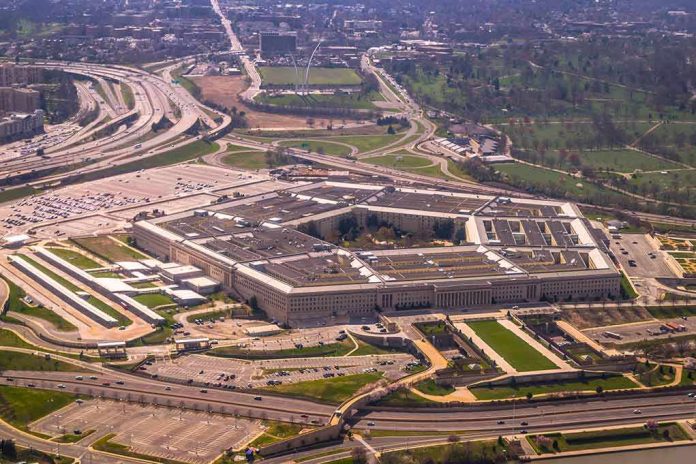
Reuters reported that the Pentagon treated a spate of freezer malfunctions across multiple military bases as a suspected cyberattack. The pattern spanned at least six commissaries, not one flaky appliance. That scope pushed the case past routine maintenance. The Department of Defense said a U.S. Cyber Command unit worked with law enforcement and other agencies. The Army Criminal Investigation Division said its Cyber Field Office was involved. That lineup signals a real investigation, not theater.
Fort Huachuca in Arizona posted that its commissary freezer “went into defrost mode where it heated up all the food,” which left spoilage and loss. A freezer that warms during defrost sounds like more than a compressor hiccup. Modern refrigeration is run by controllers that take commands. Raise the set point or force a defrost at the wrong time, and the unit cooks itself. That can come from a bad sensor, a software bug, a fat finger, or a hostile command. The post did not say which it was.
The French connection that shaped the probe
Investigators looked at a recent French case where attackers raised temps in hundreds of stores. Reports said the intruders overrode commercial refrigeration controls and spoiled food on a large scale. Reuters said U.S. officials contacted French counterparts to compare notes, which shows this was more than a media analogy. The parallel is tight enough to study, but it is not proof of a shared culprit, exploit, or campaign. Same symptoms can come from shared gear, weak settings, or old firmware.
Officials familiar with the U.S. probe told Reuters that the Pentagon treated the incidents as suspected hacking, but they stopped short of naming a vector, a tool, or a group. That restraint matters. It tells us why Cyber Command engaged, and it also tells us what is not yet known. The Defense Department has not released logs, command histories, or controller forensics. Without those details, firm attribution would be guesswork. The case sits in the gray space between credible and proven.
What would prove a hack—and what might clear it
A real answer lives in the bits and bolts. Controller command logs would show if someone changed set points or forced defrost cycles. Network records would show if remote users logged in from outside. Firmware checks would show if known bugs fit the pattern. On the physical side, a failing relay, iced sensors, bad power, or a door heater short can mimic “heat” behavior. Until investigators match commands to outcomes, both lanes stay open.
Security research shows that refrigeration controls often sit on the open internet with weak protection. One study counted thousands of exposed systems worldwide, many with web logins and old firmware. That setup makes remote mischief cheap and fast. Attackers do not need to invent new code. They can abuse normal features, like defrost, to cause damage. This is why treating the August outages as a serious lead lines up with common sense and caution.
Costs, stakes, and a conservative read on resilience
Spoiled food is not just waste. On a base, lost stock means extra costs, delays, and gaps for families who count on fair prices. That is why the right posture is simple: lock the doors, then check the wiring. Prompt cyber and criminal probes defend taxpayers and troops. If the root cause is mechanical, good—fix it fast and widely. If it was a hostile actor, deter and harden. Either way, tighter access, better patching, and basic segmentation pay off.
US: Pentagon treating military base freezer malfunctions as suspected cyberattack, officials say
The Pentagon is treating the spate of mysterious freezer malfunctions that spoiled food at military bases across the United States in August as a suspected hack, according to four…
— Alex 🇺🇸 (@A_L_E_X_V_E_G_A) October 30, 2026
Some commentary says a freezer entering defrost does not prove a hack, and that is correct. The Pentagon has not confirmed unauthorized access, a method, or a link to France. Those are fair limits and worth repeating to keep the story honest. But six sites with unusual failures in one month, a Fort Huachuca unit that warmed instead of cooling, and a full-court investigative press justify concern. Prudence is not panic. It is how you keep dinner cold and the system strong.
Sources:
people.com, nextgov.com, newsweek.com, yahoo.com, ibtimes.co.uk