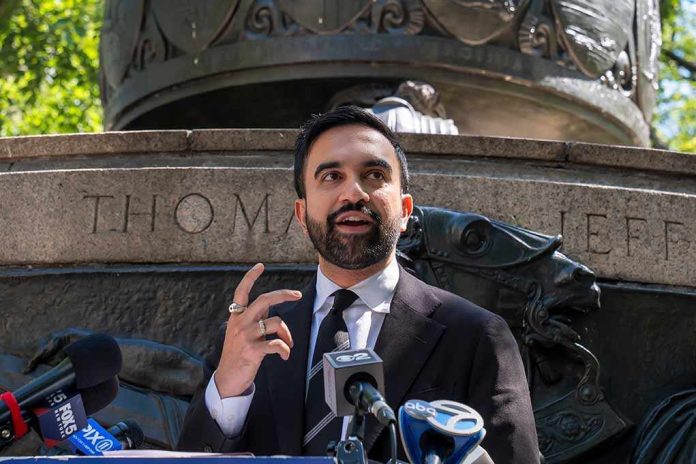
Zohran Mamdani released a Spanish-language “know your rights” video about Immigration and Customs Enforcement, then added a blunt message for voters about what federal agents cannot do at polling sites.
Story Snapshot
- Mamdani posted a video telling New Yorkers what to do if Immigration and Customs Enforcement shows up at home or on the street.
- He told viewers to look for a judge’s signature on warrants and to keep doors closed without one.
- He advised people to ask, “Am I free to go?” during street stops and walk away if told yes.
- He said do not interfere with arrests, do not resist, and you may record from a safe distance.
Mamdani’s Video: What He Told New Yorkers To Do
Zohran Mamdani published a Spanish-language training-style video during active federal operations in New York City. He framed the guidance as basic rights during encounters with Immigration and Customs Enforcement. Reports describe clear steps for both home and street contacts. The timing followed a high-profile incident in the Bronx that placed federal enforcement under a local spotlight. CBS News likewise described the clip as a reminder of rights for New Yorkers facing federal immigration agents.
The video told viewers what to say and what not to do. It said to ask officers if you are free to go during a street stop. If the agent says yes, walk away calmly. It also said you can film officers in public as long as you do not interfere. It warned viewers not to block arrests, not to impede an investigation, and not to resist. These guardrails mirror long-running civil rights “know your rights” materials produced by advocacy groups.
The Door, The Paper, The Signature: His Warrant Script
Mamdani drew a sharp line between a civil immigration form and a warrant signed by a judge. The script, as reported by multiple outlets, told viewers to look for the words “United States District Court” and a judge’s signature. It suggested asking officers to slide any order under the door. It said that without a judicial warrant, people may keep the door closed and state, “I do not consent to your entry.” Outlets that are critical of the video quoted the same language.
The instruction on staying calm and recording activity came with limits. Reports say Mamdani told people they could record federal agents during arrests, but only if they did not interfere. He added that viewers should not resist arrest and should remain calm if detained. The Hill noted his “do not obstruct” warning, while the Washington Examiner cited accusations that he was coaching resistance but also quoted his no-resistance line. Those accounts reflect the political crossfire around the clip.
Why This Caught Fire: Enforcement, Politics, And A Familiar Playbook
Newsrooms across the spectrum amplified the same core points while arguing over labels. Some pieces framed the video as rights education. Others called it coaching to evade enforcement. That split tracks years of coverage where the same act reads as civic instruction to one side and obstruction to the other. Civil-liberties groups and law school clinics have produced similar guides for years, including advice on silence, warrants, and filming officers in public.
Mamdani posted a video of himself on X on Friday, with the caption, "If you encounter ICE, here's what every New Yorker should know." https://t.co/JcYytdcCBw
— CNY Central (@CNYCentral) October 26, 2026
Federal officials also weighed in, which raised the stakes. The Hill reported that Department of Homeland Security Secretary Kristi Noem suggested Mamdani could have violated the law had he been in office when a prior clip was posted. That statement did not cite a charge but added pressure around the message. The broader fight now spans city politics, federal authority, and how far elected leaders should go in teaching people their rights.
What To Watch Next: Polling Places And The Voter Message
Mamdani capped his push with a claim about voter access. He said armed federal agents, including Immigration and Customs Enforcement, cannot be present at New York polling places without a judicial warrant. That point fits the same theme as his home-entry script: show the paper, read the signature, then decide what to do. The headline politics will keep circling the same question: is this clear rights education, or an effort to blunt federal enforcement?
Sources:
redstate.com, fox5ny.com, elpais.com, english.mathrubhumi.com, thehill.com, washingtonexaminer.com