Red paint splashed across the engraved names at the 9/11 Memorial turned a place of mourning into a billboard, and the backlash was instant.
Story Snapshot
- Police say a gun-regulation activist spray-painted “just stop killing kids” and a website on victim-name panels at Ground Zero.
- The act happened in daylight, was caught on surveillance, and drew quick arrest and charges.
- The Memorial called the site a sacred place and said the area was swiftly restored.
- Coverage amplified the message but centered on desecration and damage claims over $2,550.
What Happened, When, and Where
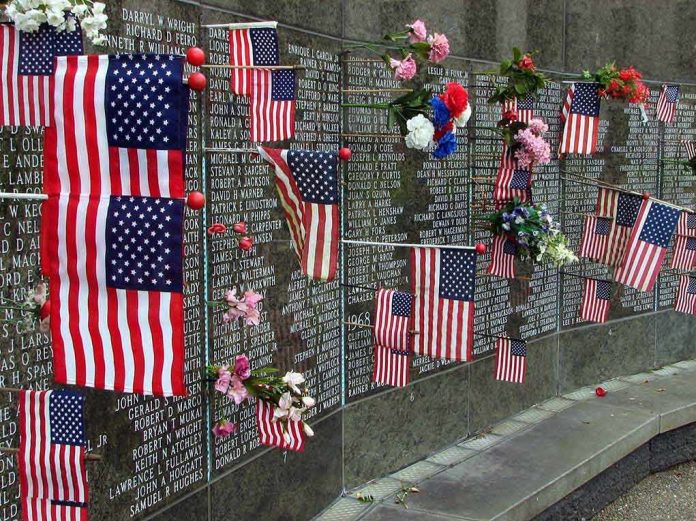
Port Authority Police said a man sprayed red words across bronze panels at the 9/11 Memorial’s North Pool around 5 p.m. The message read “just stop killing kids,” along with a matching website address that points to a gun-regulation theme. Police said surveillance captured the act, and officers made an arrest soon after. The Memorial and Museum called the site a sacred place that honors 2,983 victims and said staff and law enforcement restored the area the same day.
Reports identified the suspect as a gun-regulation activist and said he acknowledged being responsible. Police characterized the markings as graffiti and listed criminal mischief among the charges. Officers also cited damage costs above $2,550. Witness accounts described the paint cutting across engraved victim names, not just empty surfaces near the pools. That placement fueled public anger, because the names are the heart of the memorial’s design and meaning.
Why This Tactic Guaranteed Outrage
Graffiti on a memorial is not a clever shortcut to a moral point; it is a guaranteed way to make the tactic the story. The 9/11 Memorial’s own statement framed the site as sacred and the conduct as an intrusion on commemoration, which put critics on firm ground. The act may have sought attention for a cause, but it handed the microphone to law enforcement and the memorial’s caretakers. Coverage led with desecration, damage, and charges, not a policy case.
The message used a short, emotive slogan and a website to drive curious people online. That move matches how modern protest tries to bridge the street and the screen. But the record so far shows no specific bill, policy target, or concrete ask tied to the stunt. Attention without a plan is only noise. The public heard the alarm, then saw the location, and many decided the messenger had crossed a moral line that common sense and respect for the dead should not allow.
The Law, Free Speech, and Where This Crossed the Line
America protects speech, even offensive speech. But the First Amendment does not give a right to deface property. Courts have long drawn a clear line between expression and vandalism. Spray-painting a memorial moves the debate from speech to damage the instant the cap clicks. That is why police treated this as criminal mischief and graffiti. The memorial’s rapid cleaning shows both capability and priority: restore the names first, then let the courts sort the rest.
I don't understand why progressive protest via vandalism? And at the 9/11 Memorial? This is the exact opposite approach of MLK, etc. https://t.co/16iPSmycqG
— Anthony Bradley (@drantbradley) October 28, 2026
The practical result tracks what common sense predicts. The stunt sparked headlines and outrage, then collapsed into a process story about arrest, cleanup, and costs. It did not persuade. It hardened opposition. It also armed critics of gun regulation with an easy talking point: if your case is strong, why deface the names of the fallen to make it? That rhetorical loss will linger far longer than the paint did. Movements win when they respect the very civic bonds they hope to protect.
What Comes Next and What It Teaches
Prosecutors will press the property-damage case. The defense may argue motive and message, but courts will focus on conduct and cost. The memorial community will close ranks because the names represent families, not an abstract symbol. If the activist or the linked website offers a clear policy plan, lawmakers might read it. But the first impression is set: a sacred place was used as a canvas. The lesson is simple for anyone who wants change—honor the dead, argue the policy, and keep your case out of the evidence locker.