President Trump put a $1 million price tag on proof of voter fraud that ends in a conviction.
Story Snapshot
- Trump offered $1 million for tips that lead to an arrest and conviction for voter fraud.
- The offer covers past elections and the 2026 midterms, broadening the scope.
- Key details remain unclear: funding, rules, and how to claim the reward.
- News reports say fraud cases exist but are not widespread in U.S. elections.
What Trump Said And What It Requires
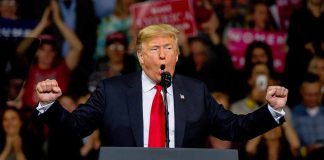
Trump posted the offer on October 26, 2026, and tied the money to a hard finish line: arrest and conviction. His wording promised $1,000,000 to anyone reporting voter fraud “in past Elections” or the “upcoming 2026 Midterm Election,” if that report leads to the arrest and conviction of whoever did it. He echoed the same point on camera, calling it a reward for tips that result in an arrest and conviction. That bar is high by design and aims straight at criminal proof.
https://www.youtube.com/watch?v=wd3exLQ-qKU
The scope matters. By including past elections and the current cycle, the offer invites tips across many states and years. That reach could surface old cases that stalled for lack of leads. It also could channel new claims into law enforcement during early voting. A million-dollar bounty focuses attention. But it also raises a question: who decides a tip actually caused a conviction when many people may touch a case?
The Missing Pieces: Money, Rules, And A Gatekeeper
Key mechanics were not announced. Coverage noted no identified funding source, no agency to run the program, and no process to submit, verify, and pay a claim. Reporters also found no guidance on whether multiple tipsters could split a reward, what crimes qualify, or how to prove a tip led to the final verdict. That gap is not small. Without rules, a big bounty can invite copycat claims, confusion, and fights over credit after a jury decides a case.
Timing adds a second layer. The pledge landed eight days before the midterms, which invites charges of politics from critics. But timing cuts both ways. If the goal is deterrence, a visible, simple promise can make would-be cheaters think twice now, not later. Voters who value election security will see pressure applied to the right place: catch criminals, prove the case, and lock in a conviction before any money changes hands.
What The Record Shows About Voter Fraud
Documented cases exist. News reports cite examples like ballots cast for the recently dead or lies on mail applications. The Heritage Foundation has tracked more than 1,600 incidents over decades, which is a tiny slice of total votes cast. Other researchers and many officials say there is no evidence of fraud at a scale that flips national outcomes, even while acknowledging occasional crimes. Two things can be true: small numbers exist, and big-rig claims lack proof.
Hmmm REMEMBER PEOPLE… PRESIDENT TRUMP IS OFFERING A HUGE $ REWARD(1 MILLION DOLLARS) FOR ANYONE REPORTING VOTER FRAUD THAT ENDS WITH A CONVICTION! https://t.co/hyg7o54zYD
— 😎LisaMarie😎 (@LisaSteelersGal) October 27, 2026
Policy should hold both ideas at once. A serious country prosecutes every real case, because one illegal ballot cancels one legal ballot. That aligns with basic fairness and the rule of law. At the same time, conservatives should insist on clear standards so incentives do not flood police with noise. Good tips name names, times, and acts. Bad tips rely on rumor. A $1 million filter must reward the first and waste no time on the second.
How This Could Work Without The Drama
A clean design would do five things. First, publish eligibility rules that cover the offense types and time frames. Second, name the intake channel and a single federal point of contact, with referrals to state prosecutors as needed. Third, set causation tests that tie the tip to a charge and then a conviction. Fourth, provide audit trails and public reporting after cases close. Fifth, clarify funding and appeal rights. These steps would turn a headline into a system.
The courts are the backstop. The offer pays only after conviction, so juries, judges, and due process control the money. That protects the innocent and narrows the risk of weaponized claims. Critics will say the rollout lacked detail, and they are right on the facts. Supporters will answer that criminals now face a new fear: a neighbor with a motive to speak up. Both can be true. The next move is not louder talk. It is rules, cases, and results the public can read.