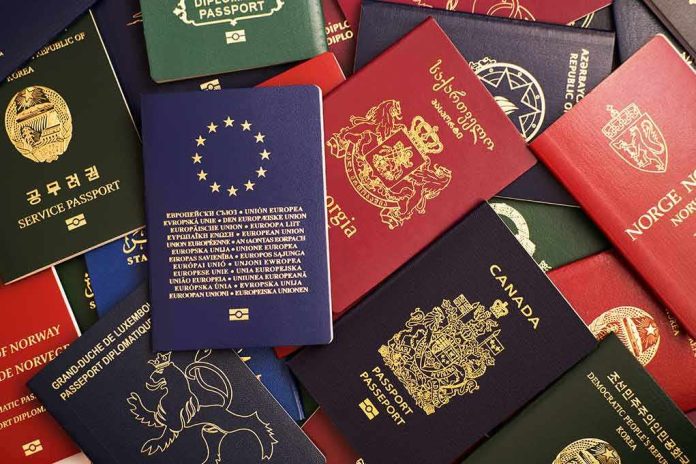
Flávio Bolsonaro lost Brazil’s presidential runoff on a Sunday, and by Monday a Supreme Court justice had already stripped him of every passport he holds and barred him from leaving the country.
Quick Take
- Justice Alexandre de Moraes ordered Flávio Bolsonaro to surrender all his passports within 24 hours, one day after he lost the presidential election to Luiz Inácio Lula da Silva.
- The order covered his ordinary passport, his diplomatic passport, and any foreign passport, and tied the travel ban to a money-laundering investigation involving lawyer Willer Tomaz.
- Bolsonaro missed the deadline, and police later cancelled the documents; he says he never planned to flee and calls the move political.
- Moraes has a history with this family — he also kept Jair Bolsonaro’s passport confiscated over an alleged coup plot, a precedent now shaping how this new order gets read.
The Order Came Fast, And It Came Hard
Justice Alexandre de Moraes issued the ruling on October 26, 2026, the day after Flávio Bolsonaro’s election loss became official. The order demanded surrender of his passports within 24 hours and barred him from leaving Brazil. It also stopped him from contacting Willer Tomaz, the lawyer named alongside him in a money-laundering investigation tied to companies and online sports betting.
This was not a single document. The order cancelled his standard Brazilian passport, his diplomatic passport tied to his Senate seat, and required him to hand over any passport issued by another country. Federal Police were also told to flag a departure alert in Brazil’s immigration system, closing off any quiet exit through an airport or border crossing while the order stood.
A Missed Deadline Turned Into Cancelled Documents
Two sources familiar with the matter told Reuters that Bolsonaro did not meet the 24-hour window. Shortly after, authorities cancelled the passports outright. Bolsonaro posted a video acknowledging the summons and said he would comply, insisting he had “never considered” leaving the country, even as he prepared to fight the order itself.
His own words, captured in Brazilian outlets, frame his objection clearly. He asked whether a comment his brother Eduardo made about leaving Brazil if the election was lost was reason enough to take his passport, calling the decision political because it landed “right after the announcement of the election result”. He said he would hand over the documents while defending himself against what he called “essa aberração” — this aberration.
Why The Timing Matters To Skeptics
A measure landing within 24 hours of an election loss invites scrutiny, and that scrutiny is fair. Courts acting with speed against a defeated politician’s family member will always draw comparisons to political retaliation, whether or not the underlying investigation has merit. Americans who watched their own election-season legal battles play out know exactly how that instinct feels, and it deserves a hearing, not dismissal.
Commentary circulating in Brazil pressed the same point, questioning why the Supreme Court moved with such urgency and whether the same order would have come down had Bolsonaro won. That is a legitimate question about judicial consistency, even if it does not by itself disprove the stated justification tied to the money-laundering probe.
This Court Has Done This Before
Moraes is not improvising a new legal tool. The same justice has kept Jair Bolsonaro’s passport confiscated since February 2023 over an alleged post-election coup plot, a restriction the court upheld again this year on flight-risk grounds. That history cuts both ways. It shows a judge willing to use passport seizure as a standard precaution against flight risk, but it also feeds suspicion among Bolsonaro supporters that the tool gets reached for specifically when their family loses power.
🚨 BRAZIL'S ELECTION DRAMA DEEPENS.
After losing to Lula, Flávio Bolsonaro missed a court deadline to surrender his passports. Police are trying to locate him, and the documents were cancelled.
Argentina says it has no record of his entry. Where is he?#Brazil pic.twitter.com/MeII71dULZ
— TwistWire (@TwistWireMedia) October 27, 2026
What is not yet public is the full written order — its case number, its legal citations, and the specific evidence the court relied on to call Flávio Bolsonaro a flight risk. Until that document surfaces, both sides are arguing from summaries and quotes rather than the ruling itself. That gap is worth watching, because a justice system that asks citizens to trust fast, sweeping orders against political figures owes the public a fast, transparent paper trail to match.
Sources:
insiderpaper.com, www1.folha.uol.com.br, nytimes.com, g1.globo.com, economictimes.com, chosun.com, economictimes.indiatimes.com, portal.stf.jus.br