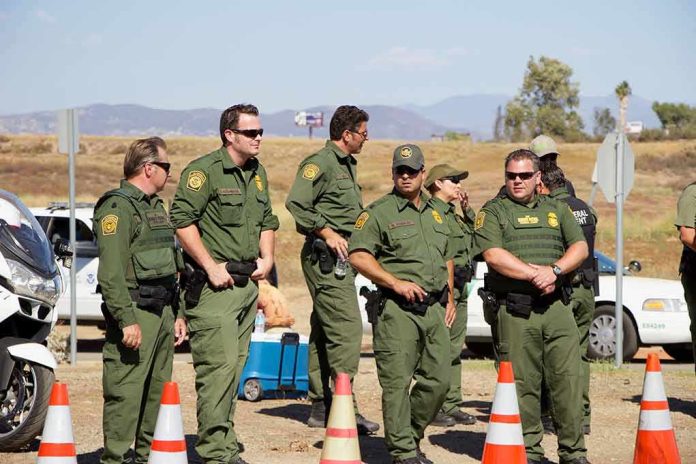
A Department of Homeland Security alert warned that cartel-linked smugglers may try to kidnap U.S. border agents near Presidio and El Paso.
Story Snapshot
- Internal alert flagged a kidnap threat against U.S. Customs and Border Protection agents in West Texas.
- The suspected cover involved moving migrants from Colombia and Venezuela across the border.
- U.S. Customs and Border Protection said it vets threats and uses robust mitigation methods.
- The warning focused on the Presidio and El Paso operational areas.
A clear warning and a focused corridor
Department of Homeland Security sources provided an internal alert that pointed to a kidnap plot targeting U.S. Customs and Border Protection agents in the Presidio and El Paso corridors. The alert said initial reporting indicated the operation may include attempts to seize law enforcement personnel. The reporting placed the threat squarely in those West Texas sectors, which sit along active smuggling routes. The specificity of place matters. It tells frontline units where to raise their guard and how to adjust patrol patterns if needed.
The alert described a known smuggler preparing to move migrants from Colombia and Venezuela as part of the cover for the operation. That mechanism tracks with how cartels blend human smuggling, scouting, and distraction. Moving people can mask surveillance, create chaos at contact points, and expose isolated agents. The tactic also exploits humanitarian instincts and split-second judgment. Agents must screen and protect migrants while also watching for bait-and-switch threats in the brush, arroyos, and culverts that dot the region.
Agency response and what “robust” looks like
U.S. Customs and Border Protection said it maintains proactive intelligence on foreign actors who threaten the homeland and vets information to determine validity. The agency also said it uses robust mitigation methods, without detailing tactics. That language lines up with core doctrine. The agency’s published strategy stresses building an intelligence picture to find and shrink high-impact risks. The goal is fast awareness at the edge and steady decision support at the top, so agents do not fight blind.
Practical steps in a case like this can include buddy-team patrols in high-risk zones, altered shift patterns, rapid alerting to agents’ devices, and tightened protocols for vehicle stops. Supervisors may surge mobile response units and place air assets on call. Field intelligence units push spot reports that refresh threat context by the hour. These measures aim to deny kidnappers surprise, complicate target selection, and shorten the time from first contact to backup on scene, which saves lives.
Why the threat vector matters now
This warning fits a familiar border security pattern: early intelligence circulates, sectors posture up, and public details stay limited because exposure can burn sources and methods. Homeland security was built to act on indications and warnings before an attack, not after. That system prioritizes speed and precaution, so you often see alerts before arrests. The tradeoff is less public detail in the moment and more weight on professional judgment inside the wire.
The El Paso and Presidio focus is notable because terrain and traffic there can stretch response times. Long, empty stretches make ambushes easier and rescues harder. A kidnapping attempt would aim to embarrass the United States, weaken agent morale, and win leverage for prisoner swaps or concessions. Conservative instincts say meet that with clarity and strength: protect the front line, deny cartels any propaganda win, and ensure consequences are fast, certain, and public when actors are identified.
What to watch next
Watch for visible posture shifts along those sectors: more marked units in chokepoints, layered checkpoints, and tighter perimeter control around stations. Listen for updates from sector chiefs to local sheriffs, who often share practical safety notes when a risk rises. Monitor whether federal partners like the Federal Bureau of Investigation open parallel lines on kidnapping conspiracies, a common move when plots target federal officers.
Expect U.S. Customs and Border Protection to say little about the underlying collection. Silence does not mean stasis. It usually means the work moved from warning to hunting, with agents briefed, routes altered, and quick-reaction plans rehearsed. One line of caution applies: outlets noted that some reporting used tentative phrasing as investigators refined the picture. The mission remains the same either way—keep agents safe, disrupt cartel planning cycles, and hold the line so families on both sides of the border can live without fear.
Sources:
townhall.com, diario.mx, newsnationnow.com, nampa.org, dhs.gov, x.com