Putin shut the door on ceasefire talks and tied the lock to a shattered bridge.
Story Snapshot
- Putin said no ceasefire negotiations after strikes on the Crimean Bridge.
- He warned of a “much more painful” response than the bridge damage.
- Ukraine cast the bridge as a military route and claimed planned strikes.
- The bridge’s role mixes hard logistics with heavy symbolism.
Putin’s Red Line After The Kerch Bridge Strikes
Vladimir Putin stated that Russia would not negotiate limited ceasefires with Ukraine after fresh strikes hit the Crimean Bridge. He said he had weighed possible maritime and energy pauses with Russia’s Security Council but ruled them out after the attack. His message was short and sharp: no deals after hits on the bridge, and a response will follow. He added that Russia’s answer would be “much more painful” than the damage Ukraine caused to the span.
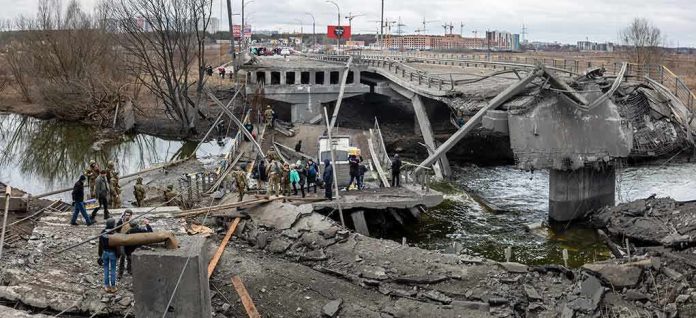
His stance came after reports that blasts damaged parts of the bridge and led authorities to restrict traffic. The bridge links mainland Russia to occupied Crimea, so any hit lands both on steel and on pride. Putin framed the bridge as a civilian route and claimed it had lost military use. Open sources dispute that view and point to years of dual-use traffic. The lack of public cargo records leaves that clash unresolved in the open record.
Kyiv’s Case: Target The Supply Spine, Not Civilians
President Volodymyr Zelenskyy said the strike answered Russian attacks on Ukrainian infrastructure. He called it part of a weeks-long, staged operation run by the Security Service and the General Staff. He described the effort as deliberate and planned, not a one-off. Kyiv’s line is simple: the bridge moves troops and fuel, so it is a lawful military target in wartime, not a commuter overpass.
Ukrainian and independent reporting described the bridge as vital for moving Russian reinforcements and supplies. Analysts and outlets have called it a key artery for the war effort and a symbol of the 2014 seizure of Crimea. The mix of military value and political meaning makes every strike louder than the blast itself. That dual role explains why Moscow faces pressure to respond, and why Kyiv keeps aiming at it.
Ceasefires Narrowed To Sectors, Then Scrapped
Putin linked the “no talks” line to sector-based pauses. He mentioned maritime and energy channels as options his team had discussed. He then said those options were off the table due to the bridge attack. This follows a wartime pattern where both sides test narrow deals to reduce risk in specific areas but pull back when fresh shocks hit. Sector deals can save lives and goods, yet they often lack deep trust or teeth to last.
This reset matters beyond the Black Sea. Pauses around shipping and power grids can shield grain flows and keep heat on in winter. Walking away raises costs for civilians who have no say in any strike. It also gives field commanders fewer off-ramps when pressure spikes. The result is a harsher, faster cycle: hit, answer, escalate, repeat. That cycle favors whoever can absorb pain and still move ammo and fuel to the front.
What “Much More Painful” Likely Means
Russia controls long-range missiles and drones that can hit deep across Ukraine. A “more painful” answer likely means strikes on energy nodes, rail hubs, and defense plants. That pattern has appeared after past shocks. Putin did not name targets or timing. The phrase sets intent, not limits. From a conservative, common-sense view, threats without clear ends risk waste. Deterrence works when goals are defined and force links to an achievable outcome.
Putin regarding the Ukrainian (actually UK/NATO) strike on the Kerch Bridge:
“Our response will be much more painful than what Kyiv did to the Crimean Bridge. I want everybody to know that.” pic.twitter.com/55QI2ivdt7
— Professor Iratus Genium (@PGenium) November 19, 2026
Ukraine will try to blunt any surge with air defenses and dispersal. Kyiv will also press that the bridge is a fair target and that Russia rejected de-escalation. Zelenskyy has said Ukraine offered steps toward calm that Moscow spurned. That claim, if sustained, frames Putin’s stance as a choice, not a forced move. Washington and Europe will watch whether retaliation sticks to military aims or slides toward civilian hardship that hardens resolve instead of breaking it.
What To Watch Next
Three signals will tell the next chapter. First, the pace and precision of Russian strikes in the coming days will show how “painful” becomes real and whether it narrows or widens the war’s focus. Second, satellite and open-source images of the bridge will reveal repair speed and any shift in use patterns that change its value in the campaign. Third, any back-channel effort on shipping or energy, even after tough words, will hint at limits both sides still respect.
Sources:
cbsnews.com, hromadske.ua, internazionale.it, nytimes.com, independent.co.uk