That quick tap on your trunk is a safety move with a paper trail of fingerprints and a split-second read on you.
At a Glance
- Officers often touch the rear of a stopped car to mark it with fingerprints.
- The tap doubles as a trunk check to confirm it is latched and not hiding a threat.
- Some officers use the touch to jolt the cabin and read behavior in real time.
- The practice is long-standing, taught in many circles, though not mandated by law.
What that quick tap really does at a traffic stop
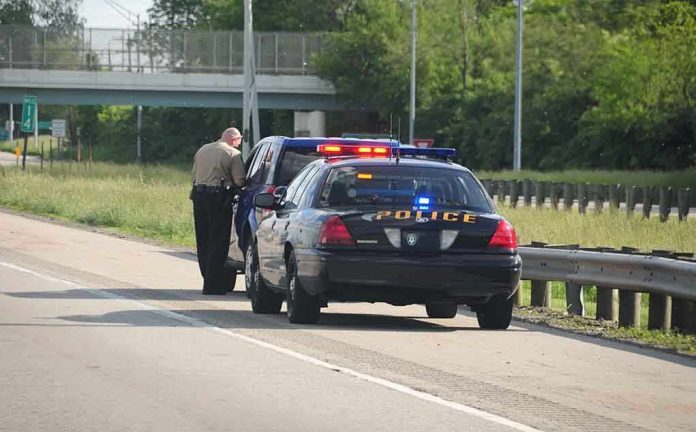
Patrol officers approach from the rear, palm or fingers out, and touch the trunk or tail light. The move serves a few jobs at once. First, it can leave an identifying print that ties the officer and the stop to that exact vehicle if the driver flees or violence erupts. Second, it confirms the trunk is secure. A trunk popping open at arm’s length is a risk no officer wants to discover late. Third, it pauses the moment long enough to read the cabin’s reaction.
These reasons repeat across training-adjacent explainers, legal talk-throughs, and auto media. The story is stable even when sources differ on emphasis. Some highlight the fingerprint angle first. Others stress the trunk check. A few point to the tactical pause. None claim a magic shield. It is about stacking small edges in a risky job. Critics note that body cameras now document stops, which can reduce the need for a physical print, but the habit persists in many places.
Why fingerprinting still matters in the camera era
Body cameras and dash cameras record a lot, but they do not cover every angle. A split-second lunge or a car that bolts may outrun video clarity. A latent print on the rear panel can still link the contact to the car in later reports, especially if the plate was obscured or swapped. The sources repeat this idea, even though they do not cite a famous case where a tail light print broke things open. That absence does not erase the logic; it shows this is a low-cost hedge.
Common sense says evidence redundancy helps the truth win. A print can support the video, radio logs, and plate checks. That aligns with conservative values on rule of law: build simple, lawful steps that deter flight and aid prosecution, without burdening the public. No law forces the touch, and no one’s rights shrink when an officer taps a trunk. The move asks nothing from the driver but patience for a few extra seconds.
The trunk check and the split-second read
Officers face the unknown at every stop. A trunk that is not latched can swing or hide a person. The touch tests the seal. If it shifts, the officer adjusts position, calls a second unit, or changes the approach angle. That is not drama; it is survival. The same touch can rattle the cabin just enough to spark eyes in the mirror, hands moving, or a quick shove toward the glove box. That micro-beat helps an officer judge risk before stepping into the driver’s window zone.
Congress is coming for the cameras that photograph your car.
On July 21, Rep. Tim Burchett filed H.R. 9800, the Protection Against Mass Surveillance Act. It bans every federal agency from buying, operating, or even accessing automated license plate readers. Flock Safety is named… pic.twitter.com/LoLyCTwDbj— Professor Landon Kirby (@LandonKirby6) August 12, 2026
Some describe the startle effect as theater. Others call it reading the room. Either way, road policing is pattern recognition under stress. A brief tap can surface tells that video might miss in the moment. That said, there is no proof in the public record that the tap by itself lowers assault rates or stops ambushes. It is part of a bundle: lighting, channeling the car to a safe spot, waiting for backup when needed, and keeping the officer’s body off the direct line of travel.
Is it required policy or just durable practice?
The public record does not show a coast-to-coast rulebook page ordering every officer to touch every car. Explainers and interviews frame it as common training and fieldcraft, not a legal duty. One outlet even notes there is no law that requires leaving a print. That fits how real policing works: agencies teach approach tactics, then allow officer discretion based on time, place, and threat. The habit appears widespread and long-standing, even if not universal.
What drivers should do when they feel the tap
Stay calm, keep hands visible high on the wheel, and wait for instructions. The touch is not a gotcha. It does not signal guilt. It signals the officer is running a tested checklist that keeps everyone safer. If you disagree with the stop, record the exchange, accept the citation, and contest it later. On the roadside, clarity beats debate. Lights on, windows down a notch, engine in park, and simple answers keep the stop short and clean for both sides.
Sources:
youtube.com, wikihow.com, facebook.com, thelawdictionary.org