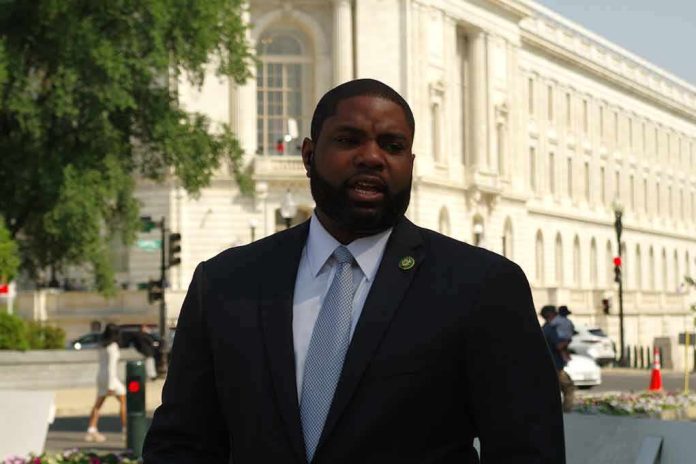
Byron Donalds just became Florida’s first Black governor, and within hours a rival cable host suggested his skin color doesn’t make him “kinfolk” to the people who share it.
Quick Take
- Byron Donalds beat David Jolly by about 108,000 votes, becoming Florida’s first Black governor
- MS NOW host Symone Sanders Townsend said Donalds would just continue Governor Ron DeSantis’s agenda, calling him “skinfolk” but not “kinfolk”
- Opinion writers at The Miami Times and The Afro argued his alliance with President Trump and DeSantis works against Black political interests
- Political scientists have debated this exact question for decades: does shared race guarantee shared representation?
A Historic Win, Counted Vote By Vote
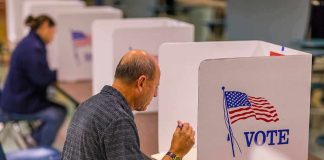
The Associated Press called the race on November 4, reporting Donalds won with 4,132,355 votes, or 50.0 percent, against 4,024,669 votes, or 48.7 percent, for Jolly, with 99 percent of ballots counted. The margin came to roughly 108,000 votes statewide.
NBC News, CBS News, and Florida Public Media all confirmed the historic nature of the win. Donalds becomes Florida’s first Black governor and, according to the Associated Press, the first elected Black Republican governor in United States history.
The race wasn’t a landslide. WUSF described it as unexpectedly competitive, and a swing of just over one point either way could have changed the outcome. That narrow margin matters, because it means Donalds built a real, contested coalition rather than coasting to an uncontested finish.
A Cable Host Questions His Blackness
Symone Sanders Townsend, host on MS NOW, acknowledged the historic win but quickly pivoted to doubt. She said Donalds “is making history, but he is going to continue the political direction that Ron DeSantis is going to continue in Florida,” then added a phrase meant to sting: “all kinfolk ain’t skinfolk.”
Sanders Townsend pointed to a Donalds radio appearance that morning, saying he “sounded similar to Ron DeSantis” when asked about policy. The framing suggests that because Donalds holds conservative views, his racial identity shouldn’t count as real representation for Black Floridians.
She wasn’t alone. The Miami Times ran an opinion piece arguing Donalds built his political identity around Trump and DeSantis, two figures the writer said have “undermined, undercut and trampled” on Black Americans’ rights. A similar piece in The Afro, written by two labor union officials, claimed Donalds ignores “real, structural issues” tied to race.
The Real Debate: Shared Skin Versus Shared Interests
This fight has a name in political science: descriptive representation versus substantive representation. Descriptive representation means an official looks like you. Substantive representation means an official actually acts in your interest. Scholars have argued over which one counts as “real” representation since at least the 1960s.
Research on this question cuts both ways. Some studies find Black lawmakers, on average, deliver more co-racial legislative outcomes than non-Black lawmakers, and that gap has widened over time. Other research finds race alone doesn’t guarantee voter loyalty, because Black voters are discerning and weigh policy, not just identity.
Here’s the problem with Sanders Townsend’s line of attack. Florida voters, including many Black voters, cast real ballots in a real election. Deciding after the fact that a winner isn’t “authentically” Black enough because he’s conservative isn’t analysis. It’s a racial litmus test, and it’s the exact kind of test conservatives have spent decades arguing against. A man’s politics should be judged on the merits, not measured against a checklist of approved opinions tied to his race.
Donalds has given critics plenty to argue about on policy, including his 2023 criticism of how Florida teaches African American history and his opposition to critical race theory in higher education, which drew pushback at a Florida A&M town hall in September. Those are fair fights to have. Questioning whether he counts as “really” Black is not.
What Comes Next For Florida
Donalds takes office in January 2027 and will govern a state that just handed Republicans nearly three decades of unbroken control of the governor’s mansion. He’ll face scrutiny from both sides: conservatives watching whether he holds the DeSantis line, and critics like Sanders Townsend waiting to say “I told you so” at the first sign of a policy they dislike. The vote totals, at least, are settled.
Sources:
redstate.com, apnews.com, nbcnews.com, thetimes-tribune.com, theledger.com, foxnews.com, politico.com, afro.com, newsbusters.org