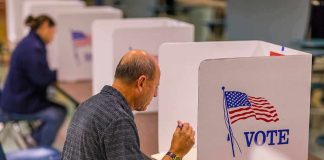
CBS News’ early exit polls pegged President Trump’s approval among 2026 midterm voters at 38%, a post-2000 low for a sitting president on a midterm ballot.
Story Snapshot
- CBS labeled the findings “early exit polls” as voting wrapped and reports posted.
- The early read suggested historically low approval for President Trump among midterm voters.
- Issue questions highlighted voter focus beyond the horse race, per CBS’ toplines.
- Exit polls offer fast context but need final weighting against actual results.
What CBS Reported As Polls Closed
CBS News published preliminary exit-poll findings as polls closed in waves across states. The report led with a specific number: 38% approval for President Trump among those who voted, identified as an early estimate from same-day surveys. The desk framed it as a historical marker among midterm presidents, citing comparisons back to President George W. Bush’s 2006 rating. The piece presented voter issue snapshots alongside the approval figure, underscoring that the data aimed to describe who voted and what mattered to them.
The network also ran a live election-day update stream and primetime segments repeating the 38% figure, while cautioning that these were early exit-poll reads, not final canvass results. The structure matched common election-night practice: share early signals, flag them as preliminary, and layer in issue crosstabs as turnout patterns emerge. That approach helps viewers grasp the electorate’s mood before full results arrive, without claiming that survey data alone decides winners.
Why Early Exit Polls Get Reported
Election-night journalism uses exit polls for two jobs: explain the electorate and inform projections. The first job is safer. Surveys at precincts and through early-voter samples can show which issues drove choices, and how groups split. The second job demands more care. Raw exit-poll data often need weighting against actual vote totals and additional models before they mirror the final electorate. Academic reviews stress that step has always been essential.
Major outlets now blend in-person precinct interviews with pre-election surveys of early and mail voters. That method aims to catch the full voting universe, not just election-day traffic. Newsrooms then adjust for nonresponse and demographics, and later benchmark against counted votes. Networks explain this process on-air and online, in part to help viewers separate fast context from official results and projections posted later in the night.
What The 38% Approval Signal Meant
A 38% approval among voters suggested a tough environment for the party in power. CBS linked the number to recent midterm history and set expectations that low presidential standing usually weighs on allied candidates down the ballot. Subsequent CBS coverage framed Democratic gains as consistent with a sour national mood on the economy and leadership, arguing that voters who rated conditions as bad broke toward Democrats in key races. That arc fits basic political gravity: when voters feel pinched, they punish the top of the ticket.
Conservative readers should ask two things. First, was the figure clearly labeled as early? CBS checked that box, which is the minimum for honest reporting. Second, do exit polls often tilt left early due to who answers? Scholars and practitioners have documented nonresponse gaps by party, which can inflate early numbers for Democrats until weighting and votes rein things in. That is why responsible outlets treat early reads as context, not conclusions.
How To Read Exit Polls Without Getting Burned
Anchor on what exit polls do best: telling you who voted and what issues moved them. Treat topline approval and issue rankings as signals, not final scores. Look for whether the newsroom tags numbers as “early,” shows methodology basics, and updates findings as votes are counted. Expect shifts through the night as weighting locks in. Keep one eye on official results and one eye on the story the electorate is telling about prices, safety, schools, and trust in Washington.