Irish police stopped a car near the Northern Ireland border and say the explosive device inside could have turned a quiet stretch of road into the next headline-grabbing terror scene.
Story Snapshot
- Police intercepted an “extremely significant” bomb in a car near the Irish border.
- Officers say the device was likely linked to dissident republican activity aimed at Northern Ireland.
- A young woman driver and a man in his forties were arrested on suspected offences against the state.
- The case fits a growing pattern of renewed bomb plots and car attacks targeting police and communities.
Car bomb intercepted on the N2 near the border
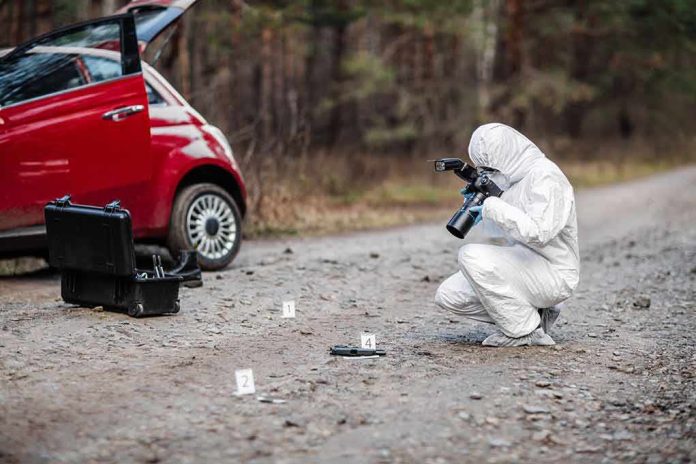
Irish police moved on the car during a planned, intelligence-led operation on the N2 road south of Carrickmacross in County Monaghan, just a few miles from the open border with Northern Ireland. Garda officers stopped the vehicle and, based on what they found, immediately called in the Irish Army’s Explosive Ordnance Disposal team. That specialist unit examined the car, made the device safe, and removed it for detailed forensic work, which officials say is still sensitive.
Senior police figures did not downplay the risk. Garda Commissioner Drew Harris described the car bomb as an “extremely significant” device, the kind of weapon that could have caused major loss of life or serious damage if it had reached its target. National broadcaster coverage, echoed by major outlets, reported that the explosive was believed to be on its way across the border for an attack in Northern Ireland. Police say the operation prevented an attack rather than simply finding a dangerous device by chance.
Suspected dissident republican plot and early arrests
The investigation is focused on suspected dissident republican paramilitary activity, the loose network of groups that reject the peace settlement and aim to pressure the British state and local police through violence. Garda officers arrested the driver, a woman in her twenties, at the roadside and later confirmed she is being held on serious offences against the state. A man in his forties was also arrested in connection with the plot, suggesting the car run was part of a wider operation rather than a lone act.
Reporters and social media commentary have highlighted that the woman is a law student or trainee solicitor, which makes the case feel more chilling to many people. It fits a trend where educated young adults sometimes get drawn into extremist politics that have very little to offer everyday citizens. From a common sense and conservative point of view, that detail reinforces why strong security laws and clear consequences matter; they discourage people from thinking terror plots are just “politics by other means.”
A long border and a familiar kind of bomb threat
The Irish border is long, open, and winding. That makes it hard to monitor every car and track every small movement, especially at night or in bad weather. Dissident republican groups have used that geography for years. Police in Northern Ireland and the Republic have previously found large devices hidden in vans or cars near the border, including a 600-pound bomb that officers said showed “destructive, murderous intent.” In this latest case, officials again stress that the bomb was ready to cause serious harm.
Security experts say dissident republican paramilitaries have become more skilled at building explosives, using homemade mixes and off-the-shelf parts to assemble improvised explosive devices designed to kill police and shake public confidence. These are not battlefield weapons, but they are still deadly. They are built in houses and sheds, moved on normal roads, and aimed at police stations, patrols, or crowded areas. That mix of crude tools and serious intent is what keeps security agencies on high alert along the border.
Links to recent car bomb attacks on police
This interception does not stand alone. Northern Ireland has seen a series of car-based attacks that look like part of a renewed campaign by the group calling itself the New Irish Republican Army. In Dunmurry, on the edge of Belfast, attackers hijacked a delivery driver, loaded a gas cylinder device into his car, and forced him to drive it to a police station, where it later exploded as officers evacuated nearby homes. Police believe the device was intended to kill officers and cause maximum harm in a residential neighborhood.
An "extremely significant" car bomb has been intercepted by Irish police near the border with Northern Ireland.
A female driver in her 20s has been arrested after Irish police discovered the explosive during an operation targeting "dissident republicans".
The device was found… pic.twitter.com/pS1ZFJGQxz
— World Source News (@Worldsource24) July 24, 2026
A similar plot in Lurgan weeks earlier followed almost the same script; a delivery driver was forced at gunpoint to move an improvised bomb to a police station before officers carried out a controlled blast after evacuating around 100 homes. Investigators and local leaders see these attacks as attempts to destabilize the peace deal that ended the Troubles and to prove dissident groups are still “relevant.” From a conservative and practical view, these tactics only show why firm policing and cross-border cooperation are crucial, not optional.
Early claims, limited public details, and why the threat still matters
One pattern in these cases is that police must speak strongly before all details are public. Officers call devices “significant” or “potentially devastating” early on, while forensics and court evidence take months. Some critics later argue that the public record is thinner than the dramatic language. That argument appears in many security stories. But here, the chain of recent car bomb attacks on police stations, plus the border history, give weight to Garda warnings and justify serious concern.
For ordinary people, especially older readers who remember nightly news from the Troubles, this story is a sobering reminder. The peace settlement reduced large-scale violence, but it did not erase extremist groups or their hatred of police and stable government. When officers stop a car bomb short of the border, they are not only saving lives in that moment. They are also defending the idea that disputes should be settled by voting and debate, not by gas cylinders and improvised explosives in family neighborhoods.
Sources:
insiderpaper.com, euronews.com, reuters.com, bbc.com, news.sky.com, washingtonpost.com, theguardian.com, dw.com, bbc.co.uk