The Democratic Party tied debate access to a public stand against dark-money help, and that flips the primary chessboard.
At a Glance
- The Democratic National Committee set 12 primary debates starting next June.
- Candidates must sign a pledge denouncing outside spending that helps them or attacks rivals.
- Failure to denounce can cost a spot in the next debate.
- The rule targets super PACs and donor-shielded nonprofits, but cannot stop them from spending.
Debate Access Now Rides On A Public Denunciation
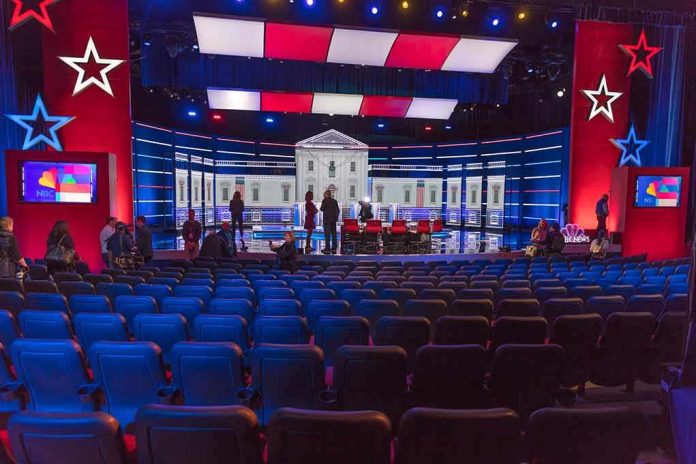
The Democratic National Committee announced a Fair Campaign Practices Pledge for the 2028 primary that links debate eligibility to how candidates handle outside money. Candidates must denounce spending by outside groups that either supports their own campaign or attacks Democratic rivals. The committee paired the pledge with a packed slate of 12 debates to manage a crowded field. Tying behavior to a real consequence matters more than yet another press release about reform. The consequence is blunt: ignore the pledge and risk missing the next debate.
The pledge tries to close a familiar loophole. Candidates often condemn harsh attacks while still enjoying “independent” boosts from friendly groups. The new rule reaches both sides of the coin, requiring denunciations of help and harm alike. That design choice matters in a long primary where waves of outside ads can quietly shape name identification and early narratives. It also sets a test of discipline. Campaigns that crave the stage must police not only their message but also the political wind at their backs.
What Counts As Dark Money, And Why It’s Hard To Police
The framework points straight at super political action committees and at nonprofit groups organized under section 501(c)(4) of the tax code. Super political action committees can raise and spend unlimited sums from people and corporations. Nonprofit groups under section 501(c)(4) often do not reveal their donors in public filings, making them useful conduits for anonymous money. The party’s pledge cannot change federal law. It can only force candidates to say no, loudly and on the record, when those groups intervene.
That limit creates tension. The Democratic National Committee can pressure candidates, but independent groups remain free to spend. The committee even acknowledges it lacks legal power to ban such groups entirely. The result is a political norm enforced by debate access, not a courtroom order. Skeptics call this symbolic because the money can still flow; the new cost is public shame and the loss of a microphone. In a media cycle that rewards conflict, shame may not be enough to move the needle.
The Enforcement Problem In A 12-Debate Marathon
The pledge includes a complaint channel. Campaigns can report outside spending to the party. If the committee agrees the spending falls under the pledge, it can require a denunciation and threaten debate eligibility if the campaign fails to comply. The reporting to date does not spell out definitions, timelines, or an appeals process. Missing standards increase the risk of rushed or uneven calls when the calendar speeds up. A crowded stage means more ads, more complaints, and less time to sort them cleanly.
The digital battlefield raises fresh headaches. Television and mail leave clearer trails. Social media ads, targeted videos, paid influencers, and artificial-intelligence content are harder to track in real time. The pledge mentions broad media types in summaries, but it does not show that the party has deep access to platform data or private vendor records. Expect disputes over whether a post was covered, who paid for it, and when a denunciation must happen. The biggest campaigns will hire researchers. Others may fall behind the fog.
Who Benefits, Who Loses, And What This Says About Power
Critics warn the rule tilts the field. Rob Flaherty argued that candidates could be swamped by negative outside spending while being required to disavow any outside support that might help them fight back. He also said self-funders could gain an edge, since they can bankroll early ads without leaning on super political action committees. HuffPost reported the pledge does not apply to the general election, so groups can reload for November even if primaries get scrubbed of public blessings. Those claims track with common sense: rules bite hardest where they actually apply.
Democrats Roll Out 2028 Primary Debate Rules With 12-Debate Slate and Dark-Money Pledge
• The DNC set a 12-debate schedule for the 2028 Democratic primary, starting with five debates in 2027 beginning in June.
• A new Fair Campaign Practices Pledge requires 2028 hopefuls to…— Newstro (@Newstro) November 23, 2026
News outlets framed the move as real, but limited. NBC characterized the pledge as mostly symbolic. It cannot stop outside spending; it can only hang a political cost on it. That is accurate as far as it goes. Yet symbols matter when the ticket to the next debate hangs in the balance. A candidate backpedaling on a denunciation days before a big stage risks a storyline that drowns their message. In a long primary, momentum is currency. Risking it for a shadowy assist looks like a bad trade.
What Would Make This Rule Credible
The party could publish the full pledge and every implementing guide, including definitions, evidence standards, deadlines, and a clear appeals track. A public dashboard of complaints, decisions, and outcomes would allow voters to judge fairness. An independent panel of election lawyers and auditors could review contested calls before debate cutoffs. These steps would not change federal law, but they would test a simple idea: sunlight plus standards can tame the worst habits of the primary money game.
Sources:
redstate.com, actionnews5.com, charlotteobserver.com, nytimes.com, newsnationnow.com, abcnews.com, nextnewsnetwork.com, huffpost.com