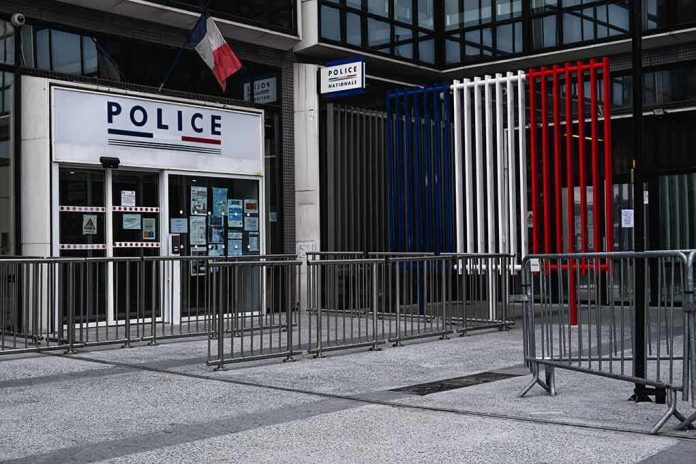
France moved to lock down hot spots in the north with targeted night curfews after a weekend of burned town halls and mass looting.
Story Snapshot
- The prime minister called for “local and partial” curfews after severe unrest.
- The goal was to stop fresh riots and protect businesses from more damage.
- Officials rejected a nationwide curfew and kept Paris off the list.
- At least one northern city, Denain, put a 9 p.m. to 6 a.m. curfew in place.
Localized Curfews Ordered After Violent Weekend
Prime Minister Sébastien Lecornu told local officials to impose targeted night curfews after two days of street violence across France. He said the curfews must be local and partial, and he ruled out putting all of Paris under curfew. Reports described burned municipal buildings, heavy looting, and attacks on public property. Lecornu framed the goal in plain terms: keep the peace overnight and shield businesses from more harm while police regain control.
Authorities said mayors and prefects would decide the exact maps and hours after quick consultations. The government stressed speed and focus over a one-size-fits-all plan. France saw widespread unrest, but the orders aimed at specific cities hit hardest, especially in the north. This design fits a core idea of responsible policing: act where the problem is sharpest, and avoid blanket rules that burden peaceful neighborhoods. That choice tracks with conservative principles of order, restraint, and local accountability.
Scope, Timing, And What We Know So Far
Lecornu kept the door open to a state of emergency if needed, but said localized curfews looked better for the moment. He presented them as a measured tool to stop night violence without sweeping national powers that reach far beyond the streets. This stance seeks balance between safety and freedom. It also signals to shop owners and residents that the state will protect them without rushing to the harshest legal steps available.
The initial announcement did not list every city, boundary line, or enforcement detail. That reflects how French public order often works in practice: the prime minister sets direction, then local leaders make the rules fit their terrain. One clear northern example came fast. The mayor of Denain set a curfew for adults and minors from 9 p.m. to 6 a.m., with the order running a full week. That concrete move showed how the government’s call translated on the ground.
Why A Curfew Now, And Why Not Everywhere?
Police faced opportunistic looting and attacks on civic buildings during late hours. Leaders judged that limiting night movement in a few flashpoints would remove cover for vandals and give officers room to work. They also argued that a narrow curfew respects law-abiding people elsewhere. In blunt terms, punish the chaos, not the country. That logic aligns with common sense: you lock the broken door, not the whole house, and you post a guard where the break-in happened.
In a departure from promises made yesterday by President Macron not to impose curfew, the 🇫🇷French Prime Minister Sébastien Lecornu today announced “limited" and "localised" curfews in response to the nationwide riots.
The formerly know “student protests” escalated the last… pic.twitter.com/A04loew0jI
— Dovydas Vitkauskas (@Dovydas44444) October 19, 2026
The choice to avoid a Paris-wide order reflects risk triage. Citywide curfews hit workers on night shifts, late deliveries, and family care. Local leaders said they want to cut harm, not daily life. The stated aim was to calm the worst areas by Monday and Tuesday nights, protect stores that just restocked, and deter roving groups looking for soft targets. That requires clear rules, visible patrols, and quick penalties for anyone who tests the line.
What To Watch Next
Officials will release more details as municipal and prefectural orders post. Expect different hours, mapped zones, and targeted exemptions for medical and work needs. The government said it hopes the limited curfews make broader steps unnecessary. If violence drops in the affected cities, leaders can lift the rules on schedule. If fires and looting resume, Lecornu signaled stronger measures are on the table, including a state of emergency if the facts demand it.
France has used local curfews during past unrest, and the tool sits in a well-known public order playbook. The current plan follows that line but stays short of national emergency powers. The test now is simple and concrete. Do the curfews cut night damage and protect businesses without punishing peaceful residents? If the answer is yes by midweek, then targeted rules, firm policing, and fast local action will have done the job they were meant to do.
Sources:
insiderpaper.com, france24.com, reuters.com, haberintelifi.aa.com.tr, bostonglobe.com, charter97.org