U.S. forces sank an Iran-affiliated dhow after removing its crew, saying it had tracked and targeted American warships in the Gulf of Oman.
Story Snapshot
- CENTCOM said the dhow surveilled and targeted U.S. Navy ships on October 6 in the Gulf of Oman.
- Forces evacuated the crew before destroying the vessel; repatriation is underway.
- Media outlets carried the same core account and timeline from CENTCOM.
- The command linked the action to months of Iran’s Islamic Revolutionary Guard Corps activity against ships.
What CENTCOM Says Happened
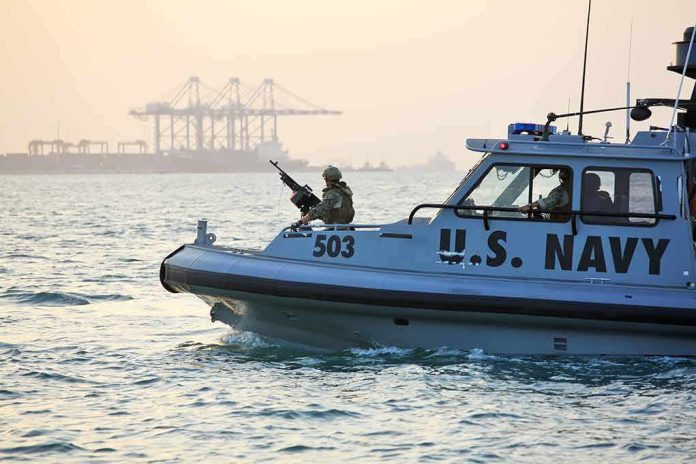
United States Central Command (CENTCOM) reported that on October 6, U.S. forces destroyed an Iran-affiliated dhow in the Gulf of Oman after it conducted surveillance and targeted U.S. Navy ships. CENTCOM said the crew was taken off the boat before it was sunk and that repatriation efforts are underway. The statement framed the strike as a response to direct force protection needs for American vessels in a high-threat waterway. The announcement came on October 14 with clear date and location details.
Several outlets reported the same facts from the CENTCOM statement. Regional and international coverage repeated the dhow’s alleged role, its link to Iran, the crew evacuation, and the destruction date. Al Arabiya, Kurdistan24, Fox News, and the Times of Israel all published versions of the account. None named a specific U.S. ship or showed the underlying intelligence, but they aligned on the timeline and asserted rationale for the strike based on CENTCOM’s release.
Why The Gulf Of Oman Matters
The Gulf of Oman sits on the approach to the Strait of Hormuz, a chokepoint where even a small boat can raise risk for global shipping. U.S. officials have warned for years that Iran and its Islamic Revolutionary Guard Corps test limits there to gain leverage. CENTCOM’s statement placed the dhow inside a months-long pattern of threats to civilian mariners and to U.S. Navy ships. That lens helps explain why a vessel that appears civilian can still be treated as a live threat if it tracks warships.
Maritime history in this region shows recurring disputes over intent and attribution. During the 2019 tanker attacks near the same waters, the United States pointed to Iranian responsibility, citing intelligence and regional patterns, while not releasing every source in public view. The public often sees fragments: a video, a track line, a debris field. Militaries see the full stack. That gap fuels debate, but it does not erase the security duty to shield ships in a crowded strait.
How Rules And Risk Shape Decisions
Commanders at sea weigh imminence, capability, and hostile intent. A dhow that shadows, signals, or cues other assets can be part of an attack chain even without a mounted weapon. If a commander judges that chain is live, the law of self-defense allows action to break it. The United States Navy’s own law of naval warfare materials anchor that duty in long-standing doctrine tied to necessity and proportionality when defending forces afloat.
Evacuating the crew before sinking the hull points to a discriminate use of force. Removing people reduces civilian harm while denying an adversary a platform. That choice also preserves options to question crew members and to repatriate them through proper channels. CENTCOM said repatriation was in progress. The approach fits common sense and American conservative values: protect U.S. lives, keep sea lanes open, and use force with restraint when possible.
What We Know, What To Watch
The core facts are set by the command’s timeline: October 6, Gulf of Oman, an Iran-affiliated dhow, surveillance and targeting of U.S. Navy ships, crew evacuated, vessel destroyed, announcement on October 14. Newsrooms echoed that account without adding their own ship names or sensor records. The through-line remains a familiar one in these waters: small craft, asymmetric tactics, and U.S. resolve to keep threats away from American hulls and global trade routes.
The next markers to watch are routine after-action steps. Officials could release imagery or tracks to illustrate the dhow’s behavior. Regional partners might share maritime warnings that lined up with the event. Oil markets often twitch when tension rises near Hormuz, so traders will watch for new advisories. For now, the message is blunt and bright: if you shadow American warships with hostile intent in a chokepoint, expect the hull to disappear.
Sources:
article.wn.com, gulfnews.com, iranintl.com, foxnews.com, openyls.law.yale.edu