President Trump put the Houthis on notice and kept U.S. options open after a deadly strike shut down Riyadh’s main airport.
At a Glance
- Trump said the United States may join Saudi strikes after the Riyadh airport attack.
- Saudi authorities halted operations and diverted flights from King Khalid International Airport.
- Houthi forces claimed they targeted the airport and a military base near Riyadh.
- Casualty reports ranged from 12 dead and hundreds injured to higher figures across multiple strikes.
What Triggered Trump’s Warning
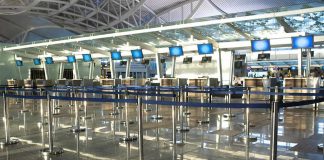
Saudi officials suspended operations at King Khalid International Airport after explosions and incoming fire rattled the capital. Airlines diverted flights as emergency crews moved people away from terminals and gates. King Khalid serves a city of about eight million people, so a shutdown ripples fast across the region. Reporters at the scene heard a loud blast, and carriers scrubbed more flights as the day wore on. The incident moved the issue from distant conflict to civilian risk in a global hub.
Iran-backed Houthi forces said they struck the airport and a nearby military site. Their statements framed the attacks as deliberate and accurate, and they warned against using Saudi airports. Saudi defenses reported intercepts near the city, but debris and shockwaves still caused fear and damage reports on the ground. The public claim of responsibility set the stage for a direct political response in Washington and in allied capitals watching the airspace picture over Riyadh.
Trump’s Calculus And The Message To Tehran’s Proxies
When asked whether the United States would join Saudi strikes, Trump answered, “We may. We’re going to look at it… we’ll make a decision. We move very quickly”. That line serves two goals at once: it warns the Houthis that American power could enter the fight, and it signals to Saudi Arabia that alliance commitments still matter. From a deterrence view, conditional language can be smart. It creates doubt in the aggressor’s mind without locking U.S. forces into a timeline or target list.
Travel warnings amplified the urgency. The United States Embassy urged Americans to avoid the airport area. Other allied governments issued alerts tied to Saudi airports and airspace. These steps show governments treated the threat as active, not as rumor. They also support a core conservative value: protect citizens first, then plan next steps backed by strength and clarity. The diplomatic messaging lined up with the commander-in-chief’s willingness to act if needed.
Casualties, Confusion, And The Cost Of Hitting A Civilian Hub
Saudi civil aviation figures reported 12 deaths and 309 injuries tied to the weekend attack cycle, while other coverage cited at least 20 dead across a week of strikes. Numbers moved as reporters sorted incidents across multiple sites, but the direction was clear: civilians suffered. Targeting an airport magnifies harm, disrupts medical evacuations, and shocks families far from front lines. That reality helps explain why Trump’s remark landed as a warning and why allies tightened their travel guidance.
"President Donald Trump on Tuesday accused Yemen's Houthi militants of deliberately trying to drive up oil prices ahead of the US midterm elections and warned that he would "never forget" their attacks on Saudi Arabia, amid a widening regional conflict fueled by the US war…
— Zoraida Sánchez (@Pettunia14) October 13, 2026
King Khalid International Airport is not just a runway; it is a national artery. Shutting it down drains commerce, delays pilgrimages, and complicates military coordination. Saudi air defenses face a hard task against mixed barrages that blend missiles and drones. Even with intercepts, falling fragments can injure crowds, start fires, and ground flights. That is why the United States and partners often focus on left-of-launch tools, intelligence sharing, and quick decisions when a threat crosses from military to mass-transit targets.
What Comes Next If The Line Is Crossed Again
The pattern behind these strikes is familiar. The Houthis test Saudi air defenses, claim wins, and then watch for Saudi and allied replies. Saudi leaders promise retaliation and weigh responses that reduce risk to civilians while restoring deterrence. Trump’s statement slots into that cycle as a lever: act right now to stop hitting airports, or face a broader set of consequences with U.S. backing. That stance aligns with common sense and conservative principles: peace through strength, protect civilians, and hold attackers to account.
Sources:
iranintl.com, npr.org, dw.com, abcnews.com, washingtonpost.com, reuters.com, cnbc.com