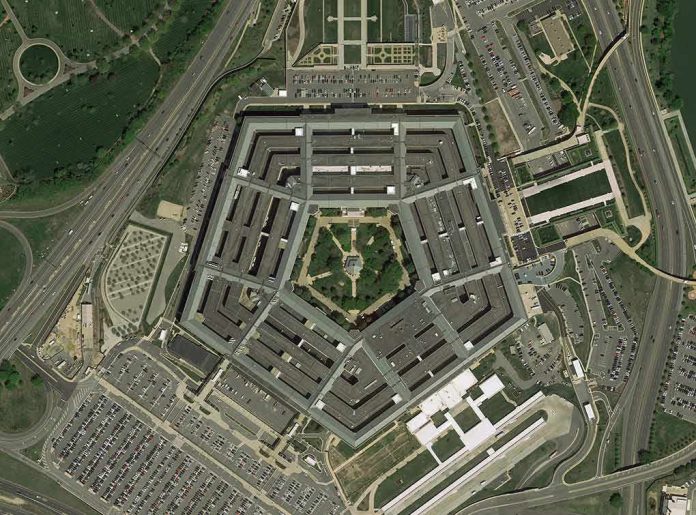
Defense Secretary Pete Hegseth just gave military chaplains a direct line to his office, cutting out the layers of staff that used to stand between them.
Quick Take
- Hegseth announced a new Pentagon Office of Religious Affairs during a September 30 speech at Quantico, saying it reports straight to him.
- The office aims to cut “bureaucratic dilution” and give chaplains faster access to top Pentagon leadership.
- A department memo reportedly says the office cannot force anyone to take part in religion or practice.
- Groups like Americans United and the Military Religious Freedom Foundation call it an unconstitutional push toward Christianity.
What Hegseth Announced And Why
Hegseth unveiled the office during his “State of the Force” address at Marine Corps Base Quantico on September 30, 2026. He said chaplains deserve a direct line to him, free from “staff filters” and “bureaucratic dilution”. He pointed back to 1775, when the Continental Army first used chaplains, arguing military religious support has deep American roots.
The Pentagon’s own statement, released October 2, said the office will advocate for chaplains and religious support “at the highest level of the Department”. That phrase matters. It frames the office as a support system for existing chaplains, not a new religious authority creating doctrine or mandating worship for troops.
The Promise Of No Compulsion
A department memo tied to the launch reportedly states nothing in it “shall be construed to compel religious participation or to diminish the free exercise rights of any Service member, civilian employee, or family member of any faith or no faith”. That is a strong written guardrail. It directly answers the fear that this office might force religious practice on anyone in uniform.
The office’s stated job list includes resource advocacy, chapel youth programs, faith-based homeschool support, and suicide-reduction work. The Catholic Archdiocese for the Military Services said it “appreciates” the move, a sign that at least some faith communities see this as help, not overreach. Still, nobody has named a director or released a full staffing charter yet, leaving real questions about how much power this office actually holds.
Why Critics Are Already Calling Foul
Americans United for Separation of Church and State says the office violates religious freedom by “elevating Christianity to an even higher role in shaping U.S. military policy”. The Military Religious Freedom Foundation went further, calling the move “immoral, unethical and unconstitutional”. The Freedom From Religion Foundation tied its objection to Hegseth’s own monthly Christian prayer services at the Pentagon, arguing a pattern is forming, not an isolated policy.
An Episcopal Church bishop added that Hegseth’s language sounds “definitely Christocentric” and amounts to pushing “fundamentalist Christianity into the military”. Hegseth’s own words give critics ammunition. He has referenced Psalm 33:12, used the phrase “spiritual warfare,” and called faith “the very bedrock” of the military’s warrior ethos. That kind of language, even paired with a no-compulsion memo, makes neutrality a harder sell to skeptics watching closely.
History Suggests The Military Gets More Room Here
Courts have long treated military chaplaincy differently than ordinary church-state fights. In Katcoff v. Marsh, the Second Circuit upheld the Army chaplaincy as constitutional, reasoning that troops often can’t just walk to a civilian church or synagogue the way ordinary citizens can. The court still warned that specific chaplaincy practices could cross a constitutional line if poorly designed. That precedent gives Hegseth’s office a real legal foundation, but it does not settle whether this particular version passes the test.
That history cuts against the loudest claims of outright illegality. Giving troops faster access to chaplains looks far more like accommodation than establishment, especially with an explicit anti-compulsion clause in writing. But the office remains brand new, unled, and short on public detail. Whether it stays a neutral support desk or tilts toward one faith’s priorities will depend entirely on how it actually operates once fully staffed.
Pete Hegseth’s conception of religious freedom seems to begin and end with his own Christian Nationalist worldview. Now he’s creating an Office of Religious Affairs that reports directly to him, giving him even more power to inject his personal religious beliefs into the… https://t.co/2kXReG7b6H
— Rep. Jared Huffman (@RepHuffman) October 2, 2026
Congress and watchdog groups now have an obvious next move: demand the full charter, the budget, and the name of whoever runs this office. Until that paperwork becomes public, both sides are arguing from announcements and speeches rather than operational proof. The facts available so far favor a support office with real legal precedent behind it, but the test comes once it starts making actual decisions.
Sources:
military.com, abcnews.com, usatoday.com, militarytimes.com, washingtonexaminer.com, al.com, apnews.com, jns.org, yahoo.com, religionnews.com, timesofindia.indiatimes.com