New York’s governor says Washington held back 40 percent of the state’s counterterror funds, and the Homeland Security chief fired back that Albany is sitting on cash.
Story Snapshot
- Governor Kathy Hochul says nearly $87 million in anti-terror funds remain unpaid to New York.
- Homeland Security officials say New York has unspent grant money and is “manufacturing a crisis”.
- State leaders link the dispute to bomb squads, transit security, cyber teams, and police training.
- Earlier court orders restored parts of related grants, showing this fight already hit the legal system.
What Hochul Says Was Withheld And Why It Matters
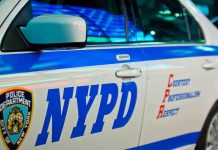
Governor Kathy Hochul said the Department of Homeland Security withheld 40 percent of New York’s counterterrorism funding, which she put at $87 million. Her office said the state had received only $100 million that a judge had already ordered released, leaving nearly $87 million still due. She tied the money to front-line tasks: intelligence work, transit hub security, equipment, training, and readiness for police and sheriffs statewide. The claim sets a high bar: pull the cash, and core safety tools go dark.
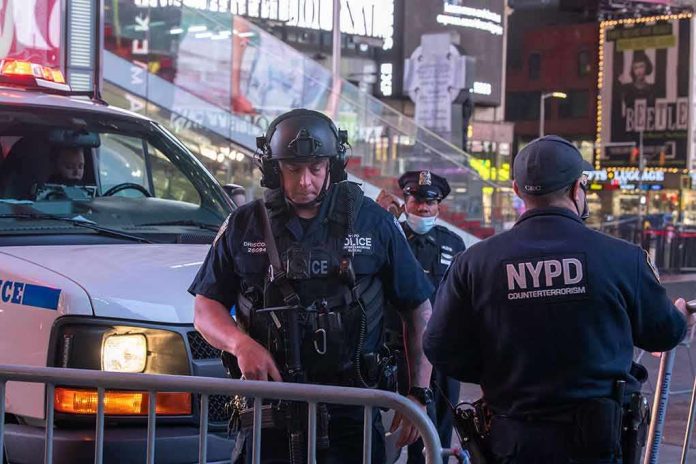
State officials also pointed to impacts on named units, not vague programs. They cited 12 bomb squads, Fire Department of New York communications, hazardous materials teams, tactical units, urban search and rescue, cyber security, and the New York State Intelligence Center. That list signals daily, practical work, from subway patrols to data fusion. If these units stall, riders, commuters, and businesses feel it fast. That is the core of the governor’s warning.
Dollars, Programs, And Cuts: The Mechanics Underneath
New York’s push centers on two grant streams run through the Federal Emergency Management Agency inside Homeland Security: the Urban Areas Security Initiative and the State Homeland Security Program. Reporting tied the dispute to big drops in both lines, including a cut to New York City’s share. The state described a prior cut near $187 million and a later hold on the $87 million tranche, reflecting a rolling fight across fiscal periods rather than a single bad day.
The numbers in public view do not always match line for line. Some outlets cite $86 million rather than $87 million, and timelines blend the earlier court-restored funds with the later freeze claims. That inconsistency gives critics room to attack the message as sloppy. Still, the large theme is constant: less federal money than usual, and long waits to receive what the state says was already promised for counterterror roles that most voters think are nonnegotiable.
DHS Pushback: Spend What You Have First
The Department of Homeland Security rejected the charge. Officials said New York “manufactured a funding crisis” because it had not spent hundreds of millions already awarded. If true, that flips the script from “Washington starved the cops” to “Albany failed Grant Management 101.” Many conservatives will nod here: good oversight means you do not rush new checks to an agency that still sits on old ones. That aligns with a pay-for-performance, results-first mindset.
New York Governor Calls for Restoration of Counterterrorism Funding https://t.co/yxuXtotwMg
— NewYork-Insight (@NewYork_Insight) September 2, 2026
But the state points to the courtroom to argue this is more than a paperwork spat. Judges already stepped in to block or reverse parts of related cuts, including transit security funds, after finding the federal actions likely unlawful. Courts are not budget committees; they do not wade in unless they see a legal flaw. Those rulings give the state’s case weight, even if the latest $87 million issue has not yet produced a public order with the same clarity.
Common-Sense Read: What Should Happen Next
Taxpayers deserve two simple answers. First, show the grant award letters, payment ledgers, and the schedule that governed release of the $87 million. Second, show the state’s spending pace and balances across the same period. If the feds promised it by date certain and pulled back without cause, release the funds. If the state is slow to deploy, publish a catch-up plan and spend down before asking for more. Safety money is not a cable-news prop; it funds bomb techs and subway cameras.
Both sides can meet in daylight. Homeland Security can post obligation and disbursement records. New York can post purchase orders, training logs, and equipment receipts tied to past awards. If either side drags its feet, voters will see it. In the meantime, mayors, police chiefs, and transit leaders should map contingency steps to shield mission-critical units from cash whiplash. Riders do not care who “wins” a talking point; they care that the 7:42 train arrives under a watchful eye.
The Political Undertow And The Public-Safety Test
This fight sits inside a larger clash over immigration and public safety. That makes easy TV, but it can warp priorities. Anti-terror grants exist to stop bad days before they start. If the government, state or federal, uses them as leverage for unrelated policy standoffs, that fails the 9/11 test many New Yorkers still carry. Conservative or liberal, most Americans agree: secure the streets, secure the trains, secure the borders, and keep politics away from the bomb squad.
Sources:
twitchy.com, governor.ny.gov, nypost.com