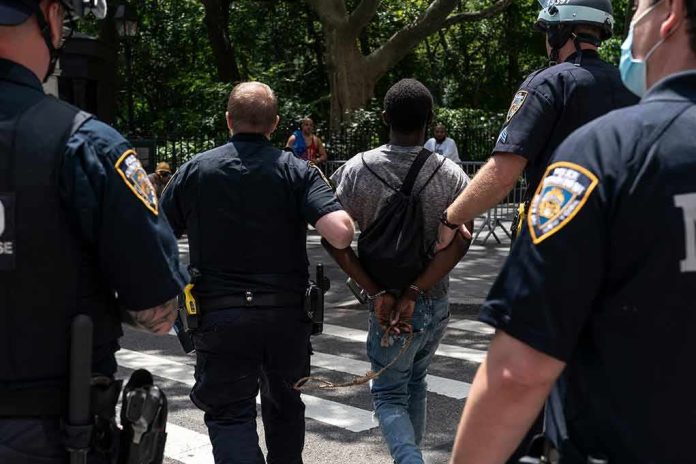
Israeli police detained 10 suspects before dawn after masked attackers struck a Washington Post photographer and European diplomats in the West Bank.
Story Snapshot
- Police say 10 suspects were detained across several West Bank sites.
- The probe cites violence, a closed military-zone order, and illegal building.
- Video showed masked settlers assaulting U.S. journalist Heidi Levine.
- French, Belgian, and Polish diplomats were attacked near Taybeh a day later.
Police Operation Tied To Two High-Profile Attacks
Israeli police announced a pre-dawn sweep that detained 10 suspects across several West Bank locations. The operation followed two weekend attacks. One targeted Washington Post photojournalist Heidi Levine, a U.S. citizen, who was assaulted while covering a Palestinian olive harvest. The next day, masked settlers attacked a group that included French, Belgian, and Polish diplomats, and French mayor Bernard Baudoux near Taybeh. Multiple outlets reported the same arrest count and sequence of events.
Police linked the arrests to suspected involvement in violent incidents. They also cited violations of a closed military-zone order set by Israel Defense Forces Central Command and illegal construction. That framing places the case within both criminal and administrative law. Authorities did not release names or charge sheets. Reports described the suspects as detained for questioning rather than already charged in court, which signals an active investigation stage.
What The Footage And Diplomatic Involvement Mean
Video from the journalist attack gave investigators and the public a clear record of part of the assault, including masked faces and the setting. That kind of evidence often sets the pace for early arrests and can shape bail and search decisions. The second incident involved accredited diplomats and a sitting mayor. Attacks on foreign officials raise stakes for any government. They trigger treaty duties and swift communication with European capitals.
The Washington Post photographer’s case also centers a basic press freedom line. Reporters and photographers must move safely to document events. Attacking a journalist is not protest; it is a strike at the public’s right to see. The diplomat incident crosses another bright line. States guard their envoys and expect host governments to do the same. Swift arrests fit that duty. Strong prosecution, if evidence supports it, is the real measure of deterrence.
The Charge Mix Signals A Wider Enforcement Net
Police highlighted three tracks: violence, violation of a military closure order, and illegal construction. That mix suggests investigators cast a wider net than the assaults alone. Closed-zone violations can support quicker detentions when assault evidence develops. Illegal construction claims may connect to the same actors or areas tied to the attacks, allowing authorities to hold and question suspects while building assault cases. That approach is common in complex public-order probes.
Some reports noted a numerical wrinkle, with one Reuters version listing eight arrests. Most outlets reported 10. Police statements and several independent reports aligned on 10. When counts differ, the best practice is to cite the clearest, repeated number tied to a named statement. Here, the consistency across major outlets and the police tally carries weight for the public record.
Accountability Will Hinge On What Happens Next
Arrests are the start, not the finish. Israeli rights monitors have logged weak follow-through in many past files. Yesh Din’s long-term data shows most cases of ideologically driven violence by Israeli civilians against Palestinians closed without indictment, with very few ending in conviction. That history explains why many observers watch for indictments and trial outcomes, not just detention headlines. This pattern does not decide these cases, but it sets the bar for proof and follow-up.
Israel Arrests 10 After Settler Attacks on Journalist, European Diplomats
The arrests follow U.S. and European demands for action after masked settlers assaulted a Washington Post photojournalist and attacked a diplomatic convoy in the West Bank.https://t.co/mseidaLcZ6
— Clash Report (@clashreport) October 19, 2026
Diplomatic pressure will remain. The targets include a U.S. journalist and European officials. Governments will ask for charge progress, court dates, and evidence handling. The test now is basic rule of law: match each suspect to specific acts with clear evidence, or release them. That standard fits common sense and American conservative values as well. Protect speech, protect envoys, punish violence, and do it with transparent, equal enforcement under the law.
Sources:
youtube.com, aljazeera.com, reuters.com, dw.com, usatoday.com, abc.net.au