One tiny Spanish city on Africa’s coast just watched its border turn into a lethal river of people, and now even the United States is quietly telling Americans to think twice before going there.
Story Snapshot
- Tens of thousands of migrants rushed into Ceuta from Morocco in under two days, overwhelming the city.
- Spain sent troops, tightened border controls, and is now installing a floating sea barrier after at least 67 deaths.
- Most of the migrants have already been escorted or returned back to Morocco, but the shock to Europe’s border politics is huge.
- U.S. travel warnings and European tension show this is not just a Spanish problem; it is a warning about modern border chaos.
Ceuta is tiny, but the scale of this surge was enormous
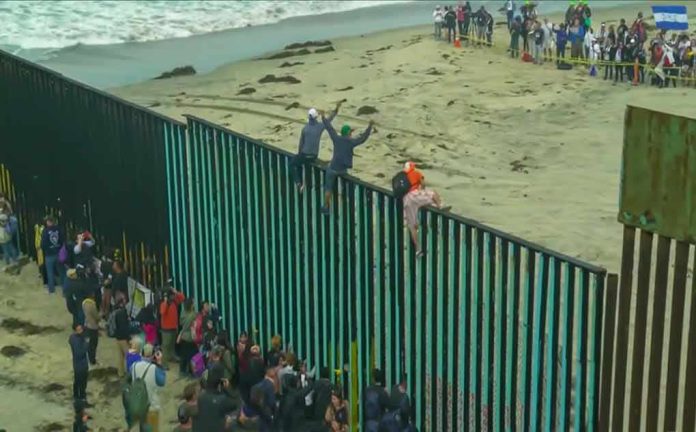
Ceuta is a small Spanish territory on the northern coast of Africa, wedged against Morocco with only a few miles of land and sea border. In just about 48 hours, Spanish officials say roughly 50,000 to 60,000 people crossed into Ceuta by swimming around the breakwater or climbing over fences. Local leaders put some estimates even higher, but everyone agrees the numbers were unlike anything seen in recent memory. For a town of about 84,000 residents, that is almost a second city arriving overnight.
Many of the migrants were young men from Morocco and other African countries, driven by job loss and hardship, and fueled by viral social media rumors that entry to Europe might be easier or temporary. Videos showed crowds moving in waves, some with inner tubes and makeshift rafts, others clinging to rocks along the seawall. What looked like a single border crossing on a map became a storm front of desperate people in the water and on the sand, all at once, with police and soldiers scrambling to keep control.
Spain responded like it was a sovereignty and security emergency
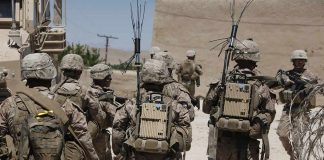
Spanish leaders did not treat this as a routine migration incident. Prime Minister Pedro Sánchez called the mass crossing a “violation of Spanish sovereignty” and promised to return people to their countries of origin as quickly as possible. Spain activated military units to support the Civil Guard and National Police, moving troops onto beaches and near the fence line to restore order and push people back toward the border. Ceuta’s local president urged Madrid to declare an emergency, arguing that normal systems could not handle such a sudden inflow.
This kind of language matters, especially to American conservatives watching from across the Atlantic. When a European leader talks about sovereignty being violated, it echoes the way many Americans see their own border struggles. Spain’s government usually shows a softer tone on migration, but here it flipped to a hard line fast, which suggests that numbers and visuals can force even liberal leaders to sound like border hawks. That is a key lesson: when the system breaks, talk of compassion gives way to talk of control.
Deaths, rapid returns, and a floating barrier in the sea
The human cost of this rush is brutal. Spanish officials now say at least 67 people died trying to reach Ceuta. Some drowned in strong currents; others were crushed in crowd surges along the breakwater and fence. Rescue teams pulled bodies from the water while soldiers helped exhausted swimmers stumble onto the beach. The scene was not a quiet asylum queue. It looked more like a stampede at the edge of a cliff, with very little time to separate families, traffickers, and thrill seekers from true refugees.
The Real Story Behind Blaming Israel For Spain's Border Crisis
Spain just lived through one of its worst border crises ever.
Tens of thousands stormed the fences into Ceuta from Morocco in days, dozens died in the crush, and Madrid had to expel roughly 25,000 people just to… pic.twitter.com/MdQkoVQ1UV
— MAGA Foreign Policy 🇺🇸 🇮🇱 🇵🇪 🇨🇴🇬🇧 (@chomcho) August 3, 2026
Then came phase two: getting people out. By late Friday, Spain’s Interior Ministry said around 48,300 of those who crossed had already returned to Morocco, many escorted back by law enforcement or leaving on their own after realizing Europe was not opening its doors. Officials now claim “virtually all” have gone back. That speed matters. It tells us this was more a shock event than a permanent resettlement wave. It also shows that strong enforcement, paired with quick coordination with Morocco, can unwind a border crisis in days, not months.
The floating barrier is a symbol of a wider shift
On Saturday, police started installing a 500-meter floating barrier off the Tarajal breakwater, one of the main sea entry points into Ceuta. The inflatable barrier rises about one to two feet above the water and extends up to one meter below, backed by a line of naval buoys with a narrow patrol channel for Civil Guard boats. Officials say it is meant both to stop swimmers and to send a clear visual signal: this is a guarded border, not a free beach. It turns the sea itself into a fence you can see from shore.
Ceuta authorities link this move to a recent Spanish Supreme Court ruling that limited instant returns of migrants intercepted at sea. Once word spread that the legal rules had changed, traffickers and online rumor mills treated Ceuta like a glitch in Europe’s firewall. Spain’s answer was not to erase the court ruling; it was to change the physical border instead. That should resonate with Americans who argue that when courts tie law enforcement hands, governments must fix the gaps with technology, barriers, and clearer rules.
Why U.S. travel warnings and European tension matter
While Spain and Morocco tried to calm the situation, Italy briefly reinstated border checks with Spain, breaking the usual free travel rules inside Europe’s border zone. That move signaled deep worry that Ceuta’s shock could ripple onto the European mainland. Media across the continent framed the surge as a test of whether Europe still controls its outer border or is at the mercy of sudden mass crossings. For older readers who watched past refugee crises, this feels like another chapter in a long story of Europe struggling to balance open travel with basic security.
The United States flagging Ceuta in travel advice fits the same pattern. When a coastal town needs troops, floating barriers, and emergency morgues, it stops being a casual tourist stop and starts looking like a flashpoint. For American conservatives, Ceuta is less about vacation plans and more about a clear warning: if you fail to hold a firm line, people will test it all at once. Spain’s quick pivot—to military support, rapid removals, and physical barriers—shows what serious border policy looks like when reality finally forces the issue.
Sources:
youtube.com, reuters.com, nytimes.com, theguardian.com, telegraph.co.uk, dailymotion.com, bbc.com