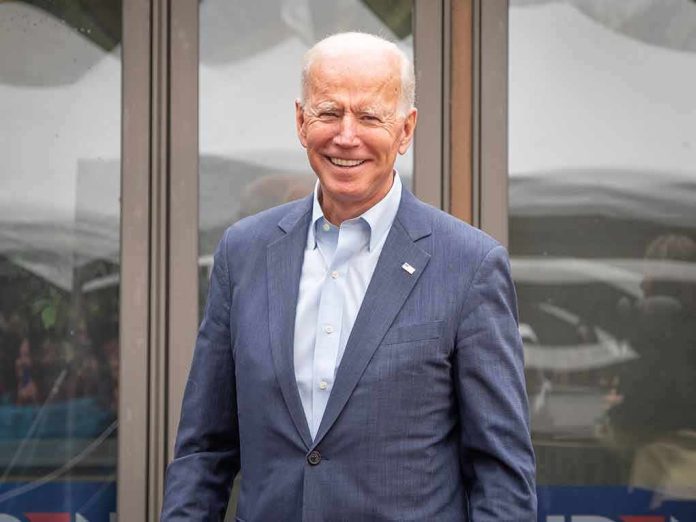
The Biden presidential library project sits on four million dollars, no confirmed site, and a shrinking window to prove it will ever become a real building.
Story Snapshot
- The Joe and Jill Biden Presidential Library Foundation reported about $4 million in 2024 contributions.
- No confirmed site has been announced, despite early talk of Delaware.
- Advisers once floated a standalone museum price tag near $200 million.
- Presidential libraries rely on private fundraising before federal operation kicks in.
What the Records Say About Money and Momentum
Tax data for the Joe and Jill Biden Presidential Library Foundation show about $4,000,000 in contributions for the 2024 fiscal year and zero in reported net fundraising, a thin base for a capital project of this size. Reports described hopes to raise more over the out-years, but early donor energy has looked weak compared with the sums needed to plan, design, and build a new museum. Time magazine framed Biden’s target as a roughly $200 million standalone building, which puts the current cash far behind the goal line.
All major modern presidential libraries began with private money, not federal checks. That model sets a simple test: either a former president’s network pulls in big gifts and naming opportunities, or the building plans shrink or stall. The National Archives and Records Administration runs the archives and museum operations only after a private foundation funds and delivers the facility, with an endowment to help cover costs. When the foundation’s tank is near empty, the bulldozers do not start.
Location: Talk of Delaware, But No Clear Ground
Public reporting has floated Wilmington, Delaware as the likely home, and some accounts described steps toward assembling a team and scouting a site. Yet Time noted that no city has been firmly announced, much less a shovel-ready plot, even as the political calendar rolls on. That gap matters. Siting drives design, permits, neighborhood outreach, and early donor pitches. Without land or a signed agreement, architects cannot draw final plans, and major donors often wait for specifics before making seven- or eight-figure commitments.
The clock also weighs on perception. Foundations that land a site can host renderings, scale models, and hard-hat tours that excite donors. Foundations that cannot do that fall into a loop of “we’ll know more soon,” which tends to drain momentum. Common sense says donors want to see a road map, not a wish list. If the team wants to reverse the story line, it needs a clear site, a credible design budget, and a first-round naming slate to anchor early gifts.
How the Presidential Library System Really Works
Presidential libraries belong to a unique public-private model. Since Franklin Roosevelt, private donors fund construction, then the federal government accepts and operates the facility through the National Archives and Records Administration. The records stay public assets under the Presidential Records Act; the building arrives as a private gift with an operating endowment tied to size and cost. That structure guards taxpayers from upfront construction risk while preserving access to a president’s papers.
This model also explains variation. Some presidents build expansive museums. Others scale back or alter plans. The Barack Obama Presidential Center, for example, raised private funds outside the traditional federal-facility path for its museum center and works with the National Archives and Records Administration for records access and digitization. Private money still did the heavy lifting, and the archives role remained focused on stewardship of records, not building costs. The rule is simple: vision follows fundraising.
What Stalled Projects Signal to Donors and Voters
Supporters once talked up an immersive Biden museum experience, the kind that needs a deep donor bench and a sharp pitch deck. The current numbers tell a tougher tale. A four million dollar fund cannot carry land, design, exhibits, security, climate control, and the required endowment. Donors read Form 990s and news clips as quickly as anyone. When the scoreboard shows single digits against a nine-figure target, many sit tight and wait for a turnaround or a scaled plan they trust to execute.
American conservative values favor transparency, prudence, and living within means. By that measure, a pause or a reset would not be a slight; it would be honesty. If the foundation can lock a modest site, publish a phased build, and seed an endowment that matches the footprint, it can earn buy-in. If it keeps chasing a grand build without the money, it risks ending with no ribbon, no building, and a legacy defined by delay, not documents.
The Likely Fork in the Road
Two paths stand out. The first: announce a Delaware site with letters of intent, reveal a design phased to match real pledges, and post quarterly fundraising tallies. That could convert fence-sitters and move big checks off the sidelines. The second: accept that a standalone showpiece is not in reach and pursue a smaller footprint or a hybrid model that centers records access, traveling exhibits, and digital features. Either choice beats drift. The archive will endure; the question is whether a building will rise beside it.
Sources:
westernjournal.com, m.dailyadvent.com, projects.propublica.org, syracuse.com, archives.gov, oversightdemocrats.house.gov, whitehouse.senate.gov