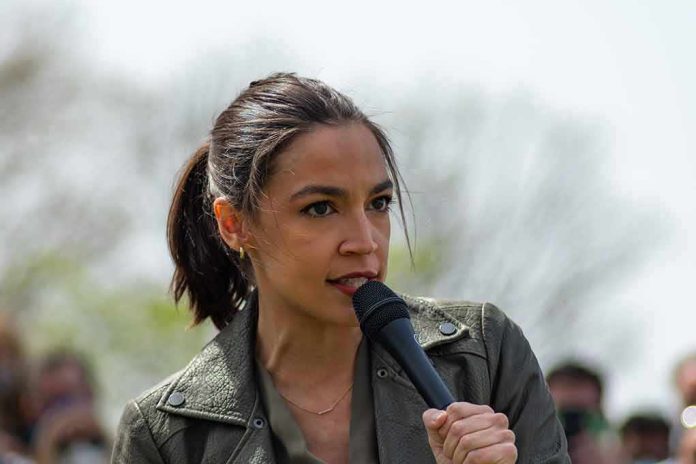
Alexandria Ocasio-Cortez says the clock starts after the midterms, and both 2028 doors stay open.
Story Snapshot
- She has not ruled out a 2028 White House bid and says she is focused on 2026 races first.
- She also left open a 2028 Senate primary against Chuck Schumer, saying anything is possible.
- She plans to make any big decision after the midterms, pointing to lessons from November.
- Coverage depicts her as truly undecided while positioning for national reach.
She Kept Both 2028 Paths Open, On Purpose
Alexandria Ocasio-Cortez told national outlets she has not ruled out running for president in 2028. She also said she may challenge Senator Chuck Schumer for his seat. She set a clear sequence: focus on winning the midterms now, then decide on 2028 after November. That stance came through in interviews where she said “I haven’t ruled out the possibility” for president and “anything is possible” on a Senate run, while stressing the midterms come first.
She later reinforced the timing. She said she will make those “considerations after the midterms,” adding that the results will teach “a lot in November.” That framing signals an intentional wait-and-see plan tied to voter turnout, issue salience, and national mood. It also keeps donors, activists, and media engaged without forcing a choice too soon. The message is simple: decisions later, groundwork now, and no locked lane yet.
What The Record Actually Shows, And What It Doesn’t
The public record shows statements that keep options open. It does not show filings for a campaign, an exploratory committee, or a formal decision. Her quotes track with that reality: open to president, open to Senate, and still running for her House seat in the near term. Reports from major outlets mirror that tone and describe her as “truly undecided” about 2028, while noting she is testing messages to reach beyond the deep-blue base and build national reach.
Different outlets used slightly different wording, but the core is consistent: she kept both doors open. She said she is focused on the midterms, and she aims to decide after those results come in. This rests on ordinary campaign logic. Politicians hold back firm choices when data is still coming. They want to see turnout patterns, fundraising energy, and how rivals move. None of that suggests a secret plan; it reflects a normal, practical pause.
Why Strategic Ambiguity Works Before A Big Leap
Strategic ambiguity is a known tactic in politics. It lets a figure talk to more than one audience at once while the facts on the ground are still moving. Scholars describe how vague signals can lower risk and extend reach, especially when commitment costs are high. In this case, keeping the president and Senate options live helps her watch 2026 results, donor interest, and primary terrain without closing doors too early. That is standard playbook material, not a mystery.
NYT: AOC says the country never electing a female president will factor into her 2028 decision.
“This country has never elected a female president. Why are we pretending that this is not a factor?” AOC said with a laugh. “That doesn’t make it impossible, but to act as though… pic.twitter.com/NYM3j0uvqK
— Politics Watch (@politics_watch1) September 22, 2026
From a conservative common-sense view, this approach aligns with basic due diligence. Big races demand proof of support, proof of message fit, and proof of fundraising. Waiting for hard results before leaping is not dithering; it is discipline. Voters deserve candidates who earn their shot, not claim it by press release. Her pledge to decide after the midterms sets a clear, testable moment. If momentum shows up, she has room to run. If not, she has kept faith with her first job.
Sources:
townhall.com, axios.com, en.cibercuba.com, nj.com