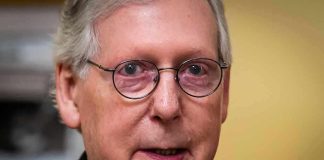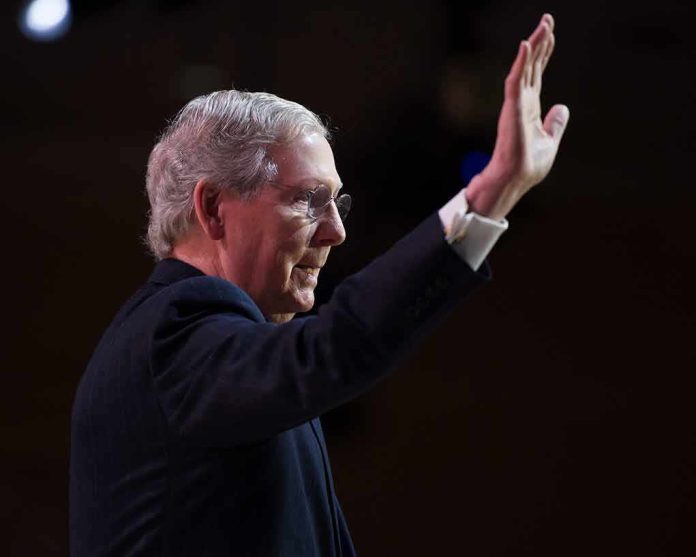
After three months away, Mitch McConnell walked back onto the Senate floor—and then lit a fuse.
Story Snapshot
- McConnell returned to the Senate after a months-long medical absence.
- He said he was eager to cast his first vote since a June fall.
- Photos and video confirm his Capitol appearance on September 14, 2026.
- His first-day follow-up move drew sharp complaints and fresh scrutiny.
A documented return to the Senate floor
NPR reported that McConnell returned to the Senate on Monday, ending a months-long medical absence that began after a June hospitalization. He posted that he was ready to vote again and to see colleagues. That message matched what cameras and photographers caught at the Capitol, including images marking his first public appearance in more than ninety days. ABC News highlighted his first time back on the floor since the June episode, underscoring the significance for Senate business.
McConnell’s office had long signaled a cautious approach. The Hill detailed that doctors previously advised against a quick floor return, pushing him to work remotely where possible. He later left rehabilitation to continue recovery at home and keep up intensive physical therapy, according to Roll Call in early August. Those steps built a clear timeline: sudden illness in June, rehab through summer, and a mid-September reentry that put him back at his desk when high-stakes votes loomed.
What he did next—and why it set off a firestorm
One day after his return, McConnell took a step that set off chatter across the Capitol. He moved fast to reassert control over Republican floor strategy, aligning votes and signals in a way only a party leader can. That move jolted the chamber because members had just adjusted to operating without him. The sudden course correction, after a long absence, rankled allies who had filled the gap and worried opponents who saw discipline snapping back into place.
That reaction followed months of pent-up questions about attendance, missed votes, and committee rhythms. Local coverage tracked how his absence slowed action on a handful of items and forced others to the back burner. A first-day show of command can look like leadership to some and whiplash to others. Common sense says a caucus wants clarity. But people do not love surprises, especially after fragile vote counts settle into new habits.
The politics of health, age, and duty in an older Senate
The Senate keeps working even when senior members face health setbacks. Offices continue casework, staff draft bills, and leaders negotiate by phone. The institution does not have a formal fitness-for-duty process beyond resignation, death, or expulsion. That structural gap explains why long absences often become media spectacles and partisan flashpoints rather than quiet administrative matters. The pattern recurs: extended leave, sudden returns, and a scramble to reset floor math and momentum.
Key differences and context
• Right photo (Getty/Finn Gomez style, yellow striped tie, gesturing, mouth open, visible bruise on the hand): This matches confirmed recent coverage from McConnell’s return to the Senate around September 14–15, 2026. He appeared frailer, used a…— Denise & Michael Book (@FrogoftheSouth) September 16, 2026
Across recent cycles, reporters have documented how aging in Congress collides with modern demands. The median age in the Senate remains high, and high-profile illnesses or recoveries ripple through committee calendars and floor planning. Voters want transparency on health while also expecting experience. That tension has no easy fix. But it does argue for steady communication, predictable schedules, and honest benchmarks for capacity—values that line up with basic accountability.
What the return means for the agenda now
McConnell’s physical presence reshapes the map. Whips count votes with more confidence, and committee leaders time markups to his floor read. Reporters saw him on the floor and moving through the Capitol, signaling that he intends to stay engaged. The test, as always, is consistency. Can leadership sustain attendance, manage therapy, and keep the agenda tight? His own words suggest he plans to do exactly that, and his first-day assertiveness shows the playbook: stabilize, then push.
One basic caveat applies: a return is not a guarantee of a full schedule every day. Recovery is not linear. But the evidence of a documented reentry, paired with his early moves, tells a simple story. The leader is back, and the Senate will adjust around that fact. For all the noise, the core takeaway is straightforward. When a veteran tactician reappears, the chamber’s center of gravity shifts fast. That is what happened here, and why the reaction was loud.
Sources:
redstate.com, 6abc.com, courier-journal.com, nypost.com, nytimes.com, time.com, abcnews.com, clashreport.com