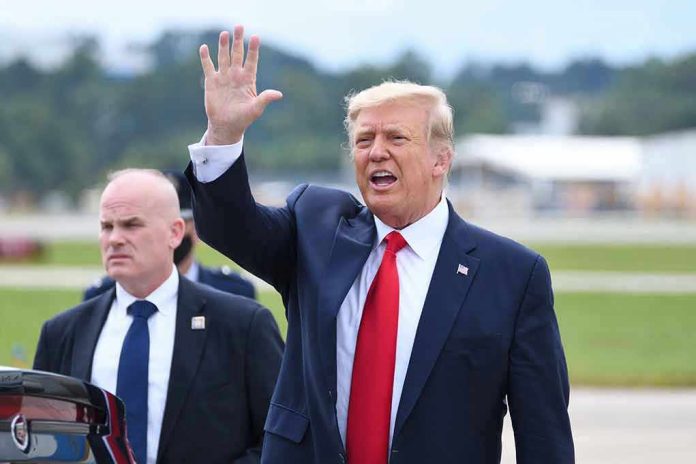
President Trump stepped off Air Force One with noticeably darker hair, and the photos lit up the internet.
Story Snapshot
- Trump arrived in Morristown, New Jersey, showing a darker, brunette-style look.
- Images tied to his Bedminster weekend triggered fast social media reaction.
- Observers compared the look to his long-running blond style and branding.
- Lighting and viewing conditions can change how hair color appears in photos.
What Happened on the Tarmac in New Jersey
Photographers captured President Trump descending the Air Force One stairs at Morristown Municipal Airport with hair that looked darker than his familiar blond. Coverage linked the sighting to his regular weekend trip to his golf club in Bedminster, which gave the moment a clear time and place. The photos traveled fast and set off wide chatter about whether the change was color, styling, or both. Fox News framed it as a darker debut that sparked online buzz.
The basic facts are simple and not in dispute: a darker-looking hairstyle appeared in public view, and people noticed. The images emphasized deeper brown tones and a more tousled shape compared with prior appearances. The cut and part seemed consistent with his usual approach, but the shade drew the eye. That contrast with the “golden” image many associate with Trump explains why this small visual switch grabbed attention so quickly and spread across platforms.
Why A Small Style Shift Gets Big Attention
High-profile politicians live by consistent visual branding. Trump’s hair has long been part of his iconography, like a campaign logo you can spot across a stadium. When a familiar signal shifts, even a little, viewers scan it for meaning. Media cycles have done this for years with his appearances, highlighting fuller volume one week or a different sweep the next. Newsweek has tracked this pattern, showing how small shifts can create big headlines and rapid social reaction.
That attention runs on a simple rule of modern politics: image cues act as shortcuts. Voters do not study policy papers every day, but they do notice a changed look in a five-second clip. Commentators often try to tie hair and clothes to character, energy, or age. Some of that is theater. Still, consistency does matter for trust and brand memory, which is why subtle changes to a defining feature draw curiosity and debate, even if the core message and job remain the same.
The Lighting Trap: Why Photos Can Shift What We Think We See
Science helps explain part of the reaction. Human vision struggles when light color and brightness swing across settings. Airport tarmacs, jet stairs, and cabin doorways mix daylight, shade, and strong overhead lamps. Those changes can make the same surface look darker or warmer in a split second. Research on how we perceive light and color shows that even trained observers can misread shifts under mixed illumination across real scenes.
Trump appears to debut darker hair, sparking online buzz https://t.co/IQzwf9aeMu #FoxNews So freakin what!!
— k.mill (@ksmill70) September 7, 2026
That does not erase what people saw in the New Jersey photos; it frames it. A darker appearance can come from dye, styling choices, product, or the light itself. The takeaway is practical. One set of images often carries more ambiguity than people think, especially at golden hour or near bright plane lighting. When millions decide from one angle and one moment, perception can outpace proof. That gap is how memes start and why they move so fast.
The Conservative Read: Substance Still Beats Surface
Some voices will try to pin sweeping narratives to a hair shade. That feels like a reach. Conservative common sense says performance matters more than presentation. Leaders should be judged on results, not memes. This story shows how a minor style note can hijack a news cycle and bury policy talk. The smarter move is to clock the brand signal, then get back to what changes lives: safer streets, lower prices, stronger borders, and a growing economy. The rest is background noise.
Sources:
foxnews.com, washingtontimes.com, primetimer.com