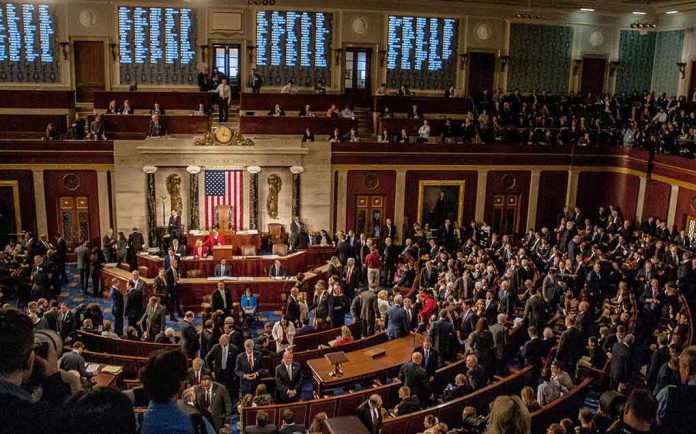
House Democrats are signaling that investigations, not an instant impeachment vote, would come first if they win the House.
Quick Take
- Democratic leaders are framing impeachment as a later step, not the opening move.
- They want hearings, subpoenas, and document requests to build a case first.
- Party strategists also want to keep the focus on pocketbook issues like costs and health care.
- Even Democrats who support impeachment now say it depends on what investigations uncover.
Leadership Wants Evidence Before Action
House Democratic leaders are taking a cautious line on President Trump. According to Reuters, senior House Democrats and aides are shaping a plan built around hearings, subpoenas, and document requests rather than an immediate impeachment push. One senior Democratic aide said, “We’re not going into this to impeach,” and added that no one wants a failed vote on day one.
That approach matches what several Democrats have said in public. Reuters reported that party planners still see impeachment as an option, but only if investigations uncover evidence that meets the threshold for it. Other reporting has shown similar caution, with House Democratic leaders keeping the spotlight on affordability and oversight instead of making impeachment the first promise to voters.
Why Democrats Are Choosing the Long Game
The logic is simple. A House impeachment vote alone does not remove a president, and Democrats know the Senate math is brutal. That is why some lawmakers see a rushed vote as a waste of time and a gift to Trump’s political team. Punchbowl News reported that even some progressives acknowledge little is gained from starting a process that is destined to fail in the Senate.
House Democrats also appear wary of looking theatrical. CNN reported in January that Hakeem Jeffries and his aides were steering the caucus away from “overly dramatic actions” and toward affordability messaging. ABC News likewise reported that fewer elected Democrats were willing to commit to impeachment ahead of the midterms, in part because of likely Republican control of the Senate and possible voter backlash.
How This Fits the Trump Pattern
This is not how Trump’s first impeachment unfolded. In 2019, the House first investigated, then held public hearings, then voted to impeach after weeks of testimony and document production. That history gives current Democrats a clear template. If they want a case that can survive public scrutiny, they need a paper trail before they move to articles of impeachment.
Mark Levin calls it “Stalinist tactics.”
Strip away the rhetoric for a moment and look at what Democrats are reportedly preparing to do if they retake the House:
Investigations. Hearings. Subpoenas. Demands for corporate and financial records. Scrutiny of Trump, his family,… pic.twitter.com/b9oIfQ7KXQ
— Olena Rohoza (@OlenaRohoza) August 10, 2026
That is also why the current Democratic message sounds more like preparation than conviction. Axios reported in April that a group of Democrats wanted colleagues to start accumulating evidence so the party would be ready if it regained the House. Reuters later reported that the broader plan is to examine companies, donors, and contractors tied to Trump’s political and business orbit before deciding whether impeachment belongs on the table.
What Comes Next
The next phase would likely be messy, public, and highly political. Democrats could use the House’s subpoena power to demand records and testimony, then decide whether the facts justify impeachment. If they find what they consider a real case, the vote could still come later. But if the evidence is thin, the party seems determined not to repeat a symbolic fight that ends in a Senate defeat and a louder Trump rally.
For now, the clearest takeaway is that House Democrats are trying to look methodical, not impulsive. They want to look like investigators first and prosecutors later. That may frustrate the loudest anti-Trump voices in their own party, but it fits the hard reality of Congress: if you cannot win the Senate, you had better win the facts.
Sources:
townhall.com, axios.com, cnbc.com, cnn.com, youtube.com, washingtonpost.com, pbs.org