When a sitting president demands TV networks lose their licenses for skipping his speech, it is not just media drama—it is a stress test of the First Amendment in real time.
Story Snapshot
- Trump blasted ABC and NBC for refusing to air his primetime “election interference” speech live.
- He said their decision shows they are “part of a plot” and urged that their broadcast licenses be revoked.
- Federal law and past Federal Communications Commission (FCC) rulings make that outcome extremely unlikely.
- The clash exposes a deeper fight: who controls the narrative on election integrity in America.
Trump’s primetime speech and the networks’ rare no-show
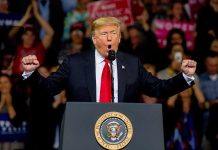
President Donald Trump took the unusual step of using a national address on “election interference” to attack two of the biggest broadcast networks in the country by name. ABC and NBC declined to air his Thursday night speech live on their main broadcast channels, opting instead to stick with regular programming and cover the remarks in their news segments and digital platforms later. That programming choice, common for campaign-style or highly partisan addresses, was enough to light the fuse.
Trump told his audience that the networks “knew what it was about” and chose not to air the speech because “they don’t like the topic,” meaning his claims about election fraud and interference. He said ABC and NBC, along with “others in the media,” were “part of a plot” to hide what he described as fraud in American elections, repeating themes he has pushed for years without producing evidence that convinces courts or bipartisan election officials. He framed their refusal as proof of bias and complicity, not simple editorial judgment.
The call to revoke licenses, and why he keeps going back to it
From that stage, Trump went further than most presidents ever have. He declared that “fraud like this should mean a revocation of their licenses,” arguing that ABC and NBC “use our public, multi-billion-dollar-in-value airwaves for absolutely no money” and that “they pay nothing” for “multibillion dollar assets.” He has used similar language before, calling the networks “two of the worst and most biased” in history and claiming that about 97 percent of their coverage of him is negative.
To many conservative viewers who feel gaslit by big media, his anger resonates. They see decades of slanted coverage, double standards on scandals, and open contempt for religious or traditional voters. From that lens, a president saying “if you are going to use public airwaves, you should at least be fair” sounds like common sense accountability. The problem is how he wants to enforce that fairness: by threatening government punishment for speech he dislikes, which runs straight into the Constitution.
What the law actually allows the FCC to do
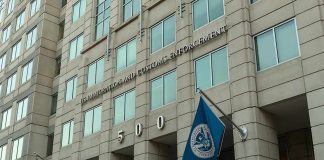
Broadcast television does not work like a cable channel or a website. Local stations need a government license to use specific chunks of the public airwaves. Those licenses come from the Federal Communications Commission, which is legally required to consider the “public interest” when it grants or renews them. On paper that sounds broad, and Trump leans on that phrase when he suggests the government could simply pull ABC or NBC off the air.
In practice, both courts and past FCC chairs from both parties have drawn a hard line: the government cannot yank a broadcast license because it dislikes a station’s news or opinion content. A former FCC chair stated flatly that the agency “does not have the authority to revoke a license of a broadcast station based on the content of a particular newscast.” Current leaders have repeated that message, stressing that the First Amendment, not the White House, controls what journalists can say.
A pattern of threats, and why this one still matters
This is not Trump’s first attempt to use license threats as a hammer. He has previously floated revoking licenses over negative coverage of his administration, late-night comedy segments, debate moderation, and questions about figures like Jeffrey Epstein. Media-law experts and even some Republican lawyers say those threats would almost certainly fail in court, because judges treat viewpoint-based punishment of the press as one of the brightest red lines in American law.
So if the legal odds are so poor, why does he keep reaching for this weapon? Politically, the strategy is clear. By naming ABC and NBC as villains, Trump turns complex complaints about bias into a simple story: “They are part of a plot to silence you.” That message rallies his base, pressures networks to overcorrect, and dares them to prove they are not the enemy by covering him more. It is a feedback loop of outrage that costs him nothing, even if it never results in a single lost license.
Free speech, conservative values, and the danger of the shortcut
For conservatives who care about limited government, there is a hard tension here. Many on the right see legacy media acting like a messaging arm for the left, especially on elections, COVID, and social issues. Yet the same Constitution that protects a pro-life pastor or a gun-rights group from censorship also protects a liberal newsroom. When a president says the solution to slanted coverage is for government regulators to “take away” licenses, he is asking the state to pick winners and losers in the marketplace of ideas.
That is exactly the tool many conservatives fear will one day be turned on churches, talk radio, or right-leaning cable channels. The American answer to bad speech has always been more speech, not more government muscle. ABC and NBC may have made a judgment call that frustrated millions by skipping Trump’s speech. Voters are free to punish them with the remote, investors, or new competitors. But inviting Washington to decide which news is acceptable hands future presidents a loaded weapon—and history shows it rarely stays pointed in only one direction.
Sources:
theguardian.com, politicalwire.com, nbcnews.com, youtube.com, nytimes.com