Elizabeth Warren’s on-air dodge over billionaire cash cracked open the Democrats’ biggest 2026 headache: they rail against big money while swimming in it.
Story Snapshot
- Warren urged Democrats to reject billionaire money, then faced questions about her party’s own megadonors.
- Stephen and Susan Mandel have poured millions into Democratic groups reshaping primaries and recruiting candidates.
- Reporters and analysts say these networks boost moderate, corporate-aligned Democrats over progressives.
- The legal landscape lets megadonors fund parties and super PACs at unprecedented scale.
Warren’s On-Air Test Meets the Party’s Money Reality
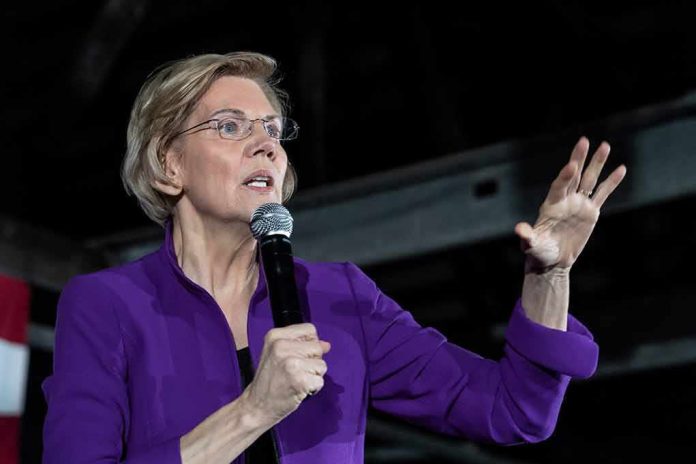
Senator Elizabeth Warren said Democrats should push back against billionaire influence, and then got pressed about Democrats taking billionaire money anyway. Critics pointed to the reported tens of millions from Michael Bloomberg and others bankrolling Democratic efforts this cycle. That line of questioning goes to the core dispute: can a party claim to stand for “the people” while relying on huge checks to win costly races? Warren’s stance opposes undue influence, yet the party’s funding mix tells a different story to many viewers.
Bloomberg is not alone. Technology investor Reid Hoffman and hedge fund veteran Stephen Mandel loom large. Coverage has described specific super political action committees and pop-up networks that move money quickly to key contests. The thrust is simple: billionaire giving to Democrats is large, targeted, and timed to shape both primaries and the general election. Voters watching Warren’s exchange saw a clean clash between message and method, and that tension will not fade before November.
The Mandel Network And The Primary Battlefield
Public reports show Stephen and Susan Mandel steering large sums into two hubs: Majority Democrats and The Bench. Those groups recruit, test, and boost candidates, often in primaries where a few million in ads can define a race. Journalists who mapped the funding call it a “party within a party” with corporate-friendly leanings. Supporters claim it modernizes the bench. Skeptics call it a billionaire screen for gatekeeping who gets through the primary door.
Independent reporting confirmed the scale. CBS News reported the Mandels gave almost $10 million to Democrats seeking federal office and that more than 90 percent of the Majority Democrats political action committee’s disclosed fundraising since mid-2025 traced to the Mandels and another wealthy donor. That kind of concentration raises a simple question any parent can ask: who pays the bills, and what do they expect in return? The public will expect straight answers if candidates want trust.
Why The Money Flood Keeps Rising
The Supreme Court’s recent rulings again widened lanes for political spending. The Court has rejected “undue influence” as a basis for restricting political speech, limiting how far Congress can curb large donors. Party and super political action committee structures can now capitalize on these rules at speed. Campaigns cost more than ever, so both parties raise and spend wherever the law allows. The result is predictable: megadonors hold more levers, and they know how to pull them.
Republican-leaning billionaire donors and significantly outspend their Democratic counterparts. In the current election cycles, top Republican donors have given roughly $1.54 billion compared to about $590 million from Democratic givers. Jackson received $3500 from 4 billionaires https://t.co/5InmOVCvit
— MrPerson (@MrPerson36581) October 23, 2026
This is the system candidates run in, not around. If Democrats claim to stand with working families, they must show how billionaire-backed spending will not steer policy away from those families. That means clear guardrails: public commitments on access, conflict disclosures, and bans on donor-driven litmus tests for hiring or agenda-setting. Voters should demand receipts, not slogans. Common sense says you cannot serve two masters—the people and the patrons—without strict rules and sunlight.
What Viewers Should Watch Next
First, track primary spending, not just general election ads. If a small set of wealthy donors keep deciding who makes the ballot, the larger base becomes an afterthought. Second, read the disclaimers on every ad and mailer. Follow the money to the committee, then to the donor. Third, listen for policy details that buck donor preferences. When a candidate crosses a big giver’s interest and stands firm, that is a real test of independence. That is how trust is earned, not tweeted.
On the facts, Warren’s broad warning about billionaire sway aligns with a decade of research and rulings that made big checks the norm. But her party’s heavy reliance on billionaire-funded committees weakens the moral high ground. The evidence of targeted, megadonor-backed networks inside Democratic primaries is specific and named, and it merits more transparency and internal reform. If Democrats want the “people vs. money” frame, they need to prove it with conduct, not just quotes.
Sources:
thegatewaypundit.com, levernews.com, truthout.org, journaloftheplagueyears.substack.com, washingtonpost.com