On Air Force One, President Trump said he likes Flock cameras because they help police catch criminals, and that simple line may shape a national fight over safety and privacy.
Story Snapshot
- Trump praised Flock cameras as crime-fighting tools, saying, “I like them.”
- Weeks earlier, he said the government was still studying the tech and weighing pros and cons.
- Police and vendor claims credit the cameras with aiding many investigations and recoveries.
- Civil-liberties groups warn of mass surveillance risks and misuse by bad actors.
Trump’s On-Record Support, Framed Around Police Use
Trump told reporters he “sort of” likes the cameras because law enforcement likes them, and because they help catch criminals. The comments came during an Air Force One press gaggle on September 13, 2026, where he doubled down with “I like them.” The remarks were short, but clear. He did not cite agency audits or case files. He kept the focus on aiding police and stopping criminals, a message that fits his law-and-order brand.
One month earlier, Trump struck a different tone. He said the technology was still under review, that it had pros and cons, and that an answer would come soon. That stance showed an open door but not a final call. Now, his words signal a lean toward adoption where law enforcement sees value. That arc tracks a common pattern in policy: study, stress-test, then endorse the core mission if frontline users vouch for it.
What These Cameras Do For Investigations
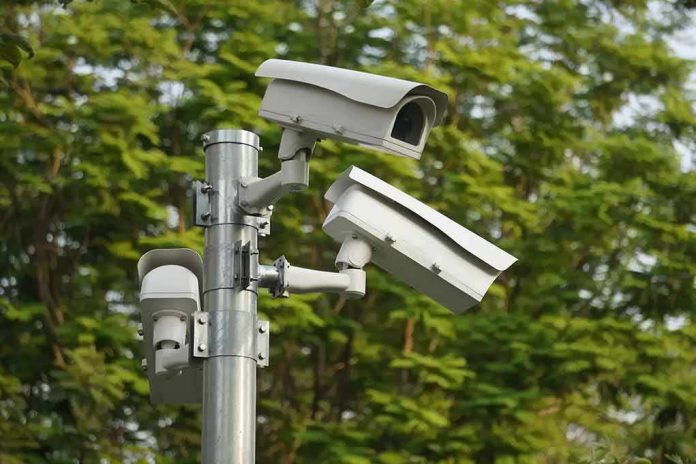
Flock cameras capture license plates on public roads and alert police to wanted vehicles. Departments say the systems speed up stolen car recoveries, suspect identification, and Amber-style searches. Public claims credited the platform with helping on a large number of cases, while some police-facing estimates placed its role in a significant share of solved crime. These are big claims, and they fuel Trump’s trust in the tool as a force-multiplier for thin blue line budgets.
Operational signals inside government point the same way. Reporting on a United States Park Police budget request described Flock cameras listed as a “nonnegotiable” equipment need. That suggests field-level buy-in, not just a Beltway talking point. For a White House that prizes visible results, that kind of operator demand matters. It says the tech is not just neat, but necessary for daily policing tasks like interdictions and recovery work.
The Privacy Fight Will Not Go Quietly
Civil-liberties groups argue the system builds a giant location log of innocent drivers and lets agencies search history without a warrant. The American Civil Liberties Union warns that these scans, once aggregated, can reveal private patterns of life. That case claims the danger is not the single snapshot, but the database power across time and places. It is the difference between a glance by one officer and a map of your week.
Critics also cite reports of officer misuse, such as tracking personal contacts, and raise Fourth Amendment concerns about unreasonable searches and seizures. Media coverage has amplified these fears, which pushes local officials to pause or cancel deployments. When that drumbeat grows, it can overwhelm the success stories and turn a police tool into a political flashpoint. Skeptics want hard rules on retention, sharing, and audit trails before any expansion.
How A Conservative Lens Weighs The Tradeoffs
Public safety is a core duty of government. Tools that help police find stolen cars, violent suspects, or missing people deserve a fair test. That said, guardrails should be clear and tight. The conservative answer is not to ban the wrench because a bad mechanic exists. The answer is to lock misuse down with logs, penalties, and short data clocks, while keeping the tool in the cruiser where it saves lives and property. That balance respects liberty and order.
The General, [Sep 14, 2026 at 7:43 AM]
BREAKING: President Donald Trump supports Flock cameras, saying they are useful tools for law enforcement.@GeneralMCNews
https://t.co/HVuDtk6xj7— Ra'ah Tony Smith (@PastorTonySmith) September 14, 2026
Court trends show a split: many judges uphold license plate readers on public roads, while some warn that mass, long-term tracking can raise different constitutional questions. Policymakers should not wait for a perfect ruling to act. They should set firm retention limits, restrict broad fishing queries, require supervisory sign-off for historical searches, and mandate automatic audit alerts. With those steps, the benefit can stand without building a dossier on everyone.
What To Watch Next
Watch for whether the White House backs up Trump’s comments with policy: procurement standards, data-retention limits, and interagency sharing rules. Look for agency evaluations that compare clearance rates and recovery times before and after deployments. Track whether Congress pushes nationwide guardrails to answer the privacy fight with uniform standards. The question is not whether technology will shape policing. It already has. The question is whether leaders will shape the rules before the rules shape us.
Sources:
thegatewaypundit.com, usatoday.com, yahoo.com, nypost.com, pbs.org