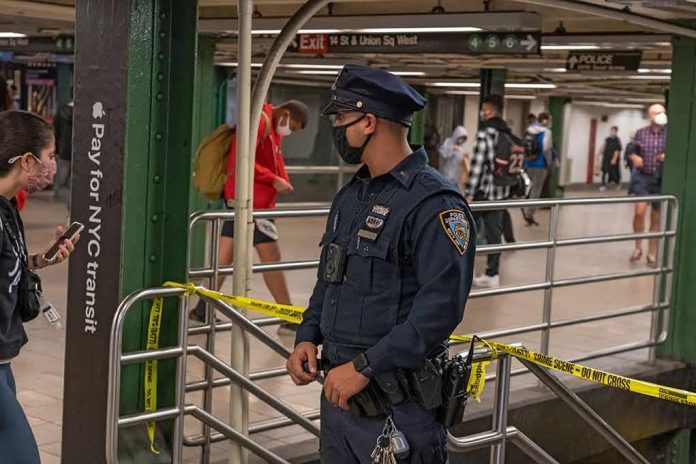
A Bronx subway dispute ended with a fatal stabbing, and the details are stark enough to leave little room for guesswork.
Quick Take
- Police said a verbal dispute turned into a stabbing on a northbound 2 train in the Bronx.
- The victim died after being stabbed in the chest and taken to Lincoln Hospital.
- Police took the suspected attacker into custody after the killing.
- The case fits a wider pattern of fast, ugly disputes turning violent in New York City transit and neighborhood incidents.
What Police Said Happened
According to police and local reporting, two men argued before one of them stabbed the other on a northbound 2 train in the Bronx. The victim was stabbed in the chest, taken to Lincoln Hospital, and pronounced dead there. Police also said they took the 36-year-old suspect into custody after the attack. The station closed while investigators worked the scene.
That sequence matters because it sets the public facts apart from the usual fog that follows a city stabbing. Here, the basic chain is clear: dispute, knife attack, hospital, arrest, shutdown. What is not clear is the deeper motive, what each man said, and whether anyone else was involved before the violence broke out. Those gaps matter, but they do not erase the core account police gave.
Why This Case Hit a Nerve
People do not just react to the bloodshed. They react to how ordinary the start sounds. A verbal fight on a subway train is almost boring until it becomes life or death. That is why these cases stick. They feel close, sudden, and hard to avoid. One moment is irritation. The next is a fatal wound and a police tape line where commuters should have been standing.
Surveillance video from a separate Bronx case showed how fast these fights can spin out. In that incident, a dispute escalated into a full brawl, and one man ended up hospitalized with stab wounds. The point is not that every Bronx stabbing is the same. The point is that a small flash of anger can turn into a scene that overwhelms a block, a station, or a whole neighborhood.
The Broader Pattern People Keep Seeing
This case lands inside a larger pattern that New Yorkers know too well. Transit attacks grab attention because they happen in tight spaces, with strangers trapped together. That makes each episode feel bigger than the statistics alone would suggest. At the same time, crime in the subway remains rare compared with the number of rides, even as officials say felony assaults have risen since 2019.
That tension explains why the public mood stays uneasy. Riders hear that violent incidents are uncommon, then watch another attack unfold on video or in police reports. They are told the system is safe, but they keep seeing disputes turn into stabbings. Both things can be true at once. The danger may be statistically limited, yet the fear is still rational because the setting gives violence such a sharp edge.
What the Public Still Does Not Know
The central facts are established, but several details remain open. Police did not publicly explain what started the argument, whether the men knew each other, or whether the weapon was recovered. The investigation was still active at the time of reporting. Those are not minor points. They shape how people judge intent, danger, and responsibility. Without them, the story stays factually solid but still incomplete.
That is where public debate often goes off the rails. Some readers want the cleanest possible moral lesson. Others want to cast doubt before the facts are done. The smarter approach is simpler: keep the confirmed facts in front, resist filling in blanks, and watch whether later evidence changes the picture. In a case this violent, the confirmed details already say enough about how fast a city dispute can turn deadly.
Why the Story Will Stay With People
This stabbing is not just another grim headline. It taps into a larger civic fear: that ordinary conflict is becoming less containable in public spaces. A subway car is supposed to be a place of motion, not a place where a fight ends in death. When a dispute spills into a killing, it exposes how thin the line can be between irritation and tragedy. That is why the story keeps echoing long after the police tape comes down.
Sources:
thegatewaypundit.com, abc7ny.com, youtube.com, facebook.com, vitalcitynyc.org, transit.dot.gov