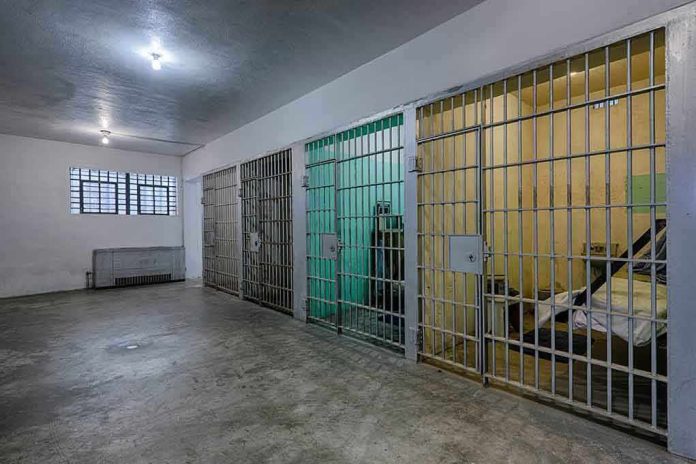
Germany now locks up almost as many foreign nationals as German citizens, and that simple fact is quietly rewriting the country’s justice and immigration debate.
Story Snapshot
- About 45 percent of prisoners in Germany are foreign nationals, versus under 20 percent of residents.
- In several key states and big cities, foreigners are now the majority behind bars.
- Costs to taxpayers run into the billions of euros each year for incarcerating non-German inmates.
- Rising foreign prisoner numbers track with years of high migration, weak borders, and crime concerns.
Foreign nationals now fill nearly half of German prison cells
Federal data and national press reports show that foreign nationals now make up about 45 percent of the people held in German prisons, including pretrial detention, out of roughly 60,000 inmates nationwide. That share is nearly three times their presence in the general population, where foreign nationals are closer to the mid-teens as a percentage of residents. Put plainly, almost every second person behind bars in Germany today does not hold German citizenship.
One key analysis from the Neue Osnabrücker Zeitung used figures from all sixteen state justice ministries and found more than 27,000 foreign inmates, or 44.8 percent of the total prison population in March 2026. Another Europe-wide prison brief, relying on Council of Europe data, put foreign nationals at about 47 percent of German prisoners in early 2025. While the exact percentage varies by source and date, the direction is consistent: foreign presence in German prisons has surged in recent years.
The scale of overrepresentation and where it is most stark
This is not a small statistical gap. Federal statistical data indicate that foreign nationals make up roughly 17 percent of Germany’s population but around 45 percent of prisoners. That means foreign nationals are represented in prison at well over double their population share. National and regional reports show the imbalance is sharpest in western and southern states and in big city-states, while eastern regions still have relatively fewer foreign inmates. The headline, however, is the same almost everywhere: foreigners are overrepresented behind bars.
Several states now report that more than half of their prisoners are foreigners. Hamburg’s prisons are about 58 percent foreign; Berlin’s figure is in a similar range. Bavaria, Germany’s second-largest state, has just over 51 percent foreign nationals in its prisons. At the local level, the same pattern shows up. A breakdown from Heilbronn in southwestern Germany reported that foreign nationals made up 54.5 percent of inmates in the town’s prison, despite being a much smaller share of the surrounding population. Germany’s prison system is no longer mainly German in many places; it is mixed, and in some areas majority foreign.
How we got here: migration waves, crime trends, and legal gaps
Germany has experienced large immigration waves for more than a decade, from European free movement to asylum flows from the Middle East and North Africa. During that same period, official crime and justice figures have recorded rising shares of foreign suspects, especially in violent crime, and an increasing proportion of foreign prisoners. Academic and government studies going back years have noted that non-German nationals are consistently overrepresented in both general prisons and prison psychiatry compared with their share of the population.
Several factors likely feed this gap. Foreign nationals may be more present in the kinds of offenses that lead to pretrial detention or longer sentences, such as violent crime and organized theft. Many lack stable housing or family ties in Germany, which courts normally use as reasons to avoid remand, so judges are more likely to keep them locked up while cases move forward. Some migrants also arrive with weak language skills and little knowledge of the legal system, which can make it harder to navigate charges, plea deals, and rehabilitation programs. These practical realities, not just ideology, shape who ends up behind bars.
What it costs taxpayers and what it signals about policy
Prison in Germany is not cheap. The daily cost per inmate is estimated at around 200 euros in some states, and nationwide spending on prisons runs into billions of euros every year. One detailed report calculated total annual prison costs at roughly 4.1 billion euros, with about 1.8 billion spent on foreign prisoners alone. For a country that already carries heavy welfare and integration bills, this is one more budget line that reflects the long tail of generous migration and weak border policies.
From a conservative, common-sense view, these numbers are not just “interesting data”; they are a loud warning siren. A justice system is supposed to protect citizens first. When foreign nationals, often admitted under promises of opportunity and solidarity, make up nearly half of the people locked away for breaking the law, something upstream has gone badly wrong. Border control, vetting, and deportation for serious offenders look less like harsh ideas and more like basic self-defense. The statistics out of Germany do not settle every debate about immigration and crime, but they leave one point very hard to deny: when a country loses control of who it lets in and who it removes after lawbreaking, its prisons will eventually tell the story.
Sources:
pjmedia.com, europeanconservative.com, pmc.ncbi.nlm.nih.gov, schengenvisainfo.com, rmx.news, journals.uchicago.edu, en.wikipedia.org, zeit.de