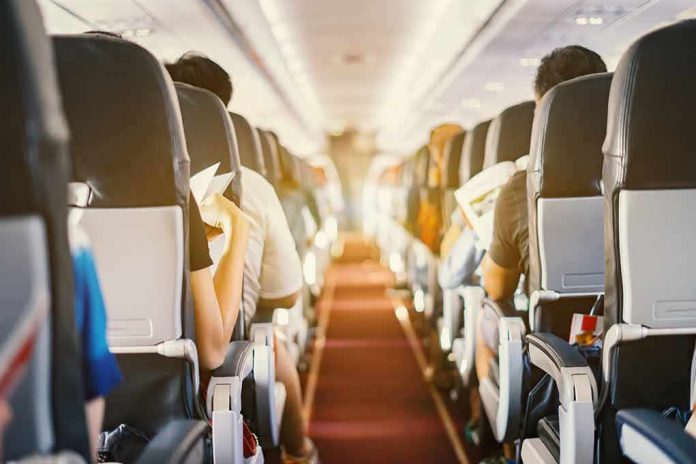
A three-year-old’s tantrum in a Swedish airplane seat did not just delay a flight for an hour — it cracked open a fierce, growing demand for adults-only ways to fly.
Story Snapshot
- A Sweden flight delay over an unruly toddler reignited calls for adults-only flights and cabins.
- Surveys show large majorities of travelers would pay extra, often 10–30% more, for child-free flights.
- Asian and European airlines already sell adults-only or “quiet” zones with age limits and surcharges.
- Existing child rules and fees on airlines prove age-based policies are normal, not radical.
The Sweden toddler delay that touched a nerve
A routine Sweden departure turned tense when a three-year-old refused to stay seated, forcing crew and parents into a standoff that ended with the family removed and the flight about an hour late. Flyers stuck on board watched one small child upend the plans of a full cabin. The episode moved fast from local annoyance to global symbol. A Fox News audience summed up the mood in one blunt line: “I would seriously pay extra for adults-only flights.” For many, that reaction felt less like a joke and more like a long-held wish finally said out loud.
The Sweden delay also highlighted how little control adults really have once the cabin door closes. You can choose your seat, pay for extra legroom, even pick your onboard meal. You cannot choose whether you spend six hours next to a screaming toddler. That sense of being trapped with someone else’s chaos explains why this one tantrum traveled so far online. It fit a pattern many passengers say they know too well, and it gave a face and age to a problem they think airlines pretend does not exist.
Real-world examples of adults-only and child-free zones
While big United States and European carriers still avoid fully adults-only flights, other airlines have quietly moved ahead with child-free or adult-only areas. Corendon Airlines, a Turkish-Dutch carrier, created an “Only Adult” zone on its Amsterdam–Curaçao route. The section reserves 93 seats for travelers 16 and older, separated by walls and curtains, and costs about €45 extra, or €100 for more legroom. The founder said putting half a plane aside for adults can even help parents, because it clusters families and reduces tension between them and solo travelers.
Asian carriers pushed this trend earlier and show it is not a fringe idea. Scoot sells “Scoot-in-Silence” cabins on some 787 flights, where no one under 12 can sit. AirAsia X blocks children under 12 from the first seven rows of certain A330 economy cabins. IndiGo in India set up “Quiet Zones” in specific rows where kids under 12 are banned. These sections cost more, often around $45–$55 extra, yet demand is strong enough that airlines keep them and report growing interest. That is the core conservative test: if people value something enough to pay for it, the market tends to keep it.
What travelers say they want — and are willing to pay
Surveys in the United States and abroad paint a clear picture. A study by PhotoAid found that 80 percent of travelers want adult-only flights, and 64 percent would pay more for them. For long flights of six hours or more, most said they would pay about 10–30 percent extra to avoid children on board. Another analysis reported that more than half of travelers would pay a premium for an adults-only option, again clustering around a 10–30 percent increase in ticket price. This is not a small niche; it is a strong majority.
Other polling dives deeper into price tolerance. One breakdown shows that about 17 percent of respondents are ready to pay 10–20 percent more for adults-only long-haul tickets, and more than a quarter of regular passengers view that surcharge as fair. Some would pay even more than 30 percent. From a common-sense view, that is gold for airlines: a segment openly asking to be charged extra for an experience that costs mostly planning and curtains, not a new airplane. It suggests adults-only flights or bigger adults-only sections are not just possible, but profitable.
Airlines already draw age lines and charge extra for kids
Supporters of adults-only flights point out that airlines already sort passengers by age and charge families more under certain conditions. KLM offers a service for children traveling alone where the child pays an adult ticket price plus a special fee between €100 and €150 for direct flights, and up to €300 for flights with a transfer. Other carriers set minimum ages for solo travel, often 14 or higher, and require a supervising adult who meets a defined age threshold. Age rules are baked into how airlines work today.
Those facts matter in the policy debate. If an airline can say “no one under 14 may travel alone” and “pay an adult fare plus a surcharge for this child service,” it is hard to argue that setting aside a section for those 16 and older is somehow beyond the pale. From a rule-of-law and fairness lens, the key is clear notice and equal treatment, not pretending every age is the same. Adults-only areas expand choice. Parents still get seats. Adults who want quiet get a way to buy it instead of resenting every family on board.
Do adults-only flights help or divide families and society?
Critics worry that no-kids zones send the message that children are a burden, not a blessing, and that pushing families to the back of the plane could deepen social divides. That concern deserves respect. But the facts from early adopters cut against the idea that adults-only policies mean anti-child policies. Corendon’s founder argues that adults-only rows can reduce friction by clearly separating expectations: parents know where other families sit, while adults seeking quiet know where to pay for calm. That sounds more like smart zoning than cultural war.
From an American conservative standpoint, the stronger case sits with voluntary, paid choice. Adults-only flights or cabins do not punish parents; they let markets match willing buyers with a product they want. Airlines already sell business class as a quieter, more spacious space. They already charge extra to seat unaccompanied children. Extending that logic to age-limited sections respects both family life and adult comfort. If anything, it may cool some of the anger shown in viral clips, because people who want distance from kids can finally buy it instead of blaming moms and dads doing their best at 30,000 feet.
Sources:
facebook.com, klm.se, ug.se, thetraveler.org, sverigesradio.se, reuters.com, travelandtourworld.com, afar.com