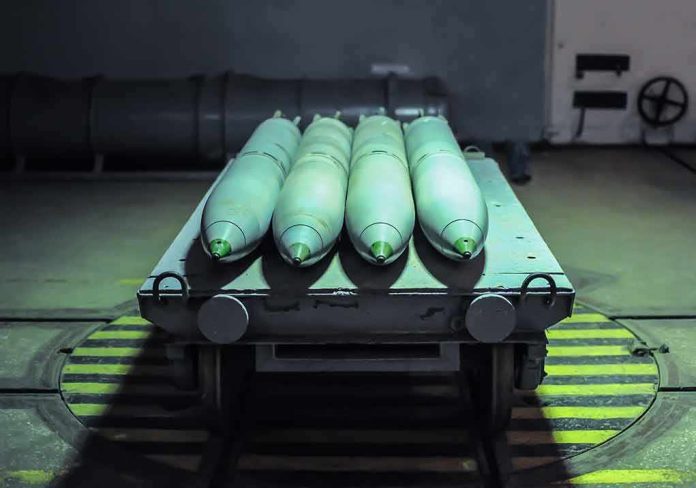
The U.S. Army blew up nearly five tons of unstable lead azide in Iowa because they judged waiting was riskier than detonating it under control.
Story Snapshot
- The Army said the stockpile had degraded and could explode on its own.
- The Environmental Protection Agency issued an emergency permit for on-site treatment.
- Officials planned a “controlled, mitigated detonation” with dust controls.
- Court filings show rapid legal action around the emergency decision.
What the Army Did and Why It Mattered
Army leaders at the Iowa Army Ammunition Plant set a time, built blast controls, and detonated the nation’s lead azide stockpile on a tight window before Thanksgiving. They said the explosive crystals had grown unstable inside aging containers. They argued any move risked a chain reaction. Their public advisory framed the blast as the safer path to avoid a surprise explosion that could hurt workers and neighbors. The plan leaned on experience with emergency demolition of sensitive munitions.
Lead azide is a primary explosive. It starts the bigger blast in a detonator. When it degrades, it can form crystals that react to light touch, heat, or friction. Officials described material that could not be repacked, vented, or hauled without major danger. That logic steered them away from shipment to a plant and toward destruction in place. Army updates called the action “controlled” and “mitigated,” with layers of sand, water, and covers meant to catch and cool debris and dust.
The Legal Green Light and the Emergency Frame
The Environmental Protection Agency issued an emergency hazardous waste permit to store and treat the stockpile on site. The permit cited an “imminent and substantial endangerment” to health and the environment. That finding unlocked emergency measures that do not run through normal timelines. The agency’s public notice made clear it weighed immediate blast risk against other options. A federal appeals record shows how fast the filings moved once the Army and the Environmental Protection Agency invoked emergency authority.
State and local partners pushed health guidance ahead of the blast. Advisories told residents how to reduce any exposure risk, from staying indoors to rinsing outdoor play areas after the event, and promised follow-up sampling. The Iowa Department of Health and Human Services posted a plain-language fact sheet that outlined protective steps and how to read air updates. That document reflected a simple aim: manage a short, sharp hazard from dust while stopping a bigger one from an unplanned explosion.
Risk Tradeoffs: Why Detonation Beat the Alternatives
Officials said the stockpile was beyond safe handling. Moving it across roads risked vibration, impact, or heat. Processing it in a factory-grade system would still require transport and repackaging. The Army stated that open detonation under a blast hood and heavy covers offered a high chance to confine the burst and drop the dust quickly. That design matched longstanding emergency doctrine for unstable explosives judged too sensitive to move or treat by routine methods.
🚨🇺🇸 #BREAKING: US ARMY DETONATES NEARLY FIVE TONS OF HIGHLY UNSTABLE EXPLOSIVES AT IOWA ARMY AMMUNITION PLANT!
A massive controlled explosion has rocked the Iowa Army Ammunition Plant in Middletown after US military specialists carried out a high-risk operation to destroy…
— Jonathan (@Jonathanslh7) November 25, 2026
Federal filings also show the operational guardrails. The Army cited meteorology, site geometry, and a designated open detonation unit at the plant boundary. The Environmental Protection Agency emergency permit set conditions for staging, execution, and monitoring. Illinois and Missouri agencies mirrored that timeline for public notice and updates, recognizing the regional interest in a cross-border plume scenario. The Army’s formal notices stressed that every day of delay raised the odds of an uncontrolled event.
Accountability, Monitoring, and What Comes Next
Public trust in such operations hangs on data that arrive fast and clean. The Army and partners deployed air monitors, set up sampling plans, and prepared soil and wipe tests near likely deposition areas. The purpose is simple: confirm that mitigation worked and publish results people can understand. That is good government and good sense. When an agency takes the high-risk choice to blow something up, it owes the public prompt evidence that the trade paid off.
Critics raised concerns about lead spread and long-term cleanup costs, and a judge briefly paused the schedule before higher courts weighed emergency claims. That push and pull is healthy. It pressures agencies to document why an emergency exists and to show they studied alternatives with clear criteria. Based on the record here, the Environmental Protection Agency’s emergency permit and the Army’s public advisories laid out a necessity case that tracks with established practice for unstable explosives that cannot be moved without grave risk.
Bottom Line
The government chose a short, controlled blast over a long, rolling danger. The Army argued that every other path ran through handling an explosive that had become a tripwire. The Environmental Protection Agency agreed and set strict conditions. That alignment does not end the story. It starts the audit: release the monitoring, fix any hot spots, and close the loop with clear, plain updates. That is the standard taxpayers should expect, and the standard agencies should meet.
Sources:
facebook.com, apnews.com, army.mil, epa.gov, ecf.ca8.uscourts.gov, dnr.mo.gov, cnn.com