Santa Clara County now stocks public machines with free naloxone, needles, fentanyl test strips, and smoking kits—no appointment, no questions, at set hours.
Story Snapshot
- The county runs harm-reduction vending machines with registered access.
- Emergency naloxone can be taken without the unique participant code.
- Locations and hours are public and easy to reach on weekdays.
- Critics call this taxpayer-funded drug gear; officials frame it as overdose prevention.
What The Machines Actually Dispense
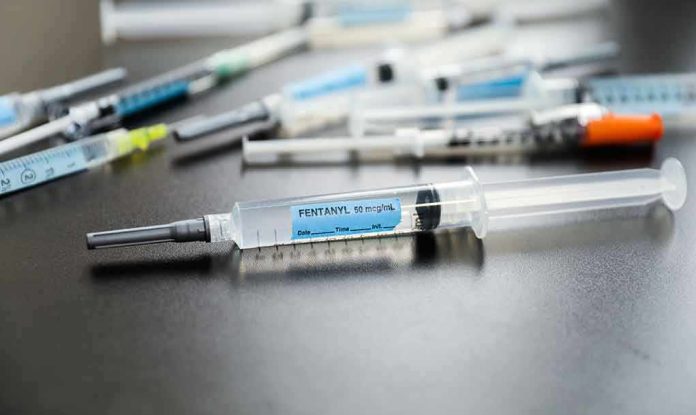
Santa Clara County lists exactly what goes in the vending machines: naloxone for overdose reversal, fentanyl test strips, sterile injection supplies, safer-sex items, and non-injection supplies that include smoking and snorting kits. The county posts this on its public harm-reduction webpage and ties it to a registration process for participants. The design aims to lower barriers so people can grab supplies fast when a staffed site is out of reach.
County policy also carves out a safety valve for emergencies. If someone is facing an overdose risk and needs naloxone, the machine will dispense without the user entering the normal unique identifier. That detail matters because most fatal overdoses happen in minutes, and any delay can turn a save into a funeral. The county chose a rule that leans toward saving a life first and sorting paperwork later.
Where And When You Can Get The Supplies
The county points people to two weekday-accessible machines. One sits in the Lenzen Health Center lobby in San Jose with posted hours, and another is identified in a county presentation at a Gilroy health site with later evening access. These are not back rooms or hidden vans. They are on public campuses with doors open during business hours or later, which removes the need to wait for an outreach worker or clinic slot.
Officials say the vending machines are a fallback when people cannot make it to a standard harm-reduction site. That framing signals a system built around “low-barrier” steps: clear locations, predictable hours, and simple access. Earlier county planning also set the stage for naloxone kiosks at local jails and juvenile facilities as part of a broader overdose push, not a one-off experiment. Supervisors backed more funding for behavioral health when those ideas moved forward.
What We Know, What We Don’t, And Why That Gap Matters
The public record nails down what the machines stock, who can use them, and the emergency naloxone exception. It does not yet show machine-level results: how many kits went out, how many unique people used them, or how many overdoses those kits reversed. It also does not publish costs, contracts, or litter and syringe-return data by site. Without those numbers, taxpayers cannot judge value, reach, or any trade-offs on cleanliness and safety near the machines.
Evidence from outside Santa Clara suggests these models can reach people who avoid clinics and can move a high volume of supplies. A study of public health vending in Clark County, Nevada, linked machine naloxone access to fewer projected overdose deaths during the first year, though methods and local context differ across states. That kind of targeted outcome analysis, done in Santa Clara, would answer the most urgent questions faster than any talking point.
The Fight Over Principle: Safety Net Or Subsidy?
Critics argue government machines that include smoking kits and sterile syringes amount to publicly funded drug paraphernalia. They claim this normalizes use, imposes costs on neighbors, and keeps people stuck rather than steering them to treatment. That charge resonates with many voters who want order, accountability, and a clear on-ramp to recovery—not an endless loop of gear without a plan.
Be nice if these people actually got some help.
"In Santa Clara County, California, a drug user can walk up to a vending machine at a county health center, enter a personal code, and receive free supplies for smoking, snorting or injecting drugs, along with naloxone, the…
— oceandesertocean (@oceandocean) November 20, 2026
Common sense and conservative priorities call for a tight standard: save the life today, show the receipts tomorrow. That means publish site-level numbers every month, verify overdose reversals tied to machine naloxone, track unique users not just total kits, and report cleanup and disposal data. It also means pairing every machine with a direct line to detox and treatment slots, not just a brochure. If the county can prove lives saved per dollar and cleaner streets per block, trust follows; if not, the program should be reworked or rolled back.
Sources:
thegatewaypundit.com, publichealth.santaclaracounty.gov, content.govdelivery.com, rehabs.org, katv.com