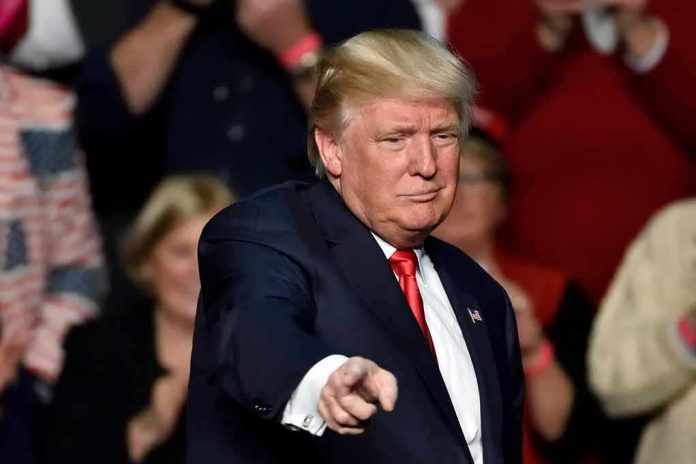
President Trump told a Michigan crowd he had seen “one hell of a beautiful ass” before turning to greet Nicki Minaj onstage, and the rapper’s own political endorsement of him got buried under the headline.
Quick Take
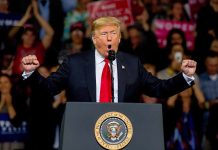
- At an October 25 rally in Port Huron, Michigan, Trump called Minaj onstage and commented on her body before praising her appearance again later.
- Minaj used her time at the podium to endorse Trump and Michigan Republican candidates Mike Rogers and John James.
- Trump told the crowd he hoped Minaj was not “insulted,” while critics on air and online called the remark objectifying.
- The moment reflects a well-documented pattern where provocative personal comments crowd out substantive political coverage.
What Trump Actually Said Onstage In Michigan
The full rally recording runs nearly two hours and covers tariffs, immigration, and the midterms. Inside that speech, Trump told the crowd, “By the way, I looked at one hell of a beautiful ass before Nicki Minaj,” then asked her to stand so the audience could see her. He later added she “never looked more beautiful,” and said he hoped she was not insulted by the comment.
The remark did not come out of nowhere. Moments earlier, Trump had joked about Ohio candidate Jon Husted’s physique, saying, “I looked at his ass. I’ve never done that with a man before.” That earlier bit set up the tone before he turned his attention to Minaj, suggesting a running joke rather than an isolated jab aimed only at her.
Minaj’s Own Message Got Lost In The Clip
Minaj did not just stand there and absorb a compliment. She took the microphone and delivered a genuine political endorsement, saying Trump had “changed the energy of the country” and throwing her support behind Rogers and James ahead of the midterms. That speech, delivered by one of the biggest names in music backing a sitting president, barely made it into most headlines.
Instead, outlets built entire stories around nine words. Newsweek, CNN, and other outlets led with the body comment rather than the endorsement itself. That is not a conspiracy; it is simply how modern political coverage works. A colorful, quotable line beats a paragraph of policy talk every time editors are deciding what goes above the fold.
Why The Backlash Followed A Predictable Script
Critics did not stay quiet. On The Breakfast Club, Charlamagne Tha God argued Trump reduced Minaj to “her body part” after years of her demanding respect for her talent, warning listeners not to confuse “being chosen with being respected”. Other outlets ran with words like “disgusting” and “gross” to describe the exchange, framing it as evidence of casual sexism rather than friendly stage banter.
Trump’s own words complicate a purely innocent reading. Telling the crowd he hoped Minaj “wasn’t insulted” shows he understood the comment carried some risk of landing wrong, even as he followed it with more flattery about her looks. That is the tension at the center of this story: a president who clearly meant it as praise, paired with language that plenty of Americans will reasonably find crude for a political stage.
At a campaign rally in Port Huron, Michigan, Donald Trump gives praise to Nicki Minaj’s backside, calling it "one hell of a beautiful a**" and noting that "it's hard to miss." The remark occurred while Trump was speaking about media coverage of his past comments on the physiques… pic.twitter.com/QjgIcafwRz
— Evener Entertainment (@ETheEvolution) October 26, 2026
No public statement from Minaj herself addresses the remark directly. She has spoken plenty about supporting Trump and Republican candidates, but nothing on record says whether she personally found the comment flattering, awkward, or something she simply shrugged off in front of thousands of cheering supporters.
The Bigger Pattern Behind The Viral Clip
Research on political communication backs up what anyone scrolling their phone already senses. A university study found lawmakers who devote just 5 percent of their public messaging to personal insults get cable news attention comparable to colleagues spending 45 percent of their time on serious policy debate. Insulting posts also pull in far more shares than policy-focused ones, rewarding exactly this kind of moment.
That dynamic explains why a one-sentence quip about Minaj’s figure now competes for attention with tariffs, border security, and a tight midterm race. It is not evidence of media bias so much as a predictable incentive structure: outrage travels faster than substance, and a president’s stray remark about a pop star will always outrun his remarks about trade policy in the algorithm’s eyes.
Supporters will see a candid moment of humor between a president and a celebrity ally who openly backs him. Critics will see a public figure reducing a successful artist to her appearance on a national stage. Both reactions can be true at once, and neither erases the fact that Minaj walked up to that microphone to campaign for Trump and two Michigan Republicans, a detail worth remembering once the clip stops trending.