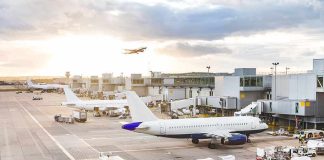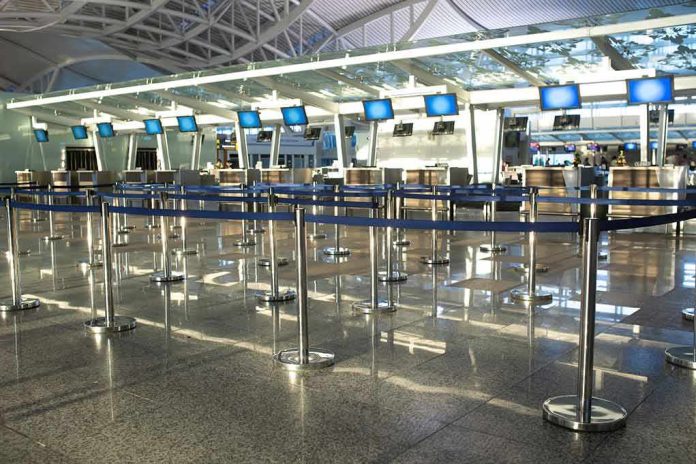
Saudi Arabia shut down one of its busiest airports after a missile strike tore through terminal buildings and struck a parked passenger jet, killing three people.
Quick Take
- Houthi forces claimed a ballistic missile strike on Riyadh’s King Khalid International Airport on October 9, 2026.
- Saudi aviation officials confirmed three deaths, injuries to people of multiple nationalities, and damage to a Saudia Airlines aircraft.
- The strike followed earlier Houthi-claimed attacks on Riyadh and Abha airports just days before, on October 6 and 7.
- Airlines canceled flights into Riyadh as smoke rose over the airport, though service gradually resumed.
Missiles Slam Into Saudi Arabia’s Busiest Gateway
Explosions rocked King Khalid International Airport in Riyadh on October 9, sending witnesses running for cover as smoke billowed over the terminal. The Associated Press reported evacuations underway as the chaos unfolded. Saudi Arabia’s General Authority of Civil Aviation later confirmed two separate strikes hit the airport that day, one targeting facilities and a second slamming directly into a Saudia Airlines aircraft parked on the tarmac.
Yemen’s Houthi movement publicly claimed responsibility within hours. Military spokesman Brig. Gen. Yahya Saree said his forces fired both ballistic and cruise missiles at Riyadh’s airport and at Najran, another Saudi facility near the Yemen border. Saree said the strikes disrupted air traffic across the kingdom, framing the attack as a direct hit on Saudi aviation infrastructure rather than a stray or incidental strike.
Saudi Officials Confirm Deaths, Houthis Claim Credit
Saudi aviation authorities reported three deaths from the October 9 attacks, along with injuries to people of several nationalities caught in the blast zones. The civil aviation body detailed the locations struck and the damage to the Saudia aircraft, but it stopped short of naming who carried out the strike. That left the Houthi claim as the primary account tying a specific group to the attack.
Reuters reported the strikes also damaged airport infrastructure and sent smoke pouring across the facility, forcing a wave of flight cancellations. The timing carried extra weight. Riyadh had been preparing to host a major gathering of global oil executives just days later, making the disruption to its main international gateway a pointed blow to the kingdom’s image as a stable business hub.
A Pattern of Strikes Across Saudi Airports
The October 9 attack did not happen in isolation. BBC reported that it followed Houthi-claimed strikes on Riyadh and Abha airports just two and three days earlier, on October 6 and 7. Those attacks reportedly killed and wounded dozens more people, suggesting a sustained campaign against Saudi aviation targets rather than a single incident.
CNN reported that Houthi-controlled armed forces claimed responsibility for those earlier strikes as well, with the broader string of attacks killing one Sudanese resident and wounding eight people in the Riyadh incident alone. The group described the escalation as a deliberate warning to commercial airlines flying into Saudi airspace, a threat aimed at raising the economic cost of the kingdom’s involvement in Yemen’s civil war.
Flights Grounded, Airlines Scramble
Multiple airlines canceled flights to Riyadh in the immediate aftermath of the strikes, leaving travelers stranded and cargo operations disrupted. Flight-tracking data showed a gradual restoration of service as ground crews cleared debris and inspected runways for damage. Saree’s own statement characterized the goal as disrupting air traffic broadly, not just striking a single target.
Saudi authorities have not publicly attributed the October 9 attack to the Houthis in their own statements, leaving the civil aviation account focused on damage and casualties rather than blame. The Houthi claim remains the primary source connecting the group to this specific strike, a pattern consistent with how the group has announced earlier attacks on Saudi soil.
What the Attack Means for the Wider War
Missile and drone strikes on Saudi infrastructure have become a near-constant feature of the Yemen conflict rather than a rare shock. The Houthis, backed by Iran, have repeatedly targeted airports, oil facilities, and shipping lanes, framing each attack as retaliation for Saudi-led military operations against them inside Yemen. Riyadh’s response has typically focused on damage control and air defense rather than public attribution disputes.
"I offer my deepest condolences on the death of our American brother in the Houthi terrorist attack on an airport in Riyadh.
Houthi = Terrorism." https://t.co/8hEheos0Vu— 🇸🇦H2021h (@H2021h4) October 11, 2026
For American observers, the strikes underscore why Gulf stability remains tied to Yemen’s unresolved war. A functioning Riyadh airport matters far beyond Saudi borders, touching global oil diplomacy and regional air travel. Each successful strike on Saudi aviation infrastructure signals that Iran-aligned forces can reach deep into the kingdom, a reality Washington cannot afford to treat as a distant regional squabble.