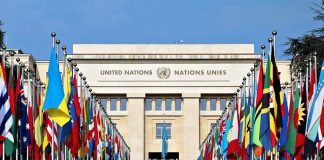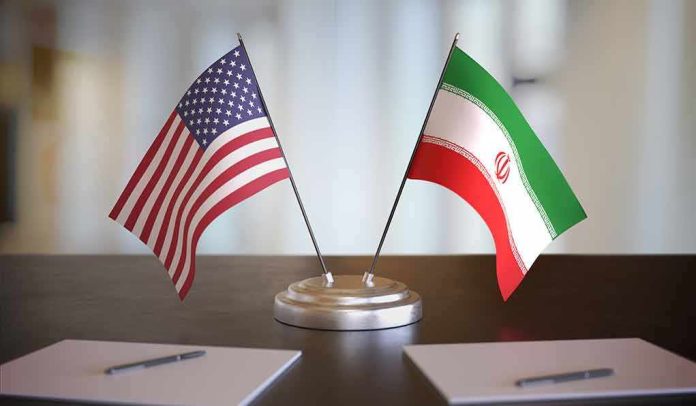
Delegates from the United States stood up and left as Iran’s president accused America and Israel of “terrorism” and “genocide” from the United Nations stage, turning a routine speech into a stress test of global power and credibility.
At a Glance
- Iran’s president denied seeking nuclear weapons and framed Iran as a victim of double standards.
- The United States staged a walkout as the speech escalated into charges against Washington and Israel.
- President Trump warned at the same forum that Iran faces a stark choice: make a deal or face annihilation.
- Recent reports show reduced nuclear transparency by Iran, deepening mistrust.
What Happened In The Room
Iran’s President Masoud Pezeshkian used his United Nations address to blame the United States and Israel for violence in the region and to claim Iran is the real victim. He held up images of dead and wounded and said Iran does not seek nuclear weapons, while insisting on a right to peaceful nuclear technology. United States delegates walked out during the accusations. The optics were stark: Tehran cast itself as righteous, Washington refused to sit for it.
President Trump, speaking to the same body a day earlier, framed Iran’s path as binary: make a deal that rebuilds the country or face annihilation by American power. He argued the war stopped Tehran from getting a bomb and said Iran could still choose peace. The message was simple deterrence. The White House paired hard lines with an open door, betting pressure changes behavior while keeping an off-ramp visible.
Iran’s Narrative Versus The Record
Pezeshkian’s denial of nuclear weapons intent plays to a long-running claim: Iran says it obeys the treaty and wants civilian energy. That case hinges on fairness. He pointed to Israel’s undeclared arsenal and said Iran faces inspections and sanctions while others do not. The fairness argument lands with some audiences. But it crashes into a recent reality: the nuclear watchdog reports little access in Iran and gaps in declared information during the reporting period.
The contrast is the core problem. Iran asks the world to trust words while cutting the world’s ability to verify deeds. Trust without inspection is not strategy; it is hope. Even some analysts who favor diplomacy say the monitoring picture has grown too thin for confidence, as cameras stayed dark and site access narrowed. That does not prove a bomb sprint today, but it erodes the only thing that ever made deals work: checking claims, every day, with eyes on steel.
Walkouts, Words, And The Conservative Ledger
The United States walkout sent a clear signal about red lines on moral equivalence. Calling America and Israel terrorists while Iran backs armed proxies crosses a line for most Americans, especially conservatives who prioritize moral clarity and national honor. The better test is not rhetoric but records. The International Atomic Energy Agency says it lacked the access and data flow needed to verify Iran’s nuclear status in the recent period. That aligns with a common-sense view: if you are clean, you let inspectors in.
🇮🇷🇺🇸 **Iranian security chief attacks Trump’s UN speech**
Iranian Major General **Mohsen Rezaei**, Secretary of Iran’s Supreme National Security Council, sharply criticized **Donald Trump’s speech at the UN General Assembly**, describing it as an attempt by a “defeated criminal”… pic.twitter.com/xI7mvEtZLd
— 𝕊𝕡𝕣𝕚𝕟𝕥𝕖𝕣 𝕻𝕣𝕖𝕤𝕤 (@SprinterPress) September 23, 2026
Trump’s “deal or annihilation” frame drew sharp reactions, but it reflects a textbook deterrence stance. Peace through strength requires believable force and a believable offramp. Iran’s leaders say they want dignity and rights. Fine. Dignity starts with transparency. If Tehran restores full access, resolves old questions, and reins in proxy attacks, it will find more open ears, even among skeptics. If not, expect more walkouts, more sanctions, and fewer friends in crisis.
Why This UN Moment Matters Next
Global forums harden into habits. When Iran accuses and withholds, and when the United States responds with pressure and exits, each side cements its script. That cycle will shape what comes after the speeches. If backchannel talks follow Trump’s line about a possible deal and deliver verifiable limits, markets calm and the region steps back from the edge. If not, the access crisis at nuclear sites turns into a security crisis no one can talk away. The clock is not loud, but it is ticking.
Sources:
youtube.com, theguardian.com, apnews.com, isis-online.org, fdd.org