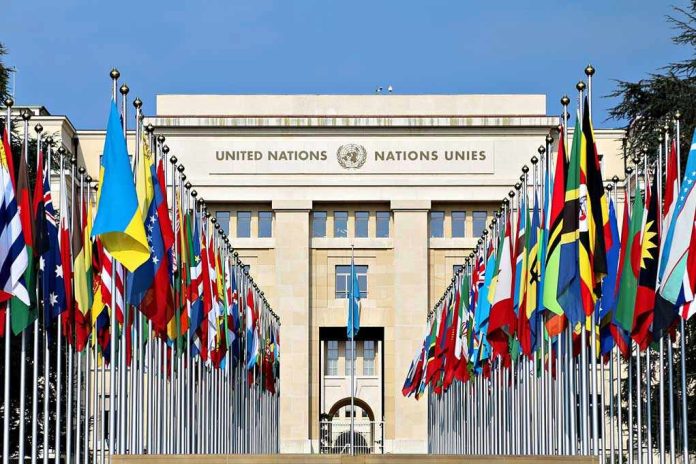
Argentina’s president walked into the United Nations and called it useless, then outlined how to fix it.
Story Snapshot
- Milei said the United Nations drifts from peacekeeping into social engineering.
- He blasted Agenda 2030 as ideological and “socialist in nature”.
- He tied failure to the Falklands/Malvinas stalemate and bureaucracy bloat.
- He offered four reform pillars: peace focus, sovereignty, efficiency, simpler rules.
Milei’s Charge: From Peacekeeper to Ideological Manager
Argentina’s President Javier Milei used his General Assembly speech to say the United Nations now behaves like a supranational manager, not a neutral peace forum. He argued the institution swapped guardrails for ideology, and that its 2030 Agenda became a global program for social planning. His words echoed his 2024 address, when he warned the United Nations had “abandoned” its core mission and embraced a top-down lifestyle script for nations. Coverage of this year’s speech reported he labeled the body “useless”.
Milei connected this critique to policy overreach. He rejected sweeping development and governance packages that tell member states how to run energy, labor, health, and culture. He said those pushes drown out the Charter’s hard aims: stop wars, keep peace, and keep faith with sovereignty. That aligns with his prior claims that United Nations activism backed lockdown policies and coddled dictatorships, which he cast as proof of skewed priorities. Supporters called the speech overdue; critics called it theatrical.
The Falklands/Malvinas as Exhibit A
Milei pointed to the Falklands/Malvinas dispute to argue that the United Nations avoids hard problems while lecturing on soft ones. He framed the stalled sovereignty talks as a case of process without outcome. He said the system rewards committees, not closure, and lets powerful interests park disputes in amber. His message was blunt: if the United Nations cannot advance what it calls core business, it has no standing to micromanage domestic policies. That hits a nerve for many states that prize control at home.
Reporters said he linked this to a broader theme of mission creep. He argued the body expanded its remit without proving results. That claim mirrors a long debate baked into the Charter: the promise of non-interference meets the duty to act for peace. The line shifts with politics, and critics like Milei say the line now tilts too far toward global regulation and away from stopping violence and brokering real deals. The Falklands/Malvinas example lets him put a flag in that ground.
Four Reforms: Peace First, Respect Borders, Audit the Machine, Cut the Rules
Milei’s plan had four parts. First, restore a narrow peace and security mandate so resources chase wars, not wish lists. Second, hard-wire sovereignty through subsidiarity, which means the United Nations steps back when nations can decide. Third, enforce efficiency with audits, fewer overlapping offices, and results that taxpayers can see. Fourth, simplify norms to curb legal sprawl that turns guidance into quiet control. The pitch was not to burn the building down, but to right-size it.
Milei calls UN 'useless' in speech to General Assembly#UN #UNGeneralAssembly #Politics
See the whole story: https://t.co/iY7DQkcBAd
— Writ News (@WritNewsTweets) September 23, 2026
These proposals track with views common in conservative circles: measured government, clear lines of authority, and freedom to trade and innovate without global red tape. They also align with reform ideas seen in policy debates that urge the United Nations to “do less and do it better.” The Council on Foreign Relations has argued that legitimacy rests on two pillars, representation and effectiveness. Bodies must deliver public goods and be known for it. Milei, in effect, says the scoreboard looks bad.
What The Charter Promises, And The Gap He Claims
The United Nations Charter sets a high bar: maintain peace, build friendly relations, and solve shared problems with respect for human rights. United Nations histories say the mission remains to give humanitarian aid, protect rights, and uphold law. That is the promise. Milei’s claim is about performance against that promise. He argues the United Nations drifted from real security work into social agendas, while conflicts fester and costs rise. He cites Agenda 2030 and the Pact for the Future as proof of that drift.
One fair caution: calling the United Nations “useless” is a sweeping judgment. The record shows mixed outcomes in peacekeeping and aid. Some operations reduce violence; others stall. But his core test is simple, and it fits common sense: are you stopping wars and settling disputes? If not, stop bossing nations around on matters that belong at home. The Charter’s text gives that argument a foothold, since it pairs cooperation with respect for domestic jurisdiction.
Why This Speech Will Echo
Many countries hear Milei’s message even if they dislike his tone. They struggle with a system that is slow, layered, and pulled by interest groups. They also hear lectures from agencies that do not answer to their voters. That breeds pushback. Reform energy builds when taxpayers see cost without clear wins. If the United Nations wants to keep authority, it must show results that match its founding aims, not expand mandates that breed suspicion. That is the argument Milei drove home.
Sources:
insiderpaper.com, g1.globo.com, canal26.com, actualidad.rt.com, cfr.org, straitstimes.com, batimes.com.ar, reuters.com, foxnews.com, globalbankingandfinance.com, americanrhetoric.com, ytscribe.com, un.org, cambridge.org