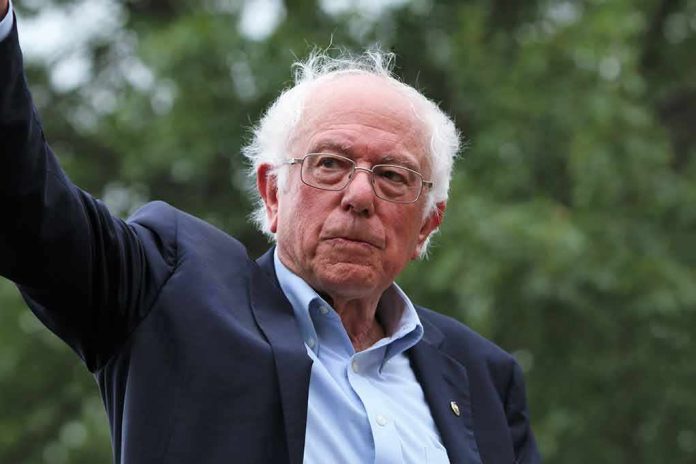
Ro Khanna tried to swat away claims that Bernie Sanders’ movement fuels antisemitism—then Joel Rubin, Sanders’ own 2020 Jewish liaison, walked in with receipts.
Story Snapshot
- Joel Rubin says Sanders and his network “actively fuel” antisemitism on the left.
- Ro Khanna rejects that charge and defines antisemitism as denying a Jewish state.
- The clash shows how Democrats now fight over where criticism of Israel ends and antisemitism begins.
- The stakes are moral and electoral, with Jewish Democrats warning of rising hostility.
What Sparked The Firestorm
Joel Rubin, who handled Jewish outreach for Bernie Sanders in 2020, published a blunt essay. He wrote that his former boss and the activist machine around him are “actively fueling antisemitism in this country.” He argued that anti-Zionism has become a new litmus test for “acceptable” Jews in Democratic circles, and that Sanders sits “at the center” of this shift. That claim moved fast across media because Rubin came from inside the tent, not the usual opposition bench.
Ro Khanna, a leading progressive in the House, pushed back. He did not defend every activist, but he rejected the idea that Sanders enables Jew-hatred. Khanna has laid down his own line on antisemitism: opposing Israel’s existence is antisemitic, period. He says he supports Zionism and frames modern antisemitism as denying a Jewish state, while also insisting leaders must call out Jew-hatred no matter which side it comes from. That stance lets him challenge both the far left and the nationalist right without conceding Rubin’s indictment.
Rubin’s Charge, In His Words
Rubin’s case is not a whisper campaign. He put his name on it and repeats it on camera. He says the Sanders operation promoted candidates whose rhetoric and positions “fuel antisemitism,” that this push was “by design,” and that it aims to disrupt Democratic unity on Israel. He argues that some activist language now treats “Zionist” as a slur and questions Israel’s very right to exist, which he calls antisemitic on its face. Rubin stakes his credibility on lived experience and a paper trail of endorsements and messaging.
Rubin’s critics answer that politics often blurs lines. They argue that railing against specific Israeli policies, or questioning military aid, does not equal hate toward Jews. They point out that law and campus rulings have warned against defining all anti-Israel speech as antisemitism. That caution matters for free speech, even as communities push for moral clarity about where criticism ends and bigotry begins. The fight turns on whether repeated slights and litmus tests add up to something darker.
Khanna’s Line In The Sand
Khanna’s formulation tries to sort policy heat from identity hate. He endorses the right of the Jewish people to a state and labels efforts to erase that right as antisemitism. He also insists on “zero tolerance,” saying leaders must call out Jew-hatred regardless of party. That message threads a needle for progressives who oppose certain Israeli actions but want no part of antisemitic tropes or aims. It also responds to Jewish Democrats warning that rising hostility could cost the party moral standing and votes.
Whether that stance satisfies Rubin is another matter. His core claim is not that every critic of Israel is an antisemite. It is that Sanders and allies elevated figures whose words and goals cross the line, and that this shift changed party norms. On the merits, that deserves a factual audit candidate by candidate, quote by quote. On the politics, it already changed the air Democrats breathe. Once a party makes anti-Zionism a status marker, ordinary guardrails do not hold.
Why This Fight Matters Now
American voters sort moral seriousness fast. They expect leaders to defend Jewish safety, reject bigotry of all kinds, and still debate hard policy. That is a high bar, but it is not complex. Rubin raises a clear alarm. Khanna offers a clear standard. The conservative reading is simple: deny no people’s right to exist, junk the slur-and-smear culture, and confront hate without excuses. The party that speaks that truth cleanly will earn trust in a year when trust is scarce.
Sources:
jewishinsider.com, jpost.com, thefp.com, jns.org, joelrubin.substack.com, 5rb.com