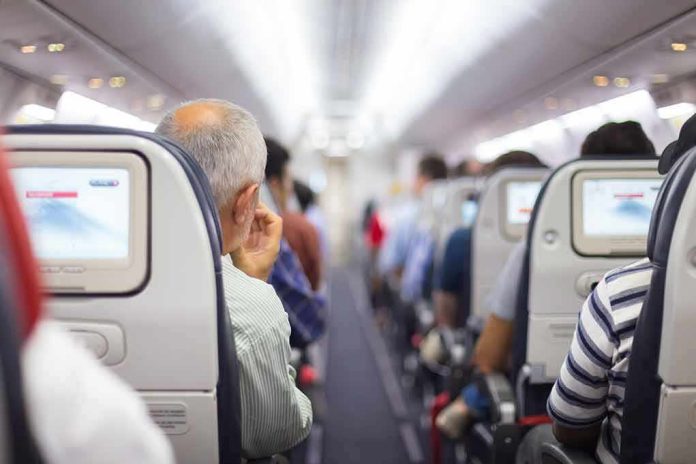
The smoke came from a single laptop, but the lesson filled the whole cabin.
Story Snapshot
- American Airlines Flight 2398 landed safely at Dallas/Fort Worth after smoke in the cabin.
- Federal officials described a laptop battery fire contained by a thermal bag.
- One passenger was treated at the airport and released, officials said.
- Pilot radio said four to five passengers had burns during the event.
What happened on Flight 2398
American Airlines Flight 2398 from Atlanta to Dallas/Fort Worth reported smoke in the cabin during landing. The airline said the aircraft touched down safely at Dallas/Fort Worth and went to the gate for response. The Federal Aviation Administration described a laptop battery fire on board and said flight attendants contained it with a thermal containment bag. Local coverage identified about 133 people on the flight. The crew coordinated with air traffic control to taxi to the gate for medical and safety checks.
Airport officials reported that one passenger received treatment at the scene and then went home. Air traffic control audio captured the pilot stating there was a cabin fire in the back and estimating four to five passengers had burns tied to the laptop incident. These two details show the difference between early in-cabin counts and ground-confirmed care. Both can be true in sequence. Crews report what they see fast; medics later confirm who needs actual treatment.
How the crew fought the fire
Cabin crews train for lithium-ion battery events because they can go from warm to fire in seconds. Flight attendants on Flight 2398 used a thermal containment bag to isolate the device and cut heat spread, according to federal officials quoted in reports. That bag is a last line of defense after cool-down and smother steps. The aircraft did not evacuate on a taxiway. The captain took the aircraft to a gate, where responders met the flight, which signals a contained threat and good cockpit-cabin coordination.
That choice matters for safety and common sense. An evacuation adds injury risk on its own. If smoke is under control and the fire is contained, staying buckled while rolling to a gate can be the safer call. Conservative thinking favors order over drama. The facts support that the crew kept order, kept passengers seated, and handed off to firefighters and medics in a controlled spot at the terminal.
Why lithium batteries keep making headlines
Lithium-ion batteries power our daily lives, so they ride on almost every flight. They can fail through damage, cheap parts, or charging issues. When they fail, they can enter thermal runaway. That means heat feeds itself and can cause smoke or fire. Federal tracking shows a record run of lithium battery incidents in recent years, with counts that rose through 2024 across airline cabins and cargo areas. Laptops are a known share of those events, which is why crews drill the playbook.
This pattern explains the tone and steps seen on Flight 2398. Announce the issue. Move fast to cool and contain. Isolate the device. Monitor for heat rebound. Land as planned if safe, or divert if not. Airline and airport messaging then sticks to three pillars: contained, landed safely, treated and released. That is not spin; it is how risk control should read when training works. The numbers and the endpoint here match that approach.
What the numbers say—and what they do not
Published reporting cites the airline’s statement that the flight landed safely and that smoke came from a customer’s device. Federal sources described the event as a laptop battery fire and said the crew used a thermal bag to contain it. The pilot’s radio estimate of four to five burn cases shows the heat and confusion at the moment. The airport’s later count—one treated and released—sets a calmer, clinical end point. Both reports align with how emergencies unfold.
Final device forensics and formal tallies may take time in any case like this. The core facts remain firm: a laptop battery failure created smoke; trained flight attendants contained the hazard; the airplane landed and taxied to the gate; and medical staff handled minor injuries on site. That is the aviation safety system doing its job. Personal electronics are part of modern travel. So is the discipline to manage them when they misbehave at 150 miles per hour on short final.
Sources:
washingtontimes.com, youtube.com, cbsnews.com, facebook.com