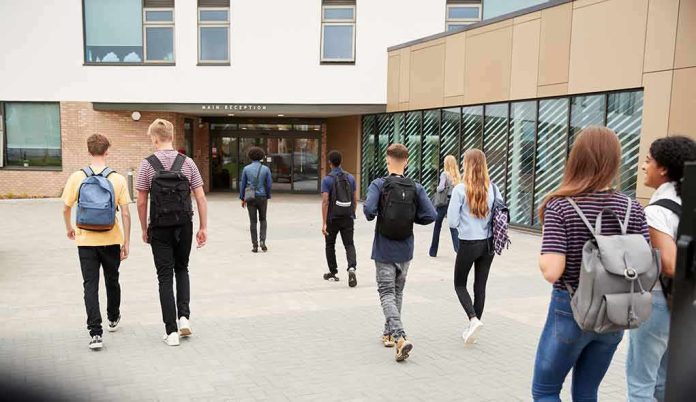
A teenage girl is dead and three others are wounded after an 18-year-old attacked a Swedish high school with a sword.
Story Snapshot
- Police detained an 18-year-old suspect after a deadly attack at Brinellskolan in Fagersta.
- One victim died and three were injured, according to officials and local authorities.
- The assault began around 2 p.m. local time; police rushed to the scene.
- Investigators are examining possible online links and a pre-attack social media post.
Deadly attack inside a Swedish high school
Police and the municipality confirmed an assault at Brinellskolan in Fagersta that left one person dead and three injured. Officers detained an 18-year-old man at the scene. Officials said there was no ongoing threat to the public after the arrest. Reports from the school described a sword used in the attack. The casualty count held steady across major outlets by Friday evening. The case remains active with prosecutors leading the inquiry and coordinating witness interviews and evidence collection.
The first emergency calls reached police shortly after 2 p.m. local time. Responding units entered the school and secured halls and classrooms while medical teams treated the wounded. Authorities outlined a swift timeline from first alert to suspect detention. The school initiated lockdown and evacuation procedures as officers moved floor to floor. Officials later assured families and residents that the situation was under control and that students and staff could reunite with relatives at designated points.
What investigators are focusing on now
Prosecutors and police are mapping the suspect’s movements and contacts. Investigators are reviewing possible digital footprints, including whether a short video platform account that posted a sword image minutes before the attack was linked to the suspect. Detectives are also examining online communities that may glorify school violence to determine any influence or encouragement. Authorities described the investigation stage as intense, with digital forensics joining standard interviews and scene analysis to secure a clear timeline.
Media initially reported that police shot the suspect during the arrest, then later relayed a clarification that he was not injured in custody. Such early-cycle corrections are common in fast-moving incidents and explain why officials stress caution before details harden in public view. The core facts remain stable: one dead, three injured, a single detained suspect, and no continuing threat at the school or in the area. This alignment across outlets and official statements provides a solid base for public understanding.
Context: rare but high-impact violence in Scandinavian schools
Sweden experiences school attacks far less often than many countries, but each case commands national attention. Swedish agencies have built protocols to prevent and manage such violence, including guidance hubs for schools and municipalities. These frameworks stress early threat assessment, tight coordination with police, and clear communication plans for families. They also encourage staff training to spot warning signs and to rehearse lockdown and evacuation drills that can save lives when seconds count.
Breaking News Update
Girl, 17, is killed in sword rampage at Swedish school, police confirmThe victim of a deadly sword attack at a Swedish high school was a 17-year-old girl, police have confirmed.
An 18-year-old man armed with a sword unleashed his violent rampage at the… pic.twitter.com/MyB41EaK2i
— News News News (@NewsNew97351204) August 22, 2026
Swedish authorities have also warned that the internet can amplify violent ideas and connect isolated youth with communities that praise harm. Government strategies and research highlight the role of digital platforms in spreading extremist content and grooming young users. Schools, parents, and local police are urged to watch for sudden changes, fascination with weapons, or posts that hint at self-harm or public attacks. Early reporting on the Fagersta case shows why digital traces now sit at the center of most serious crime probes.
The path forward: security, accountability, and common sense
Parents want straight answers and safer halls on Monday morning. That starts with firm access control at schools, practiced lockdown routines, and quick alerts to families. It also requires enforcing laws first and fast when threats surface online. American conservatives will see a clear throughline here: protect kids with real security, hold offenders fully accountable, and reject excuse-making that blurs moral lines. Sweden’s investigators appear to be moving with purpose; that resolve should continue through charging and trial.
Communities also need practical support for students who feel alone or angry. Mentors, school resource officers, and faith and civic groups can spot trouble before it spills into violence. Social media companies should preserve evidence and respond quickly to lawful requests that may prevent copycat harm. None of this brings back a lost life in Fagersta. It does honor it by closing gaps in the system and making the next attempt harder to plan, stage, and carry out.
Sources:
humanevents.com, reuters.com, euronews.com