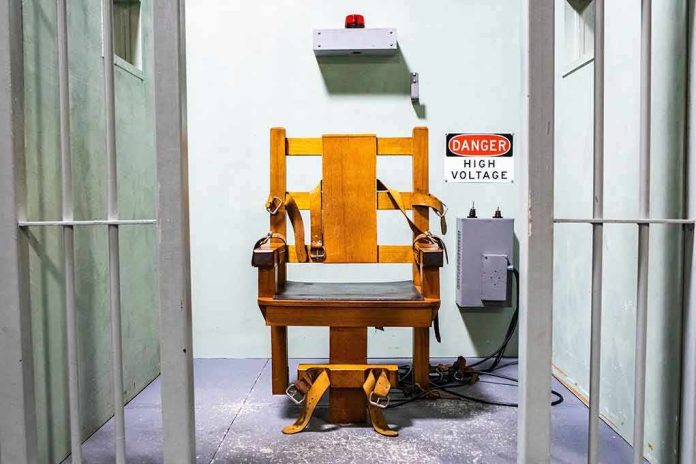
Three states plan to carry out executions on the same day, a rare convergence that tests law, logistics, and public will.
Story Snapshot
- Tennessee, Alabama, and Oklahoma scheduled executions for August 13, 2026.
- If all proceed, it would be the first triple same-day execution since 2010.
- Schedules can shift late due to courts, clemency, or drug issues.
- The cluster spotlights how states manage protocol, timing, and scrutiny.
Three Warrants, One Day: What Is Set To Happen
Officials in Tennessee, Alabama, and Oklahoma set execution dates for August 13, 2026. The Death Penalty Information Center’s public calendar lists Anthony Darrell Dugard Hines in Tennessee, Carlos Cuesta-Rodriguez in Oklahoma, and Jeremy Williams in Alabama on that date. The Associated Press, published by ABC News, reported the three states plan to move on the same day and noted the country has not seen three executions in one day since 2010. The scheduling appears coincidental, not coordinated.
Executions run on strict clocks. Wardens plan minute-by-minute steps, from inmate movement to witness seating. Lawyers file last appeals, sometimes at dawn. Governors and boards check clemency files one more time. Corrections staff lock down units and run redundancy checks on equipment. When three states align on the same Thursday, each must solve its own puzzle: secure drugs, confirm protocols, prepare medical staff, and keep command chains clear and accountable.
Why Same-Day Executions Are So Unusual
Modern death penalty practice spreads executions out. The public record shows states avoid bunching for practical and legal reasons. Drug procurement is hard. Medical protocol must be precise. Federal courts can step in at any hour. The Death Penalty Information Center’s analysis shows multiple executions on the same day are rare events; Arkansas once scheduled eight in eleven days to beat drug expirations, an outlier that drew heavy legal fire. Triple same-day events have been extraordinary outliers in recent decades.
National outlets framed August 13 as the first triple-execution day in nearly sixteen years, tying back to 2010. That claim reflects how seldom three states end up on one calendar date with active death warrants and viable protocols. The coincidence underscores something else: death penalty timelines move on case law, not headlines. Appeals can move a date by hours, days, or years. Anyone treating “scheduled” as “certain” will get whiplash. Advocates on both sides know the clock is elastic right up to the final hour.
The Cases And The Calendar
The three men faced different juries, different facts, and different timelines. Yet their warrants matured into the same day. Public trackers list each case with the state’s selected method, typically lethal injection. Courts allow these schedules after direct appeals and many rounds of review. This is how the system is designed: long due process first, finality later. The listings that place Hines, Cuesta-Rodriguez, and Williams on August 13 come from widely cited execution calendars used by reporters and advocates alike.
On Thursday, August 13, 2026, the State of Oklahoma is scheduled to execute by lethal injection Carlos Cuesta-Rodriguez, age 70, for the 2003 Oklahoma County of Olimpia Cardina Fisher, age 43, his common-law wife. This will be third execution carried out by the state this year… pic.twitter.com/VdUiMyagye
— Diocese of Tulsa (@DioceseofTulsa) August 12, 2026
States still must clear last-mile hurdles. Corrections departments need drugs that meet their own rules. Defense teams may seek testing data on drug potency or purity. Judges weigh claims of pain risk and disability, and often do so hours before a warrant window opens. Even supporters of capital punishment accept these checks as part of ordered justice. The point is not speed; the point is a verdict carried out under law, with safeguards that respect the Constitution.
What It Says About Policy, And What Comes Next
Americans split on the death penalty but agree on one baseline: if the state takes a life, the process must be fair, transparent, and careful. The August 13 cluster will test that baseline three times in one news cycle. Supporters will say justice delayed should not be justice denied. They will see courts, juries, and governors doing their duty. Critics will press questions on method, innocence risk, and racial disparities. Both sides will watch for late rulings that reset the clock.
The conservative reading is simple: states have the authority to enforce lawful sentences when due process ends. That authority must be used with restraint, clear protocols, and public accountability. Triple scheduling does not change those duties; it sharpens them. If all three executions proceed, expect calls to review drug sourcing and timing guardrails. If one or more halt, the lesson remains: in capital cases, certainty arrives only when the warrant window closes and the courts go quiet.