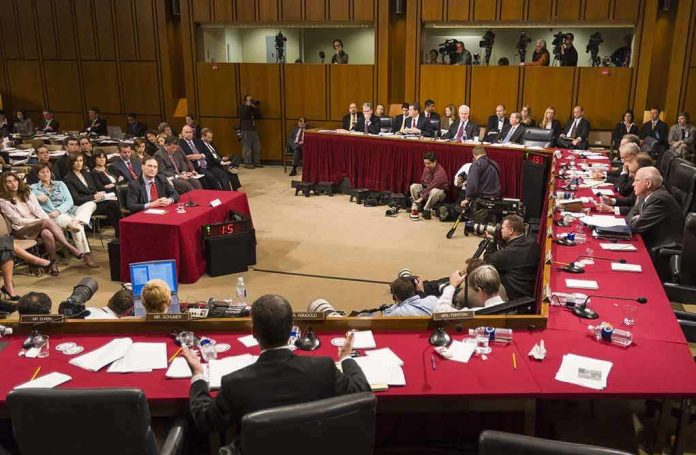
The White House put Congress on notice: abuse oversight, and you may face criminal scrutiny.
Story Snapshot
- The White House counsel sent a legal warning to Rep. Robert Garcia.
- The letter says Congress must seek laws, not prosecute the executive branch.
- Democrats say Article I gives them broad power to investigate.
- The clash will test where oversight ends and punishment begins.
The Letter That Drew a Line Before Subpoenas Fly
White House Counsel Will Scharf sent a three-page letter dated November 9, 2026 to Rep. Robert Garcia, the incoming head of House Oversight, warning that threats aimed at scaring off executive-branch officials and abusive process could cross into “blatant criminality.” The letter added that issuing unlawful subpoenas to strip citizens of constitutional rights “may warrant further investigation.” Media outlets published the language and timing soon after Democrats signaled aggressive probes in the new House session.
Scharf grounded the warning in a core rule: Congress can investigate to help write laws, but not to punish the executive branch or act like a prosecutor. That standard echoes Supreme Court guidance that congressional subpoenas must tie to a real legislative task and respect separation of powers. The letter did not list criminal statutes or a target case, which shows it as a caution, not a charge. Still, it sets markers that the White House says it will enforce.
Democrats’ Stance: Oversight Is a Duty, Not a Request
Rep. Garcia fired back that Congress’s power comes from Article I and needs no permission from the White House. He said oversight is broad and built into lawmaking, and he framed planned probes as a path to write anti-corruption laws. He pointed to ideas like rules to stop any president’s family from profiting from office. He cast the letter as an attempt to chill a constitutional function and said the committee will proceed with its work.
Garcia also tied the agenda to voters, saying the electorate demanded laws to curb abuse. He previewed topics like potential financial dealings tied to policy outcomes and said the focus is on corruption, not criminal prosecution by Congress. That claim matters because it answers the White House test: link requests to future laws, not punishment. If Democrats can show that link in hearings and drafts, courts usually give them room to operate.
What Counts as Legitimate Oversight Under the Courts
Courts have long said Congress’s power to investigate tracks its power to legislate. When lawmakers seek information, they should state a clear legislative purpose and tailor requests to that aim. The Supreme Court’s Trump v. Mazars decision laid out steps to weigh need, scope, and burdens when a subpoena touches the presidency, and pushed both branches to negotiate before escalating in court. That framework rewards precision and punishes fishing trips dressed up as lawmaking.
History shows Congress has tools to enforce subpoenas, like criminal contempt referrals and civil suits, but both rely on other branches to complete the job. That is why most standoffs end in negotiated access, phased production, or narrowed requests. Criminalizing the other branch’s conduct is rare and high friction. It usually appears at the edges of bitter fights, not as the main event. That context explains why this warning landed like a thunderclap across Washington.
The Stakes: Serve the People or Scare the People
The White House argues that threats and performative subpoenas scare qualified people from public service and drain agencies for headlines, not laws. That concern tracks common sense for conservatives who value ordered liberty: use power with restraint, explain the goal, and show the bill it will inform. If Democrats run a tight process with clear legislative aims, they will blunt that critique. If rhetoric turns into punishment theater, they will validate the warning.
Rep. Robert Garcia (D-CA), incoming House Oversight Committee chair after the 2026 midterm Democratic gains, publicly enumerated targets including Kristi Noem, Kimberly Guilfoyle, Donald Trump Jr., Eric Trump, and Stephen Miller (now White House Chief of Staff) on CNN, stating he… https://t.co/IztYNZaaoZ
— Durwin Lloyd, ND (ret) (@LloydDurwin) November 12, 2026
Democrats counter that corruption must be exposed to craft real reforms. That is fair—sunlight informs statutes. The burden now sits with committee leaders to link each request to text on the page, from draft bills on conflicts to rules for presidential families. Precision is not a hedge; it is a shield in court and a signal to voters. Do that, and oversight stands tall. Miss that mark, and the White House’s legal tripwire will be waiting.
Sources:
redstate.com, nbcnews.com, cbsnews.com, abc27.com, heraldonline.com, congress.gov