Abelardo de la Espriella did not just win Colombia’s presidency. He opened with a warning that sounds like a deadline for war.
Story Snapshot
- De la Espriella told armed groups they had one month to submit to the law.
- He framed his victory as the end of Gustavo Petro’s softer peace approach.
- He won by a razor-thin margin, which makes his mandate look stronger than it is.
- Guerrilla leaders have not signaled surrender, and the biggest group says it will keep fighting without dialogue.
The Ultimatum That Changed the Tone
In his first speech after the official result was confirmed, de la Espriella told criminals and guerrillas they had “one month to arrange your submission.” He also said his government would make no “generous offers or unacceptable concessions” like the outgoing administration. That is not campaign talk anymore. It is a direct signal that Colombia’s new leader wants to replace negotiation with pressure, speed, and force.
The headline-grabbing part is not the threat itself. It is the timing. He delivered it before taking office, while still riding the momentum of a narrow victory. That matters because it shows how he plans to govern: by setting a hard line early and daring armed groups to test it. He also tied his security plan to military cooperation with the United States and Israel, which adds a foreign-policy layer to a domestic crackdown.
Why His Victory Matters More Than The Margin
De la Espriella won the election with 49.7 percent of the vote to Iván Cepeda’s 48.7 percent, according to the official preliminary count. That is close enough to keep the country tense. It also leaves him with a fragile mandate. A president with such a slim win can speak loudly, but he still has to govern through Congress, courts, and public opinion. Those are very different battlegrounds.
His campaign was built on a simple promise: stop talking and start hitting back. He backed that message with pledges for 90-day military operations, mega-prisons, and a tougher war on narcotrafficking. Supporters see a needed correction after years of failed peace efforts. Critics see a gamble that could harden the conflict without fixing the root problem. Both readings are possible. Only one will be tested by results.
Why A One-Month Deadline May Not Force Surrender
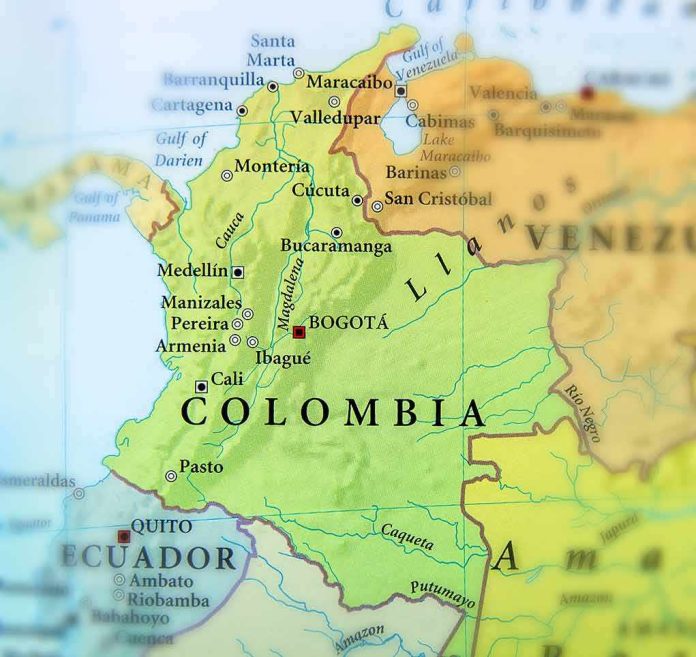
The hardest fact for the new president is this: armed groups do not vanish because a leader gives them a date. The National Liberation Army has said it will keep fighting unless the new president opens dialogue. That alone makes a clean surrender unlikely. Reports also describe the group as large, embedded in coca-growing and mineral-rich regions, and deeply rooted in Colombia’s borderlands. That is not a setup for quick obedience.
“🇲🇽🇨🇴 Mexico asks De la Espriella to "take charge of his part" in the fight against drugs in Colombia
🚔 President Claudia Sheinbaum asked the president-elect of Colombia, Abelardo De la Espriella, that each country assume its responsibility in the fight against organized crime,… https://t.co/DAcSs7Zt9A
— Gerry Lykins (@LykinsGerry) June 27, 2026
Colombia has seen this movie before. Gustavo Petro’s peace strategy did not stop violence, but that does not automatically mean a hardline answer will work better. The public is split, with roughly half favoring dialogue and peace efforts. That leaves de la Espriella standing on a narrow ridge. If he pushes too hard, he risks deeper unrest. If he backs off, he weakens the image he just sold to voters.
The Real Test Begins After The Speech
The first real test is not whether de la Espriella can make a dramatic speech. It is whether he can turn that speech into an operating plan. So far, the public record shows bold promises, but not the practical details that make promises real: troop levels, prison capacity, budgets, timelines, and legal authority. Without those, the ultimatum is more theater than policy. And in Colombia’s security fight, theater is never enough.
There is also a political risk that goes beyond the battlefield. De la Espriella faces fraud allegations and questions about his wealth and past ties, while Gustavo Petro has already raised irregularity claims of his own. That makes the transition more brittle. A president trying to crush guerrillas while defending his own legitimacy does not get the luxury of calm. He gets pressure from every side, and the clock starts running fast.
Trump-Backed Colombian President-Elect Gives Guerrillas "One Month To Surrender" As Socialist Era Ends https://t.co/wO9WrU7G97
— zerohedge (@zerohedge) June 27, 2026
Sources:
[1] Web – Trump-Backed Colombian President-Elect Gives Guerrillas “One Month To …
[2] Web – Colombian president-elect gives armed groups one month … – Yahoo
[3] Web – Bogotá, June 25, 2026 (AFP) – Colombian president-elect gives …
[4] Web – Colombian president-elect Abelardo de la Espriella has issued a …
[5] Web – Colombia’s president-elect De la Espriella issues 1-month ultimatum …
[6] YouTube – Colombia’s President-elect gives criminal groups “one …
[7] Web – De la Espriella gives Colombia’s armed groups one month to …
[8] Web – Far-right de la Espriella elected Colombia president: What’s next?
[9] Web – Colombia | El presidente electo, Abelardo De La Espriella, y el …
[10] Web – Colombian president-elect Abelardo de la Espriella has issued a …
[11] Web – Colombian President-Elect Abelardo de la Espriella and Vice …
[12] Web – Colombian President-elect Gives Armed Groups One Month To …
[13] Web – Colombia rebel leader hopes Trump will back peace effort
[14] Web – ‘Real threat’ of US military action against Colombia, president tells …
[15] Web – Colombia’s president warns Trump: ‘Do not wake the jaguar’ with …
[16] Web – Trump says new military operation focused on Colombia sounds good to …
[17] Web – Trump Blasts Colombian President As ‘Lunatic, Drug Leader’ While …
[18] YouTube – Trump threatens Colombia’s Petro, warns Mexico ‘to get their act …
[19] Web – Plan Colombia – Wikipedia
[20] Web – Colombia’s brutal internal conflict is defining its presidential …
[21] Web – Five Outcomes of Colombia’s First Round Presidential Elections
[22] Web – Colombia Elects Hardline Populist Who Vows War on Cocaine Gangs
[23] Web – Will Colombia elect a far-right president? | Chatham House
[24] Web – Colombian president-elect gives armed …
[25] Web – REACTION: Colombia Heads Toward a Polarizing Runoff
[26] Web – Experts react: Colombia’s presidential runoff pits the far right …
[27] YouTube – Who to know ahead of Colombia’s election, and how it will impact U.S.
[28] Web – What to Know About Colombia’s 2026 Presidential Runoff Results