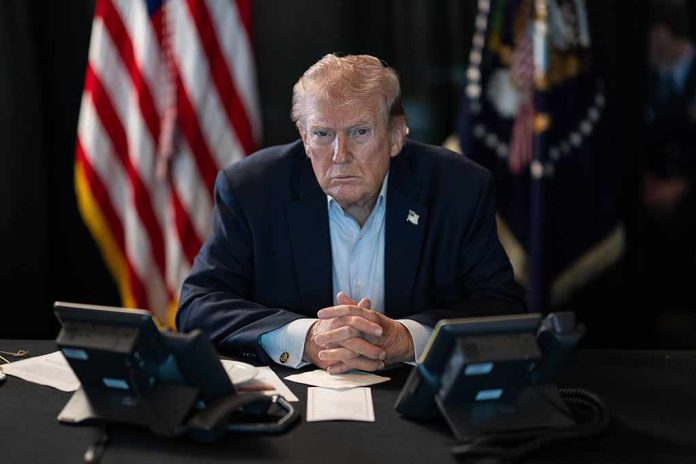
President Trump told the Justice Department to treat the Second Amendment like a right, not a privilege—and the gears of government actually moved.
Story Snapshot
- Executive Order 14206 ordered a hard review of recent federal gun rules and a plan to protect gun rights.
- The Justice Department launched a formal process for eligible people to restore federal firearm rights.
- Federal lawyers sued San Jose over a nearly $1,600 gun-carry permit fee they say blocks ordinary citizens.
- The Civil Rights Division created a Second Amendment Section and linked its mission to the order.
Trump’s Order Set the Course, Not the Spin
Executive Order 14206 did not whisper; it directed the Attorney General to examine recent federal actions on guns and bring the President a plan to protect Second Amendment rights. The text covered Department of Justice and Bureau of Alcohol, Tobacco, Firearms, and Explosives rules from January 2021 through January 2025. That scope matters because it converts campaign talk into a paper trail and deadlines, which agencies must answer with actions, not tweets.
The order’s design reflects a simple conservative test: if a rule chills a right for the law-abiding, fix it. That is why it demanded a look at guidance, plans, and enforcement, not just formal rules. The job was broad by design. It reached permit hurdles, license policies, and agency interpretations that can stack costs on citizens. That is where most modern fights now live after the Supreme Court’s Bruen ruling reset the legal yardstick on gun restrictions.
Restoring Rights Moved From Rhetoric To Process
The Justice Department announced a new process to restore federal firearm rights for eligible people who are prohibited. The Attorney General said the department finalized a regulation and opened a path to apply. That step shifts power from political speeches to a repeatable, reviewable process that applicants can actually use. Critics can and will argue over standards, but a working process beats a dead letter the public cannot reach.
Opponents claim the restoration move gifts the gun industry and weakens safety screens. They also complain that decision-making may be too opaque. Those are serious concerns to weigh, but they do not erase a core principle: rights restoration is part of justice when someone proves rehabilitation and meets clear rules. The debate should focus on the text of the final rule, evidentiary burdens, and denial safeguards, not slogans alone.
San Jose Fee Fight Targets “Rights For Sale”
The Justice Department sued San Jose over what it called an unconstitutional $1,600 carry-permit price tag. Federal lawyers argued that fees many times the cost of a handgun do not look like regulation; they look like a blockade. The Civil Rights Division’s Second Amendment Section said its job includes enforcing Executive Order 14206, making this case a test of both legal theory and White House policy follow-through.
This theory fits common sense and the Court’s recent guidance. Government cannot price a right out of reach for ordinary people. If high fees and red tape keep the working class from carrying while the wealthy breeze through, that is not neutral policy; that is a velvet rope around a constitutional right. Expect more suits where local costs, delays, and “gotcha” extras try to do the work that denied policies used to do before Bruen reshaped the field.
The Internal Clash And Why It Matters
Reports describe a split inside the Justice Department over how hard to defend older federal gun controls in court. Some career staff want to appeal and seek stays by default, arguing a duty to defend statutes. Others argue the department need not cling to laws that courts have found unconstitutional on solid grounds. Senators aligned with gun-control groups pressed for more aggressive defense of the National Firearms Act.
Healthy institutions argue hard over law and duty. But leadership sets priorities. Here, the priority lines up with the Constitution’s text and the Supreme Court’s test: treat keeping and bearing arms as a normal right, not a licensed favor. When a policy acts like a poll tax for self-defense, stop it. When a person has paid their debt and can prove fitness, give them a path back. That is not chaos; that is ordered liberty consistent with American conservative values.
What To Watch Next
Courts will decide whether San Jose’s fee falls or survives. The restoration process will face lawsuits from both sides: some saying it goes too far, others saying not far enough. Congress may demand the department disclose the full internal plan the order required. That disclosure would show how the executive branch knitted litigation, rulemaking, and enforcement into one strategy to guard the Second Amendment in daily practice.
Sources:
pjmedia.com, newsmax.com, federalregister.gov, washingtontimes.com, theepochtimes.com, justice.gov, npr.org, dailycaller.com, reuters.com