The loudest claim is that U.S. forces disabled an Iran-linked tanker breaching a port blockade—yet the paper trail proving a blockade remains out of public view.
Story Snapshot
- U.S. officials said they seized an Iran-linked tanker in the Indian Ocean, identifying it as part of Iran’s sanctions-evading shadow fleet [1][4].
- Reports tied the vessel to prior U.S. sanctions for transporting Iranian oil, bolstering the interdiction rationale [1][2][4].
- Public records have not surfaced that show a formal, binding blockade order covering this ship at the time of seizure [4].
- Maritime reporting says the tanker’s routing did not clearly show a beeline for an Iranian port, complicating the “blockade-runner” narrative [4].
What U.S. officials say happened and why it matters
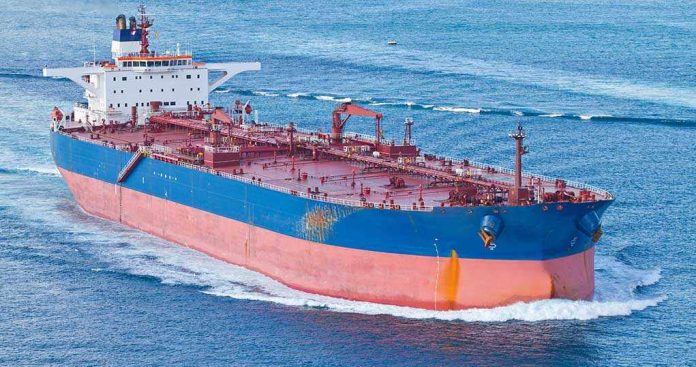
U.S. officials briefed media that American forces interdicted an Iran-linked tanker in the Indian Ocean, pointing to a pattern of ships moving sanctioned Iranian oil through opaque networks [1][4]. Coverage identifies the vessel as the Skywave and says the United States had sanctioned it earlier for transporting Iranian crude, a detail that reinforces Washington’s enforcement posture [1][2]. The framing leans on the logic that sanctions violations, plus a refusal to comply with commands at sea, justify disabling action. That interpretation resonates with a law-and-order approach to maritime security.
However, the strongest claim from the briefings—attempted entry to or support for access to an Iranian port under a U.S.-enforced blockade—requires more than anonymous assertions. Blockades are formal acts, typically announced and documented. Reports thus far recirculate the same core points without producing a public blockade order specific to the incident or vessel [4]. From a common-sense, conservative perspective, government power should rest on verifiable authority; if Washington executed a blockade, the public record should show it.
Ship identity, sanction history, and the “shadow fleet” backdrop
Maritime analysts have chronicled a shadow fleet of tankers that mask ownership, spoof locations, and conduct ship-to-ship transfers to move Iranian oil outside sanctions regimes [4]. The Wall Street Journal-sourced accounts, echoed by several outlets, place the Skywave within that system and say it was already under U.S. sanctions when interdicted [1][2][4]. That context strengthens the enforcement case: sanctioned cargo, a vessel tied to prior violations, and a region where such interdictions have occurred before. The pattern is credible, even when operational details remain classified or redacted.
Video segments and headlines amplified the narrative of a decisive U.S. operation, but they largely reference the same official sourcing rather than independent documentation [3][5]. The consistency of those reports signals coordination, yet coordination is not the same as transparency. For readers evaluating risk and deterrence, the key is whether the legal basis—sanctions authority versus a declared blockade—matches the described use of force. That distinction affects everything from maritime insurance to allied cooperation at sea.
The contested point: blockade breach versus sanctions interdiction
Routing data cited in maritime coverage undercuts the clearest version of a blockade-run: the tanker’s signals pointed east at one point, then showed calls or destinations outside Iran, including China and the United Arab Emirates, which does not align neatly with an imminent Iranian port call [4]. If true, that narrows the justification back to sanctions enforcement rather than a hot pursuit of a blockade violator. Sanctions interdiction can still be lawful under certain authorities, but it is a different threshold—and a different diplomatic message—than enforcing a blockade.
Seizure and inspection of a sanctioned ship linked to the Islamic Republic in the Indo-Pacific region
US naval forces, during a maritime operation in the Indian Ocean, have inspected and intercepted a stateless and sanctioned vessel linked to the Islamic Republic named "MT… pic.twitter.com/CjeCkFOvoe
— Iran Observatory (@IRObservatory) June 5, 2026
Critics argue that without a published blockade order naming covered waters, ships, or criteria, invoking a “blockade breach” sounds more like rhetoric than law [4]. That critique has weight. Conservatives who prize the rule of law and predictable government power should demand clarity: is the United States enforcing sanctions, a blockade, or both? If the answer is sanctions interdiction, say so plainly and show the sanction designations. If the answer is blockade enforcement, release the order. Ambiguity invites mission creep, miscalculation, and political blowback.
Risk calculus: deterrence, escalation, and credibility
Seizing a tanker telegraphs resolve to Iran’s network of facilitators and insurers: the cost of moving sanctioned oil is rising [1][4]. That helps deterrence. Yet deterrence that leans on opaque legal claims can erode credibility with partners asked to share risk. The prudent path blends firmness with receipts: public designations, documented authorities, and clear rules of engagement. On the available reporting, the sanctions case looks substantiated by prior actions and pattern evidence [1][2][4], while the blockade claim remains unproven in the public domain.
The bottom line for readers who want results without entanglements is straightforward. Hit illicit logistics hard, but keep the playbook clean. A transparent sanctions interdiction, backed by named designations and allied coordination, deters more and escalates less than a murky blockade narrative. If the government has the paperwork, publish it. If not, call this what it likely is: a targeted sanctions operation against a known node in Iran’s oil-moving shadow fleet—tough, defensible, and strategically smarter when the facts are laid out [4].
Sources:
[1] Web – US says it fired on, disabled tanker that violated Iran port blockade
[2] Web – US seized Iran-linked oil tanker in the Indian ocean, WSJ reports
[3] Web – US seizes Iran-linked oil tanker in Indian Ocean – WSJ
[4] YouTube – Video: US seizes Iranian linked oil tanker
[5] Web – Report: U.S. Navy Has Seized Third Iranian Shadow Fleet Tanker