Eleven strangers drifting on a life raft in the Atlantic, staring at a vanishing airplane tail, had to answer one question most of us never ask: how long does help actually take when everything has gone wrong?
Story Snapshot
- A Beechcraft King Air turboprop ditched in the Atlantic during a Bahamas flight; all 11 on board survived.[1]
- The pilot reported engine trouble around 50 miles off Florida and put the airplane into the water in controlled fashion.
- Survivors waited for hours in a life raft, unsure anyone had even heard their distress call.
- A coordinated response by the United States Coast Guard and partners turned a likely tragedy into a rare, complete rescue.[1]
The Flight That Turned From Routine Hop To Survival Test
The trip began like countless island hops between Bahamian airports, with a Beechcraft 300 King Air lifting off from Marsh Harbour and heading northwest toward Grand Bahama and the Florida coastline beyond.[1] Passengers expected a short, uneventful flight in a proven workhorse of business aviation. The twin turboprop cruised high over warm water that looked friendly from above but promised something very different if the engines ever fell silent. Nobody boarded that morning thinking about raft drills.
The trouble started somewhere around 50 to 80 miles off the Florida coast, when the pilot reported engine problems and declared an emergency to air traffic control.[1] Pilots train for this call in simulators where the “ocean” is just pixels; this crew now faced it for real, with 11 lives and only minutes to work the checklist. Authorities later described an engine failure, but the exact mechanical chain remains under investigation, as it should whenever a proven airframe suddenly loses power.
How A Ditching Becomes Survivable Rather Than Fatal
The decision to ditch, rather than stretch a limping aircraft toward land, likely saved everyone on board. Water ditching in a twin turboprop demands discipline: hold enough airspeed for control but not so much that the impact tears the fuselage apart, touch down parallel to the swells, and keep the wings level so one does not dig in and cartwheel the airplane.[1] The pilot appears to have executed that high‑stress choreography well enough for all 11 to escape to a life raft.[1]
Once the aircraft settled into the Atlantic, the clock switched from “time to impact” to “time to hypothermia, exposure, and panic.” Survivors later recalled long hours on a life raft with no idea whether anyone had truly registered their last radio call. The ocean around them held sharks, swift currents, and sun exposure strong enough to cook bare skin. Survival training teaches that the first hour after a ditching often decides everything, not because of drama, but because unorganized people waste strength and sanity.
The Quiet Machinery Of A Modern Ocean Rescue
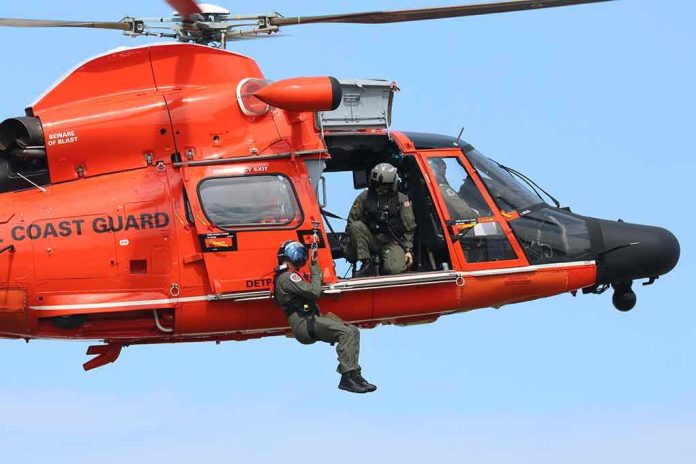
On shore, the United States Coast Guard does not treat a mayday as a news headline; it treats it as a problem to solve. Controllers in Florida began tracking the last known position of the King Air, building a search box shaped by winds, currents, and the aircraft’s likely glide path.[1] Rescue crews launched boats and aircraft shortly after noon, turning abstract coordinates into a grid they would systematically comb until they found either wreckage, survivors, or both.
#BAHAMAS: The aircraft, identified as a Beechcraft 300 King Air (BE30), registration HP-1859, had previously departed Leonard Thompson International Airport before the emergency unfolded.
— CaribbeanNewsNetwork (@caribbeannewsuk) May 13, 2026
Search aircraft eventually spotted the life raft bobbing in the Atlantic and directed surface vessels to the scene, where crews pulled all 11 survivors from the water alive, with several injured but conscious.[1] That outcome does not happen by luck; it requires layered investment in training, equipment, and coordination. Critics often argue government should stick to core functions and do them well. This is one of those core functions. Search and rescue is not a talking point; it is a promise to citizens and guests that their lives matter.
Why Engine-Failure Stories Are Never As Simple As The First Soundbite
Authorities and early reports labeled this crash as the result of engine failure, which may prove accurate but remains, for now, a working description rather than a complete explanation.[1] Aviation history shows a predictable pattern: headlines rush to assign cause long before investigators finish pulling maintenance records, pilot logs, fuel samples, and any onboard data. The National Transportation Safety Board exists precisely because instant narratives so often miss the real chain of events that turned a flight into an accident.
Mechanical failure alone rarely tells the whole story. Investigators over the coming months will examine whether maintenance followed manufacturer guidance, whether any parts showed unusual wear, and how the crew managed the emergency from the first caution light to the moment the fuselage kissed water.[2] Common sense says we should resist scapegoating pilots or mechanics until evidence speaks. American aviation got safer by honoring that discipline instead of letting outrage or fear drive the conclusions.
What This Miracle At Sea Says About Risk, Responsibility, And Faith
This rescue, framed as “miraculous” in headlines, certainly feels that way to families who almost planned funerals instead of hospital visits.[1] Yet the deeper story blends providence with preparation. Pilots who fly over long stretches of water accept real risk but also real responsibility: to brief passengers, to know ditching procedures cold, and to respect weather, weight, and maintenance limitations. That blend of personal accountability and institutional backup reflects the best of conservative instincts about risk and reward.
For the rest of us, the image of 11 people huddled in a life raft under a vast sky offers a quiet corrective to everyday cynicism. Bureaucracies we love to mock launched aircraft and boats until they found them. Strangers they would never meet trained for years for those few minutes at the rail, hauling cold, frightened passengers aboard. Freedom to travel and do business over an open ocean will always carry danger, but this King Air’s story shows that when people take duty seriously, danger does not always get the last word.
Sources:
[1] Web – Eleven Rescued After King Air Crashes Off Florida Coast – AVweb
[2] Web – Loss of control Accident Beechcraft B100 King Air N30HG, Monday …