Brooklyn’s street fight over an Israeli real estate event ended with arrests, and the very NYPD unit targeted for disbanding helped shut it down.
Story Snapshot
- Protest outside a kosher deli in Midwood turned violent; NYPD reported arrests.
- The Strategic Response Group deployed despite a push to disband it.
- Mayor Zohran Mamdani plans a civilian-led protest response approach.
- Prior probes found NYPD protest tactics sometimes escalated tensions.
What set off the clash in Midwood
Protesters and counterprotesters converged outside Essen NY Deli in Midwood on November 25, 2026. The gathering targeted an Israeli real estate event. Physical fights broke out, barricades moved, and police pushed in to restore order. The New York Police Department reported arrests on scene. The Jerusalem Post placed the arrest count at four and described violent confrontations with officers and opposing demonstrators. That number may shift with court processing, but the chaos on the block is not in dispute.
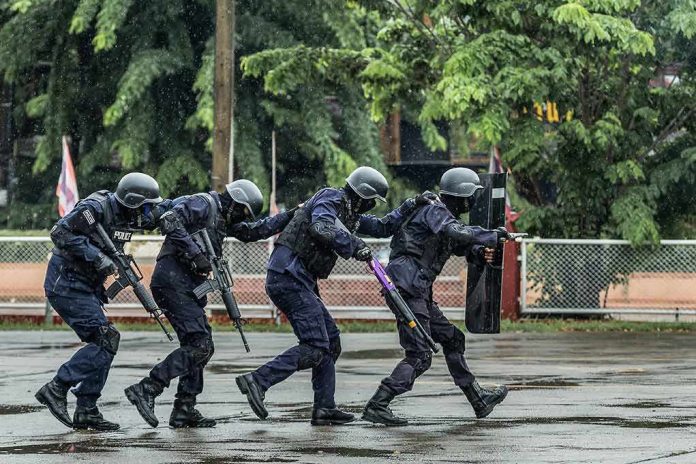
New York outlets and social feeds showed police in helmets arriving fast and forming lines. Identifiers and captions flagged the Strategic Response Group. That unit exists for rapid response to volatile protests and public disorder. JFeed’s write-up linked the deployment to the unit that Mayor Zohran Mamdani vowed to disband days earlier, a contrast that caught public attention. The timeline matters because it shows how fast street unrest can outpace City Hall plans on paper.
Why the unit is on the chopping block
Mayor Mamdani announced he would disband the Strategic Response Group and replace its protest duties with a civilian-led model focused on dialogue and de-escalation. He argued that New Yorkers using their First Amendment rights should not get the same posture reserved for terrorism threats. He also said the new approach would bar pepper spray for crowd control and set limits on loud devices. National outlets reported his plan and rationale plainly. Supporters framed it as a reset for protest rights.
Past reviews give his argument weight. The city Department of Investigation’s 2020 report on the George Floyd protests found that New York Police Department tactics went too far and often failed to protect speech. The report said the approach to protests, including specialized units, likely raised tensions instead of easing them in some events. Civil-liberties advocates say the Strategic Response Group used kettling, batons, and bikes in ways that turned calm scenes into brawls, though those claims vary by incident and remain contested.
What the Brooklyn incident tells us about risk and response
The Midwood protest shows why a city keeps surge capacity. Competing crowds, hot tempers, and narrow streets can flip from chants to swings in seconds. A rapid, trained line of officers can stop a melee from rolling down the block. That is the case supporters make for the Strategic Response Group: speed, numbers, and practiced formations save bystanders and small businesses when things break bad. The fact pattern in Brooklyn supports that core need, at least for that night.
The same scene also shows the policy risk. Heavy gear, hard lines, and crowd pushes can send adrenaline through a mixed group and spark more scuffles. The Department of Investigation findings warn that tactics matter. Tone, communication, and clear routes reduce panic and flight. The best night ends with fewer arrests and no injuries because trouble never peaks. Research from the RAND Corporation echoes this: planning and perceived legitimacy often decide outcomes more than any single tool or formation.
The path that balances free speech and safety
City leaders now face a practical test. If the Strategic Response Group goes away, who stands a post when rival crowds collide? A civilian dialogue team can cool many tense moments. But a pane of glass shatters faster than a mediation circle forms. The replacement plan must keep surge-ready officers linked to any civilian team, with clear triggers and rules. That is common sense, and it fits conservative values of order, equal protection, and the duty to defend worshipers and shopkeepers.
https://twitter.com/NY_ACTIONS/status/2125966628839903254
The cleanest compromise is simple. Keep a trained quick-response core that activates only when threats or violence start. Put dialogue and clear instructions first. Post obvious exit routes. Record every use of force. Publish an after-action review within days. If Mayor Mamdani’s model hits those marks, it can protect speech while stopping street fights. If it does not, the city will relearn a hard lesson on a sidewalk like the one outside Essen. Brooklyn just reminded everyone what is at stake.
Sources:
redstate.com, jewishlink.news, thefilterednews.com, abc7ny.com, en.wikipedia.org