A sudden blast at a California landfill sent a towering black plume over the Santa Clarita Valley, and the first clues point to a drilling mishap that hit something it should not have.
Story Snapshot
- Los Angeles County firefighters reported a small explosion near a drilling pipe at Chiquita Canyon Landfill.
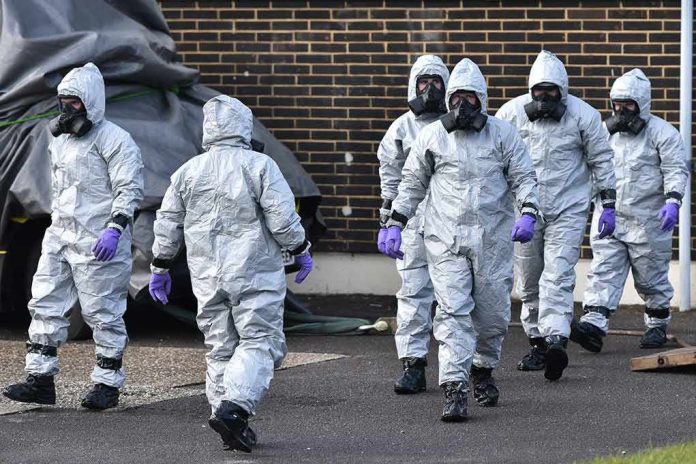
- A hazardous-materials team responded; air testing began on site.
- Officials reported no serious injuries; several workers were evaluated or transported.
- Evacuation advisories went out as the plume later thinned and fire danger subsided.
A blast, a black plume, and a quick hazmat call
Crews rushed to Chiquita Canyon Landfill around 4:00 p.m. on November 16 after reports of an explosion and thick smoke near Henry Mayo Drive and Highway 126. Firefighters said smoke came from a pipe at an active drilling operation and believed the drill may have hit something that triggered a small blast. The county’s hazardous-materials division deployed and began air testing as the dark plume rose, then slowly faded over the next hours.
Dispatch traffic and on-scene reports pointed to a contained event rather than a spreading fire. The Santa Clarita Valley Signal reported no ongoing surface fire after the explosion. Officials emphasized monitoring and containment rather than fire suppression as the main task. The visible risk shifted from flames to air quality, which is why the hazardous-materials team and monitors, not just engines, became the key tools.
Who was hurt, who was warned, and how officials moved
KTLA reported that four people went to hospitals for evaluation, with no serious injuries confirmed at the time. Other early counts described several or about six people being checked, which reflects the scramble of first-hour reporting. The city issued advisories that told nearby residents to be ready to evacuate, but these were not orders. Officials used the cautious approach that common sense expects when smoke and unknown gas rise near homes.
Los Angeles County sent its Health Hazardous Materials Division to measure the air on site and downwind. Preliminary checks reportedly did not show major airborne hazards, though some methane registered, and more testing was planned to confirm the picture. Air instruments give a snapshot in time. Crews often follow with mapped sampling to judge where a plume moved and how it changed as winds and heat shifted.
Why a drill strike fits the early facts—and what that does not prove
Firefighters on scene linked the blast to drilling activity because smoke came from a pipe at the work area and the sequence matched a strike-and-release pattern. That account fits what landfill experts see when a tool pierces trapped gas or pressurized material. Methane, a key landfill gas, can ignite or violently escape in the right mix and pressure. The Environmental Protection Agency notes methane becomes explosive in air at about five to fifteen percent.
Chiquita Canyon Landfill also faces a separate subsurface heated-reaction problem. Federal records describe an ongoing elevated-temperature event there since 2022. These underground reactions can shift gas movement and heat, which can make drilling and gas control more complex even when crews follow plans. Good practice treats both ideas—drilling strike and background heat issue—as linked risks at an active site.
What officials tested, what they looked for, and what comes next
Hazard teams likely screened for methane, carbon monoxide, hydrogen sulfide, and volatile chemicals. Field crews use direct-read meters to flag danger and then take samples for lab work if needed. The early priority is life safety: stop work, isolate the area, and get real-time readings for responders and workers. The follow-up priority is quality data to map the release, match it to a source, and decide if changes to drilling, gas control, or traffic are needed.
Residents living near the Chiquita Canyon Landfill in Castaic began self-evacuating Monday after an explosion sent a massive plume of gas and debris hundreds of feet into the air. Six workers were hospitalized with minor injuries. https://t.co/XylA7DynlK pic.twitter.com/2D3v4CJJoK
— KTLA (@KTLA) November 17, 2026
Residents wanted fast answers about what they breathed and why the plume turned black. Black smoke often signals soot from burning hydrocarbons or oil-based fluids, but plume color alone cannot identify a compound. That is why agencies test first and talk second. A careful chain of custody and confirmed lab numbers beat guesses, and they support actions the public values: clear rules for future drilling, tighter gas controls, and straight talk when things go wrong.
Why this response aligns with common-sense risk control
Officials treated the event like a hazardous industrial mishap, which it was. They secured the area, tested the air, moved people for checks, and warned neighbors without panic. That approach reflects a simple conservative view: protect life first, verify facts before blame, and fix the process so it does not repeat. Landfills are tough worksites. Drilling into a waste mass with gas under pressure will always demand strict permits, sharp oversight, and disciplined stop-work rules.
Sources:
nypost.com, ktla.com, signalscv.com, response.epa.gov, epa.gov