One router switch at a remote site choked the nation’s skies and sidelined over a million travelers.
Story Snapshot
- Transportation Secretary Sean Duffy tied the failure to copper-to-fiber work by L3Harris.
- A misbehaving router flooded others, scrambling aircraft communications and radar feeds.
- Officials reported over 1,000 connection attempts every four to five seconds.
- The Federal Aviation Administration issued a nationwide ground stop at about 3:36 p.m. Eastern.
What triggered the ground stop and who did what
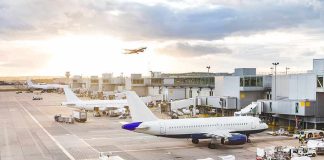
Transportation Secretary Sean Duffy said a contractor, L3Harris, was switching telecommunications lines from copper to fiber at a remote Federal Aviation Administration location when the trouble began. During the transition, a router flooded other routers on the air traffic network. Controllers lost stable communications with aircraft and saw radar feeds disrupted, according to Duffy. With those safety tools unstable, the Federal Aviation Administration ordered a nationwide ground stop to keep planes on the ground until systems stabilized.
Reporters pressed for technical details. Duffy described abnormal network chatter as “over 1,000 connection attempts every four to five seconds.” That activity, he said, swamped parts of the system and triggered cascading effects on communications and radar. The timing matched the operational hit. Coverage placed the ground stop at about 3:36 p.m. Eastern on Friday, after the communication failures emerged and spread beyond a single facility. Major hubs reported delays and cancellations into the weekend.
How a single router shook 17 centers
Outlets across the spectrum echoed the same core account. The copper-to-fiber swap, the L3Harris role, the misbehaving router, and the flood of traffic all appeared in independent reports. Separate coverage said the disruption touched 17 of the Federal Aviation Administration’s 22 en-route centers, the backbone facilities that handle aircraft between takeoff and landing phases. That scale explains the rare nationwide pause. When voice links and radar feeds wobble across that many centers, safety rules leave no wiggle room. You stop, stabilize, then restart.
Duffy framed the ground stop as a direct safety choice. Controllers need two anchors: reliable communications and a clear picture of the sky. The traffic flood undercut both. Airlines can work around weather. They cannot work around blind spots between pilots and controllers. That is why the order went out fast, broad, and blunt. Planes already in the air kept flying with extra spacing. Planes on the ground waited for clean signals and confident handoffs before pushback resumed.
What officials know, and what they are testing
Officials said the investigation is focused and active. They are testing whether the event flowed from an installation or configuration mistake by L3Harris, or from defective hardware in the router itself. That is a fair fork. If a work step went wrong, that is on the contractor. If the device failed under normal use, that points to the box. The early number on the connection-attempt flood came from government briefings and was repeated by multiple outlets, with the caveat that log and forensic detail will land in the final report.
Will Black’s take is pure speculation that collapses under the actual details. The ground stop was triggered during **routine copper-to-fiber maintenance** by contractor L3Harris at a remote site in El Dorado, Arkansas. A router flooded the network with 1,000+ connection attempts…
— Parliament of Owls (@stimfig) November 15, 2026
The broader backdrop is not in dispute either. The Government Accountability Office has warned for years that the Federal Aviation Administration’s air traffic systems lean on aging gear and slow modernization. In 2024, auditors said over three-quarters of 138 systems were “unsustainable” or “potentially unsustainable,” a flashing yellow light for resilience when something breaks. That history does not erase the triggering error, but it explains why a single bad node could ripple so far, so fast.
What the fallout means for travelers and taxpayers
The operational cost hit hard. Reports tallied thousands of cancellations and delays, with knock-on effects into Sunday as crews and planes fell out of position. This is where policy meets real life. Families missed events. Small businesses ate costs. The fix requires two tracks. First, tighten change control so field work cannot ripple unchecked. Second, harden the network so one faulty device cannot drag down half the map. Conservative common sense says buy redundancy before buying speeches.
Contractor accountability also matters. If testing shows L3Harris botched a method of procedure, hold them to the contract and the consequences. If the hardware failed under a proper install, press the vendor and sharpen acceptance tests. Either way, keep the receipts and publish the after-action. Transparency builds trust, and sunlight forces better habits. The skies are safest when boring routines work every time. Friday was not boring. It should have been.
Sources:
npr.org, transportation.gov, abc7.com, fortune.com, bbc.bm, gao.gov