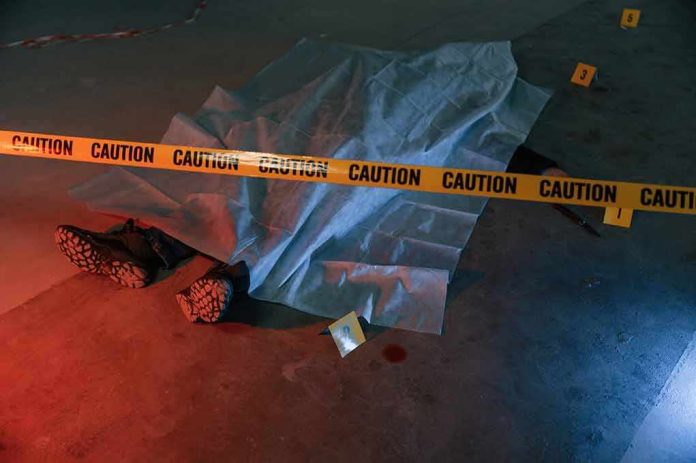
A Phoenix jury convicted a hospital security guard of four felonies for sexual conduct with a corpse inside a morgue freezer.
Story Snapshot
- Jurors found Randall Bird guilty of four felony counts tied to crimes against the dead.
- Investigators reported Bird’s DNA on the deceased woman’s genital-area swabs.
- Security staff said they found Bird inside a locked morgue freezer with the body bag unzipped.
- Arizona law makes sexual contact with a corpse a crime under the state’s “crimes against the dead” statute.
What the jury decided and why it matters
Jurors in Maricopa County weighed forensic evidence and reports from hospital security and found Randall Bird guilty of four felony counts for sexual conduct with a corpse at Banner University Medical Center in Phoenix. The case turned on direct facts, not rumor. Prosecutors presented DNA findings that tied Bird to the deceased woman’s body. Arizona law treats sexual contact with a corpse as a clear felony, and the verdict reflects that bright legal line.
https://www.youtube.com/watch?v=tQhUenu-J3A
Evidence laid out in court included male DNA identified on external genital and vulvar-vestibular swabs taken from the decedent, with reporting attributing that DNA to Bird. Police accounts also said Bird’s DNA was found on the corpse. A jury does not convict on shock alone; it convicts when specific facts meet a statute. Here, the link between the body and the accused, combined with scene details, met that test.
Inside the morgue freezer: what witnesses said they saw
Two hospital security employees reported a scene that did not match routine work. They described a morgue freezer door locked from the inside, the light on, and Bird inside sweating and nervous. Reporting further stated they observed a fully unzipped body bag and the decedent’s gown rolled up above her belly, exposing her from the waist down. Another account said Bird pulled the gown down when discovered. Those facts, if believed, align with unlawful contact and support the jury’s findings.
The Maricopa County Medical Examiner conducted a sexual-assault evidence collection after the incident. Reporting said the exam documented post-mortem rib fractures along with the male DNA findings. While the mechanism of the fractures is not fully detailed in public accounts, that medical work formed part of the investigative record presented to jurors. The body reportedly arrived at the morgue zipped inside its bag, which narrowed the window in which contact could have occurred.
The law draws a bright line on dignity after death
Arizona’s “crimes against the dead” statute bans sexual intercourse or sexual contact with a dead human body, apart from contact needed for proper storage, preparation, disinfection, or embalming. The point is simple: death does not erase human dignity or the duty of care. This aligns with common-sense conservative values about respect, order, and the rule of law. When power or access turns into abuse, the law must bite and institutions must close ranks fast.
Public coverage placed this case in a narrow, recognized category of crimes involving human remains. Researchers note these cases are rare and usually involve opportunistic abuse by someone with access to bodies, like hospital or mortuary staff. That pattern does not smear the many who serve with integrity; it highlights how access without tight controls invites risk. Hospitals owe families a fortress of trust around the dead as much as the living.
Institutional duty: locks, logs, and unblinking oversight
Banner University Medical Center employed Bird at the time, and coverage later referred to him as a former employee. That timeline underscores a key lesson: access control is not a paper policy. It requires hard steps—badge audits, dual-employee entry, camera coverage, and freezer-door logging. The report that the body was zipped when it arrived but later found exposed should trigger reviews of every handoff and every key swipe on that unit’s doors.
An Arizona man has been convicted of having sex with a 79-year-old woman’s corpse in the morgue freezer of the Phoenix hospital where he worked as a security guard, according to court record https://t.co/f4BzjVfxyH via @tsgnews
— Robert Don Gifford (@GiffordLawFirm) November 15, 2026
Families deserve certainty that a loved one’s remains will be treated with care. Administrators should test their systems the way red teams test a bank vault. Start-to-finish chain-of-custody logs, real-time alerts on door states, and random supervisor checks reduce temptation and catch trouble early. When wrongdoing occurs, swift firing, police referral, and full cooperation are nonnegotiable. That is how institutions show respect for victims and protect their mission.
Sources:
thesmokinggun.com, kbtx.com, lawofficer.com, metro.co.uk, foxnews.com, fox10phoenix.com, azleg.gov