A conscious, six-months-pregnant woman was lifted alive from a Brooklyn collapse, and the camera caught every second.
Story Snapshot
- Firefighters pulled a conscious woman from rubble about two hours after the collapse.
- Her husband identified her as six months pregnant and said, “She’s alive”.
- More than 250 responders searched with dogs, drones, and hand tools.
- The collapse killed at least eight and injured others, officials said.
Rescuers reach a voice in the debris
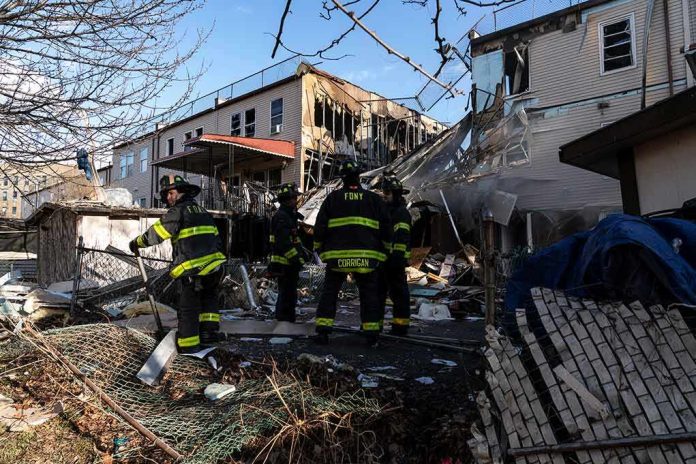
Firefighters worked through twisted wood, brick, and dust to reach a trapped woman at 1321 Flatbush Avenue late afternoon. Crews made contact around 6:15 p.m. She was conscious and able to respond. They cleared a path, spoke to her, and lifted her onto a stretcher minutes before 6:30 p.m. Video from the scene shows firefighters covering her with a blanket and moving her to an ambulance. The rescue happened as the larger search pressed on across a wide debris field.
Her husband stood near the tape line and told reporters, “She’s pregnant, six months.” He repeated that she was alive and thanked the crews. Outlets across the country echoed the scene, which became the image of the night: a mother-to-be, dust-covered but responsive, eased from wreckage by steady hands. Multiple organizations reported the rescue, and the footage confirmed the timeline and the care shown on site.
What collapsed, where, and when
The three-story building at 1321 Flatbush Avenue fell into an adjacent construction site at 2625 Bedford Avenue in the Flatbush neighborhood. Reports place the failure at about 4:00 p.m. Neighbors said the sound was sharp and fast. A cloud rolled across the block as walls gave way. The collapse buried people in apartments and workers near the pit. The woman’s extraction near 6:30 p.m. matched the fire department’s sprint to find living voices before dark and cold slowed the effort.
The scale of the response grew by the minute. Search-and-rescue teams used dogs to sniff voids. Crews flew drones to map hazards. Firefighters cut, pried, and carried by hand to avoid more shifting. Command staff rotated teams to keep fresh eyes on unstable sections. More than 250 first responders arrived, ringing the site with lights, saws, and stretchers. The measured pace kept the scene from turning into a second disaster.
Deaths, injuries, and the window for survival
Officials said the collapse killed at least eight people. Dozens more suffered injuries ranging from cuts to crush trauma. Hospitals received several patients as crews continued the search. The fatal count rose as the dig moved from rescue to recovery through the night and into the next day. The rescued woman’s condition was described on scene as conscious and alert, which suggests a clear airway and stable circulation at that moment.
Video that aired locally and nationally showed the exact moment firefighters eased the woman free. Reporters on the ground described the coordination between the dig teams and the medics on standby. One outlet recorded the stretcher’s route through the alley to the ambulance bay. The pictures backed up the timeline: contact at about 6:15, extraction by 6:30, and transport right away. For skeptics of big-city readiness, this was a crisp answer: train, move, save.
The broader frame: risk next to active work
Collapses like this often share a pattern. Rescue is fast and visible; accountability takes longer. City records and prior incidents show that buildings next to excavation or demolition face extra stress. Investigators look at shoring, soil movement, and how old walls handle new loads. The New York City Department of Buildings documents thousands of violations and stop-work orders each year as part of that guardrail system, and it audits why barriers fail when they do.
Eight people died when a Brooklyn building fell. Its north wall was rated poor.
– A city inspection report found visible cracks in three of the building's walls.
– The mayor says he is incredibly troubled that construction kept going despite that report.
– Officials still… pic.twitter.com/bdxnP8Mebz— Unbiased Headlines (@UnbiasedHdlns) November 13, 2026
Officials described the hunt for the cause as careful and technical. Teams will test debris, model the failure, and compare site plans to what they find on the ground. The Associated Press reported that the city began checks at other sites linked to the companies on this project, a common move after a major failure. That step aims to reduce the chance of a repeat while engineers build the full picture of what broke first and why.
Why this rescue mattered
The image of a mother-to-be, alive under a shattered home, cuts through politics and noise. It shows what works when a city invests in training, gear, and discipline. It also underlines a basic truth that aligns with common sense and conservative values: rules only matter if leaders enforce them, and consequences must follow when they do not. Honor the rescuers. Then demand the facts. Lives depend on both instincts—swift action and firm accountability.
Sources:
facebook.com, bbc.com, abc13.com, cnn.com, cdapress.com, abcnews.com, patch.com